
Gateway to Hetch Hetchy
The drive up to Camp Mather threads through ponderosa pine and incense cedar on the western edge of Yosemite, ending under a wooden sign that reads "Gateway to Hetch Hetchy, San Francisco Camp Mather." The camp has been operated by the San Francisco Recreation and Parks Department for more than a century. Generations of San Francisco families have learned to swim, fish, and paddle on the small lake at its center. That lake is the heart of the camp. When the water there is in good shape, the summer works. When it is choked with aquatic vegetation, every other camp activity feels the strain. Our role on this engagement was straightforward. Get the lake camp-ready before the season opened, and do it without the chemical treatments that would not be appropriate for a public swimming and recreation environment.
- Camp Mather is operated by the San Francisco Recreation and Parks Department
- Located adjacent to Hetch Hetchy Reservoir on the edge of Yosemite
- Small lake at the camp serves as the primary recreation amenity
- Goal of our engagement was mechanical vegetation control ahead of summer
The Right Tool for the Job
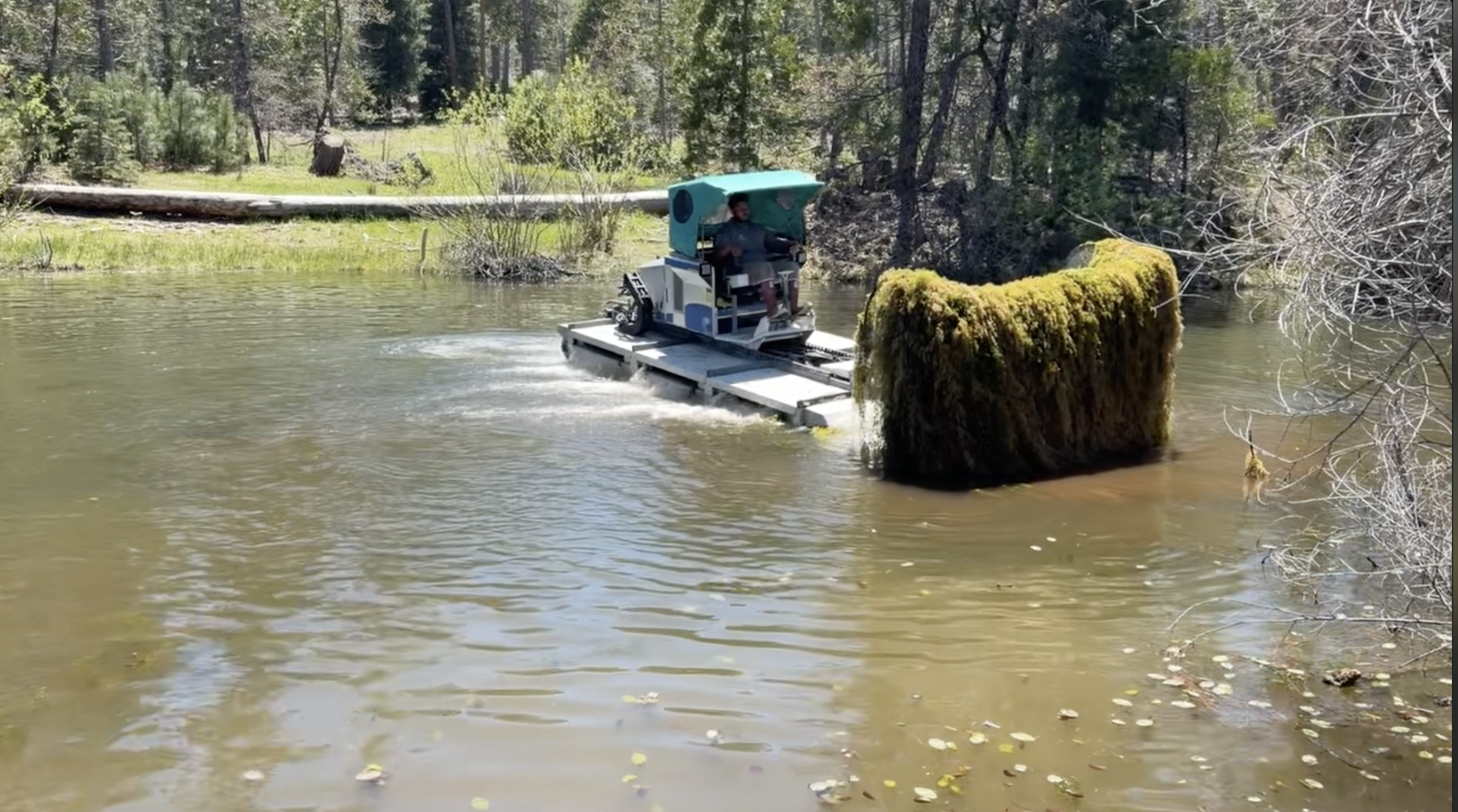
Most of what we do at LakeTech happens through consulting, reports, software, sensors, and the kind of remote monitoring that lets a lake manager check oxygen levels at three in the morning without leaving home. We do not put boots in the water on every project. When we do, it is because the problem in front of us is not one a dashboard can solve. Birch Lake had a vegetation problem that needed mass and momentum, not data. The fix was our aquatic harvester, a low-draft work boat that cuts submerged and floating vegetation, lifts it onto a conveyor, and stockpiles it on the deck for disposal on shore. In one pass it can remove what a crew with rakes would take a week to handle. By the time we were finished, the shoreline was clear, and the camp staff had a lake that looked much better.
- Aquatic harvester cuts, collects, and transports submerged and floating vegetation
- Mechanical removal avoids chemical treatments in a recreational swim environment
- Removes hundreds of pounds of biomass per cycle
- Shoreline disposal allows the organic material to be composted or hauled off
Why We Still Show Up in the Field
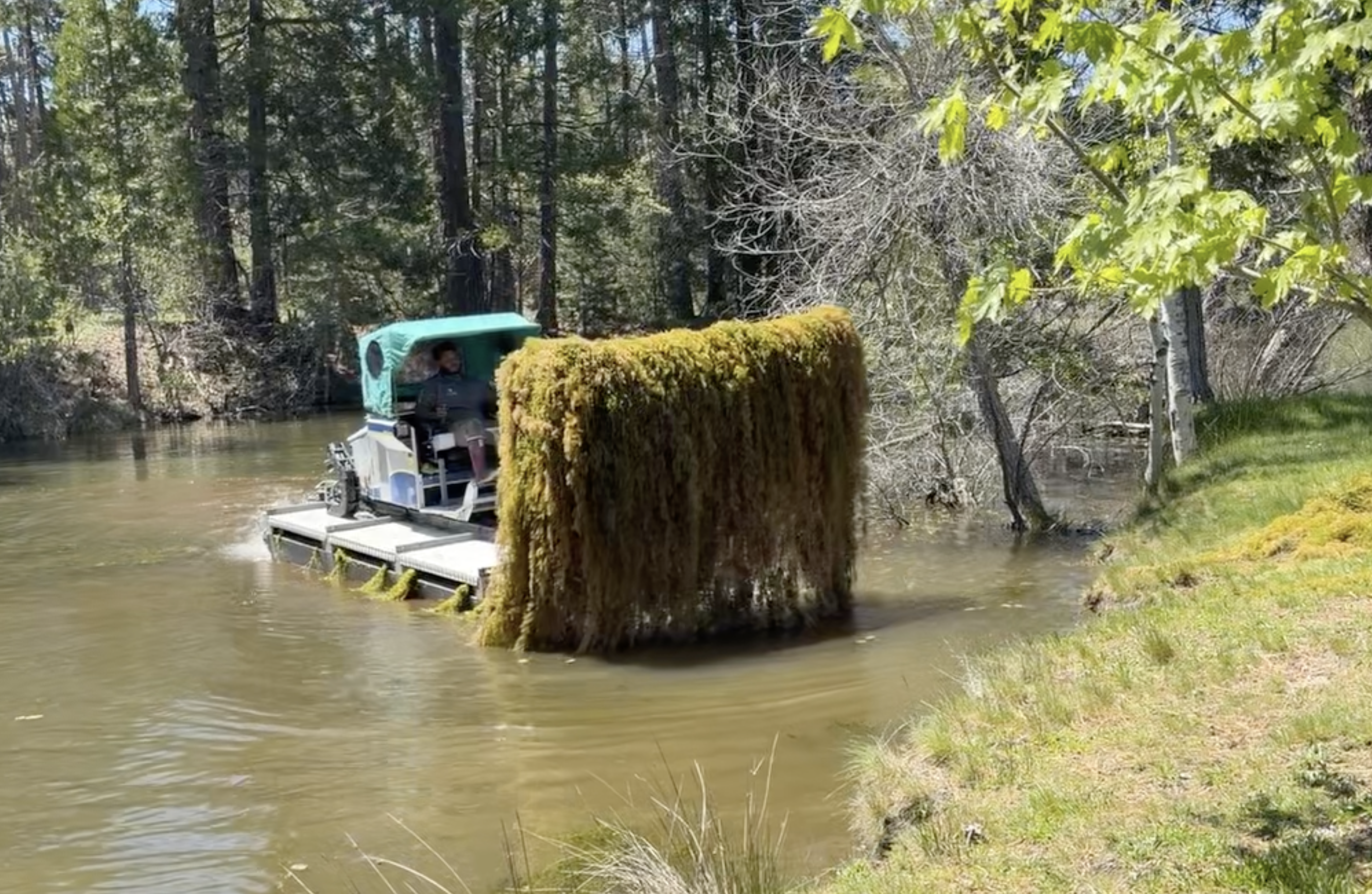
There is a version of this story where LakeTech stays behind the screen. Consult, build software, deploy the sensors, send the reports, let someone else handle the wet work. We have chosen not to run our business that way. Field engagements like Camp Mather keep us honest about what our customers are actually dealing with, and they let us help on the days when monitoring data alone is not enough.
Software, Sensors, and the Occasional Conveyor Belt
If you are reading this and your familiarity with LakeTech is mostly through our monitoring platform or our blog posts about consulting, this is the side of the work we do not always show. Most days we are pulling sensor data, building charts, and helping clients interpret what their lake is telling them. Some days we are on the water, in the mud, hauling vegetation onto a flat deck under a Sierra sun. Both versions of the work are LakeTech. We are not interested in being the company that only solves one half of lake management. If the right answer for a client is a harvester, we will bring ours. If it is a buoy and a dashboard, we will bring that. The lake decides, and we listen.