
A New Partnership Built Around Better Data
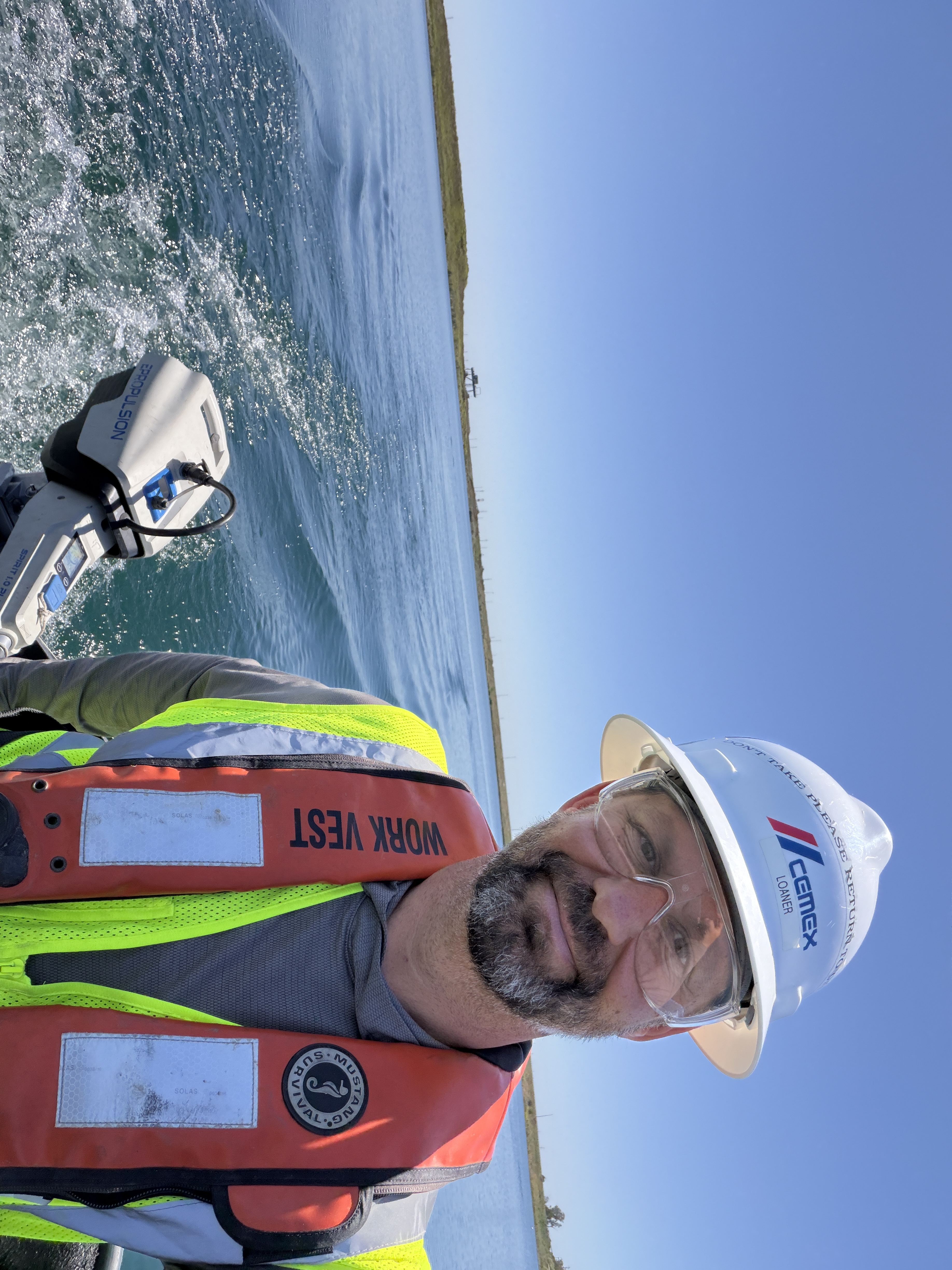
We're excited to share that LakeTech has begun a new partnership with CEMEX, one of the largest building materials companies in the world. Our team is working with CEMEX to evaluate the performance of an aeration system using real-time, IoT-connected water quality monitoring. The goal of the engagement is straightforward. CEMEX wants visibility into how their aeration is actually performing across the water column, not just at the surface, and not just on the day someone happens to be on site. With continuous data flowing into the LakeTech platform, their team can move from assumptions to evidence. We're proud to support CEMEX in this work. Their operational teams already bring deep expertise in water management, and our job is to make sure they have the kind of high resolution data that makes good decisions easier to defend.
Why Aeration Performance Is Hard to Evaluate Without Real-Time Data
Aeration is one of the most common tools in industrial and environmental water management, and for good reason. Whether the goal is keeping dissolved oxygen levels elevated, breaking down thermal stratification, controlling odor, or supporting biological treatment, aeration earns its keep on a properly tuned site. The challenge is that aeration performance is rarely uniform. Dissolved oxygen can vary significantly between the epilimnion and the hypolimnion. Seasonal turnover, wind, water level, and biological loading all shift how a system performs week to week. A grab sample taken from a dock at noon tells you very little about what happened at night, at depth, or during a hot afternoon when oxygen demand spikes. Operators who rely on periodic site visits or single point sensors often end up making decisions based on incomplete information. That's where continuous, depth resolved monitoring changes the conversation entirely.
- Dissolved oxygen stratification reveals whether mixing is reaching the bottom of the water column
- Temperature profiles show how effectively aeration is destratifying the pond
- Diel oxygen swings expose how the system performs at night versus during the day
- Trend data over weeks and months separates real performance issues from one off anomalies
What the LakeTech Platform Brings to the Site
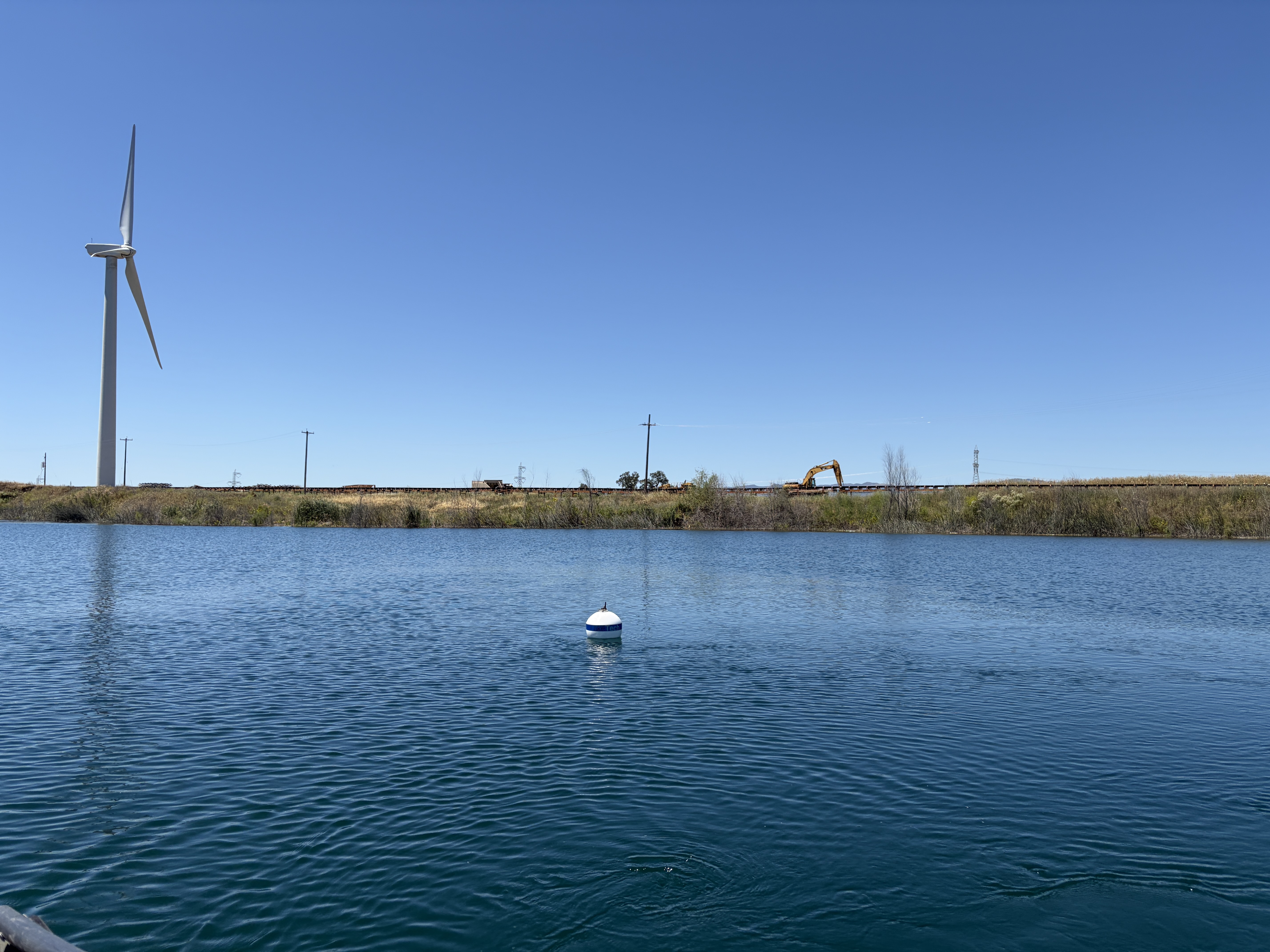
For this project, we're deploying our real-time monitoring stack with multiparameter sondes positioned at multiple depths. Temperature, dissolved oxygen, conductivity, pH, ORP, and turbidity stream from the buoy to the LakeTech platform around the clock, with cellular telemetry so the data is visible from any device. The platform handles the unglamorous but essential work behind the scenes. Data is logged, time stamped, and stored in a clean, exportable format. Customizable alerts notify the team if any parameter crosses a defined threshold, so issues can be addressed before they become incidents. Dashboards visualize trends over hours, days, or seasons, depending on what the user wants to see. For CEMEX, this means their environmental and operations teams can log in and see exactly what the water column is doing at any moment. The same data also produces the long term records that support reporting, internal benchmarking, and continuous improvement efforts.
- Multiparameter sondes deployed at surface, midwater, and bottom positions
- Continuous logging with cellular telemetry, no manual data downloads required
- Real-time alerts and alarms based on user defined thresholds
- Full CSV and PDF export for archival and reporting workflows
- Dashboards designed for both operators and environmental staff
From Continuous Data to Confident Decisions
The reason CEMEX is investing in this monitoring program is the same reason a growing number of industrial operators are turning to continuous water quality data. When you can see what the water is doing, you can manage it intentionally rather than reactively. The team can evaluate whether the aeration system is delivering the dissolved oxygen profile they expect. They can identify the times of day or year when performance dips. They can test the impact of operational changes, like adjusting run times, repositioning diffusers, or scaling capacity, and verify the results with data rather than relying on intuition. Over time, this kind of feedback loop is what turns a static asset into a finely tuned tool. We're genuinely excited to support CEMEX in this work, and we're looking forward to sharing more about what we learn together. Partnerships like this one are why our team comes to work. There is real satisfaction in helping a forward thinking operator move from "we think it's working" to "we know it's working, and here's the data."