
Why lake probiotics matter
Maintaining ecological balance in lakes, ponds, and other water bodies has become a growing priority. Lake probiotics, described in the source article as beneficial bacteria and enzymes, can help improve water quality and degrade sediment. They may also be used with aeration systems to promote a healthier aquatic ecosystem.
What are lake probiotics?
Lake probiotics, also called beneficial bacteria, are naturally occurring microorganisms found in healthy aquatic environments. They break down organic matter such as dead plants, fish waste, and other debris into simpler compounds through biodegradation.
That process helps maintain nutrient balance and prevent harmful substance accumulation. Human activities and pollution can disrupt biodegradation, leading to nutrient imbalance and declining water quality. Introducing lake probiotics is intended to enhance natural biodegradation and restore balance.
Applications of lake probiotics
The source article describes several ways lake probiotics may be used.
- Improve water clarity by breaking down organic matter and helping limit algae growth.
- Reduce excess nutrients such as phosphorus and nitrogen that can support harmful algae and aquatic plants.
- Reduce odors produced during organic matter biodegradation.
- Degrade sediment that accumulates on lake and pond bottoms and can affect habitat and water quality.
Using lake probiotics with aeration
Aeration introduces air into a water body to increase oxygen levels and support beneficial aerobic bacteria. When used with lake probiotics, aeration can enhance biodegradation and overall water quality.
Higher oxygen levels create conditions that favor aerobic bacteria, which the source article describes as more efficient at breaking down organic matter than anaerobic bacteria. That environment can help probiotics work more effectively at degrading sediment and improving water quality.
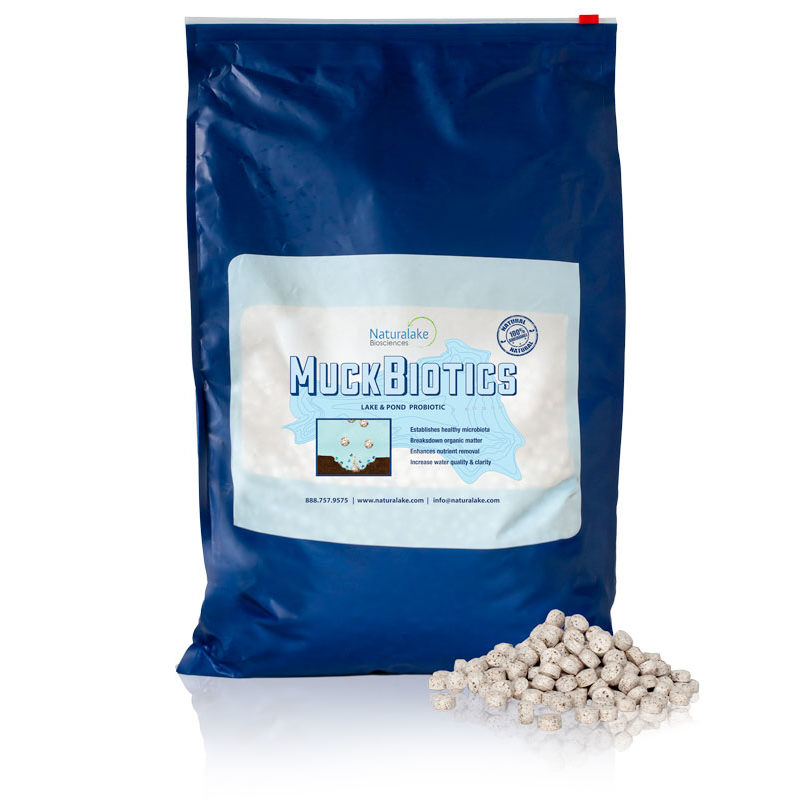
MuckBiotics
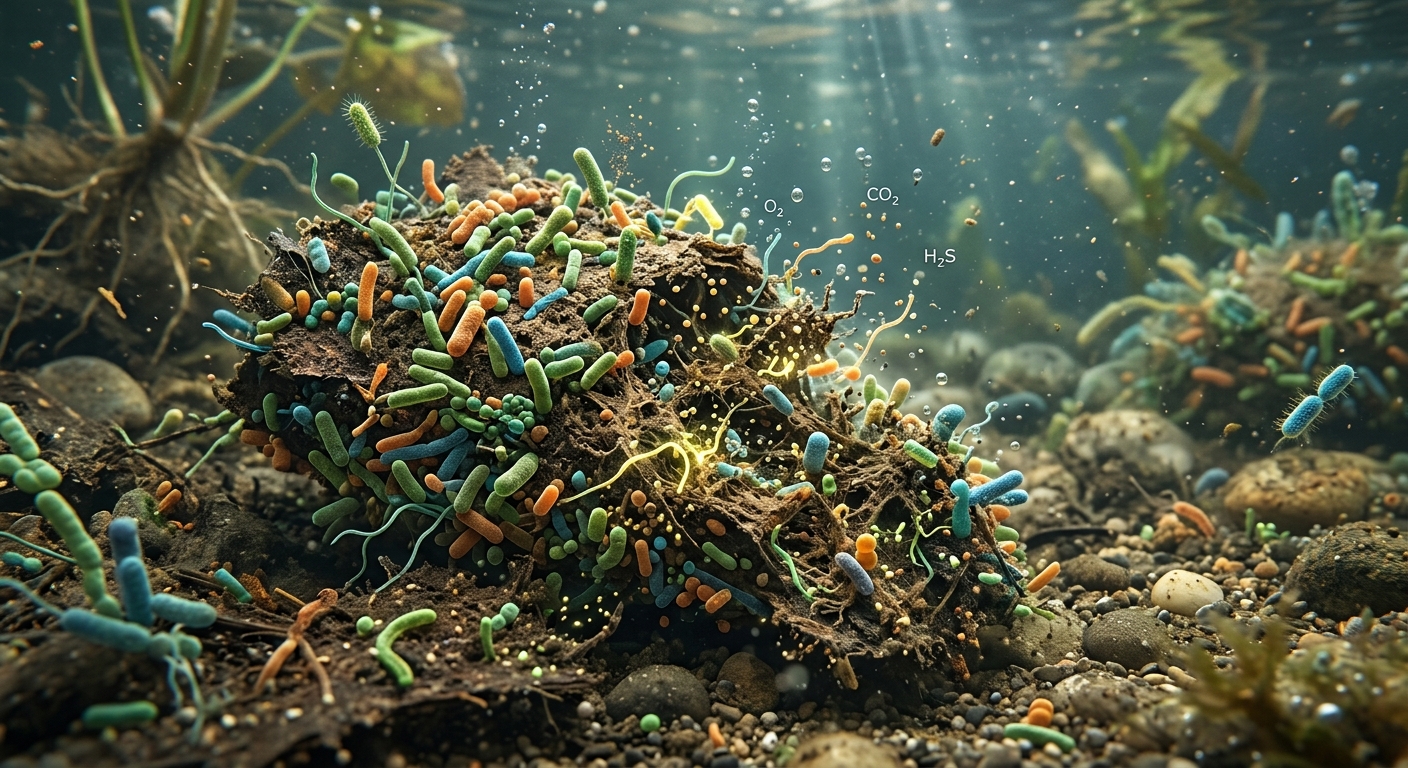
MuckBiotics are described in the source article as a next-generation probiotic tablet for restoration and maintenance of impaired water resources. The product combines scientific research with bioengineering to treat the entire water body starting at the bottom.
Tablets saturate the sediment layer with rare earth stimulants and a broad spectrum of natural bacterial cultures. That establishes a microbiota at the water-to-sediment interface that accelerates digestion of organic matter. The microbiota acts as a biofilter, reducing harmful nutrient loading from internal and external sources, and is intended to promote improved water quality and clarity in declining water bodies.
MetaFloc
MetaFloc is described as a complete water quality and clarity restoration tool that combines probiotics, phosphorus binding, and coagulation or flocculation research. It is applied as a dilute mixture evenly over the surface of the targeted area.
The proprietary blend of probiotics and phosphorus-binding materials is intended to remove phosphorus and turbidity in water within hours and continue removing phosphorus from sediments to help prevent future water-quality issues. The source article states that MetaFloc does not kill aquatic plants or algae.
A natural approach to lake health
Lake probiotics offer a natural and environmentally friendly approach to maintaining aquatic ecosystem health. By supporting beneficial microorganisms, managers can work toward improved water quality, reduced nutrient levels, and sediment degradation. Combined with aeration, probiotics can provide a more effective path toward restoring lake and pond vitality.