
A New Partnership for Colorado's Prewitt Reservoir
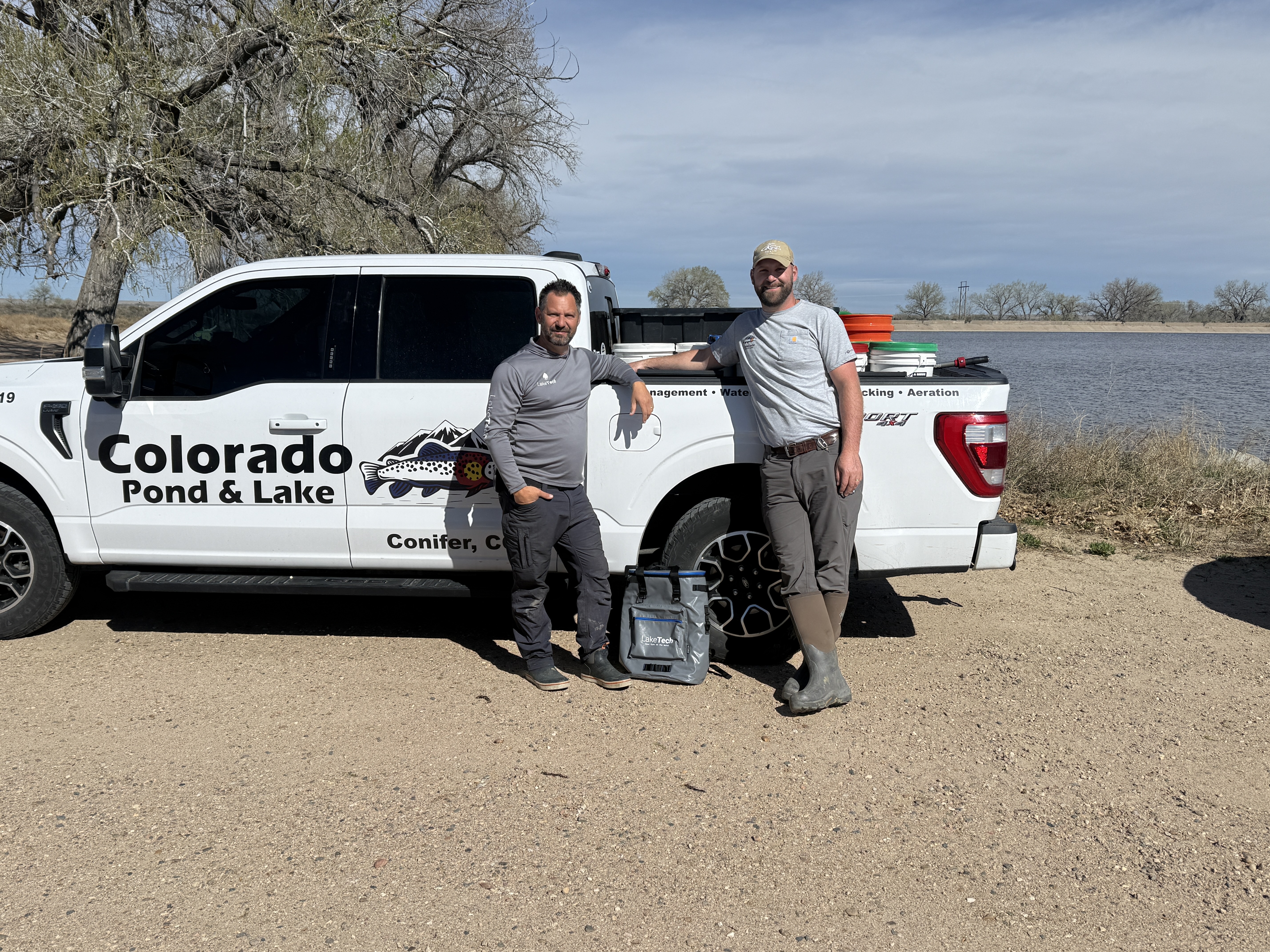
We are excited to announce a new partnership at Prewitt Reservoir State Wildlife Area in Washington County, Colorado. LakeTech is teaming up with Colorado Pond and Lake to deliver a season-long water quality monitoring program on behalf of Jacobs, one of the world's leading engineering and environmental services firms.
The 2026 program pairs our platform and instrumentation with the Rocky Mountain fieldwork expertise of the Colorado Pond and Lake team. Together we will generate defensible, high-resolution baseline data that Jacobs and its stakeholders can rely on for long-term resource management decisions at Prewitt.
Each partner plays a clear role in the program. Jacobs is the client and lead engineering firm. LakeTech provides the telemetry-connected sensor platform, the software, and the technical framework. Colorado Pond and Lake handles on-site sampling, equipment deployment, calibration, and invasive species decontamination protocols.
- Jacobs, engineering and environmental services (client)
- LakeTech, platform and instrumentation
- Colorado Pond and Lake, Rocky Mountain field operations
Why Baseline Data at Prewitt Matters
Prewitt Reservoir is a managed state wildlife area in northeastern Colorado, a part of the state where reservoir water quality has direct implications for irrigation, recreation, and downstream ecosystems. Understanding current conditions is the first step toward managing these waters well into the future.
Baseline studies like this one establish the foundation for every future comparison. Without multi-season, high-resolution data on parameters like dissolved oxygen, temperature stratification, and nutrient concentrations, resource managers are left making decisions without a reference point. A full growing season of continuous data captures how the reservoir behaves through spring turnover, summer stratification, and fall mixing.
For Jacobs, this program produces the kind of defensible documentation needed to inform planning, permitting, and operational decisions. For us, it is an opportunity to apply our platform where it matters most, in the field, under real conditions, producing data that real people rely on.
The Buoy-in-a-Box Sensor Chain
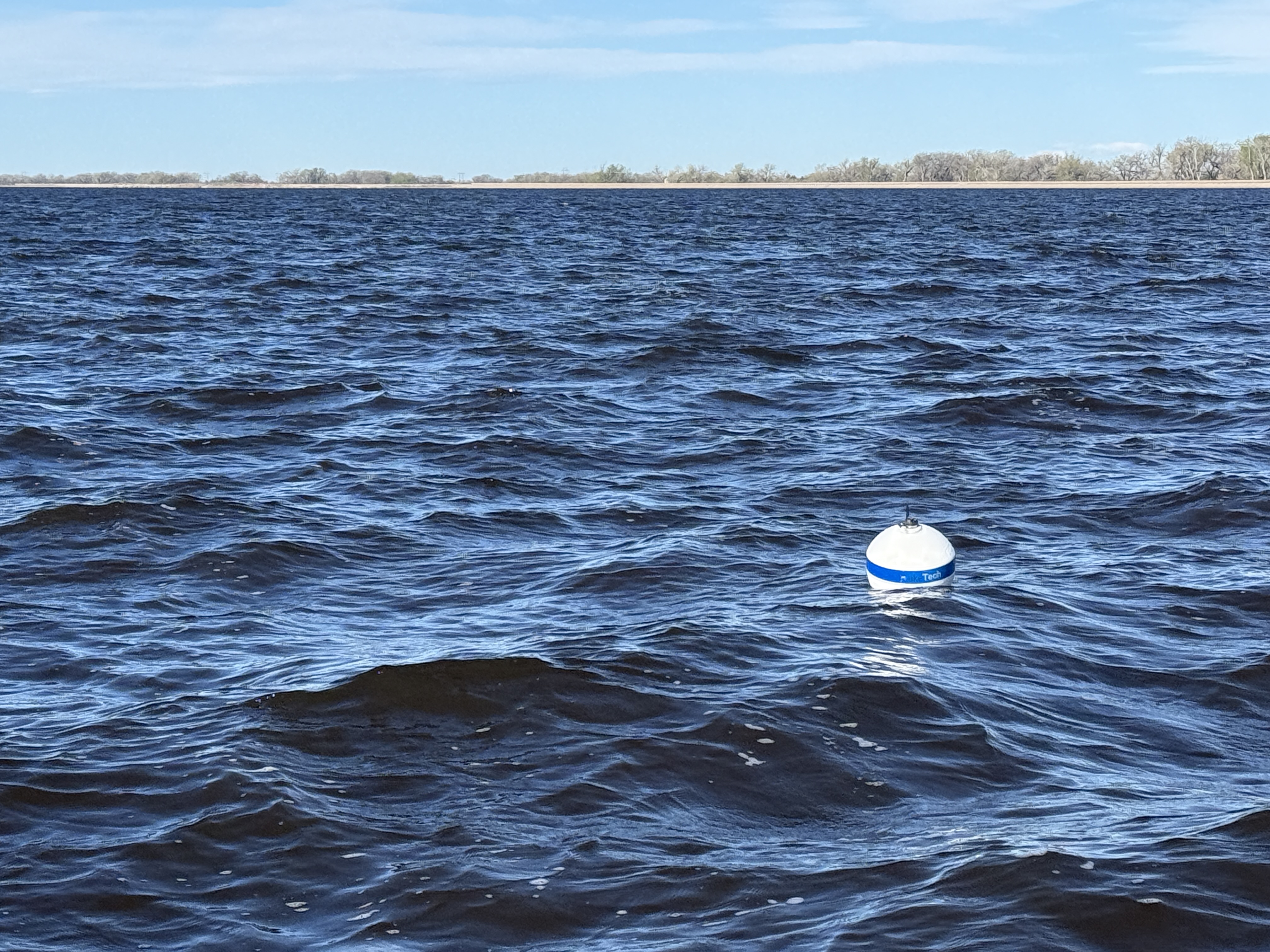
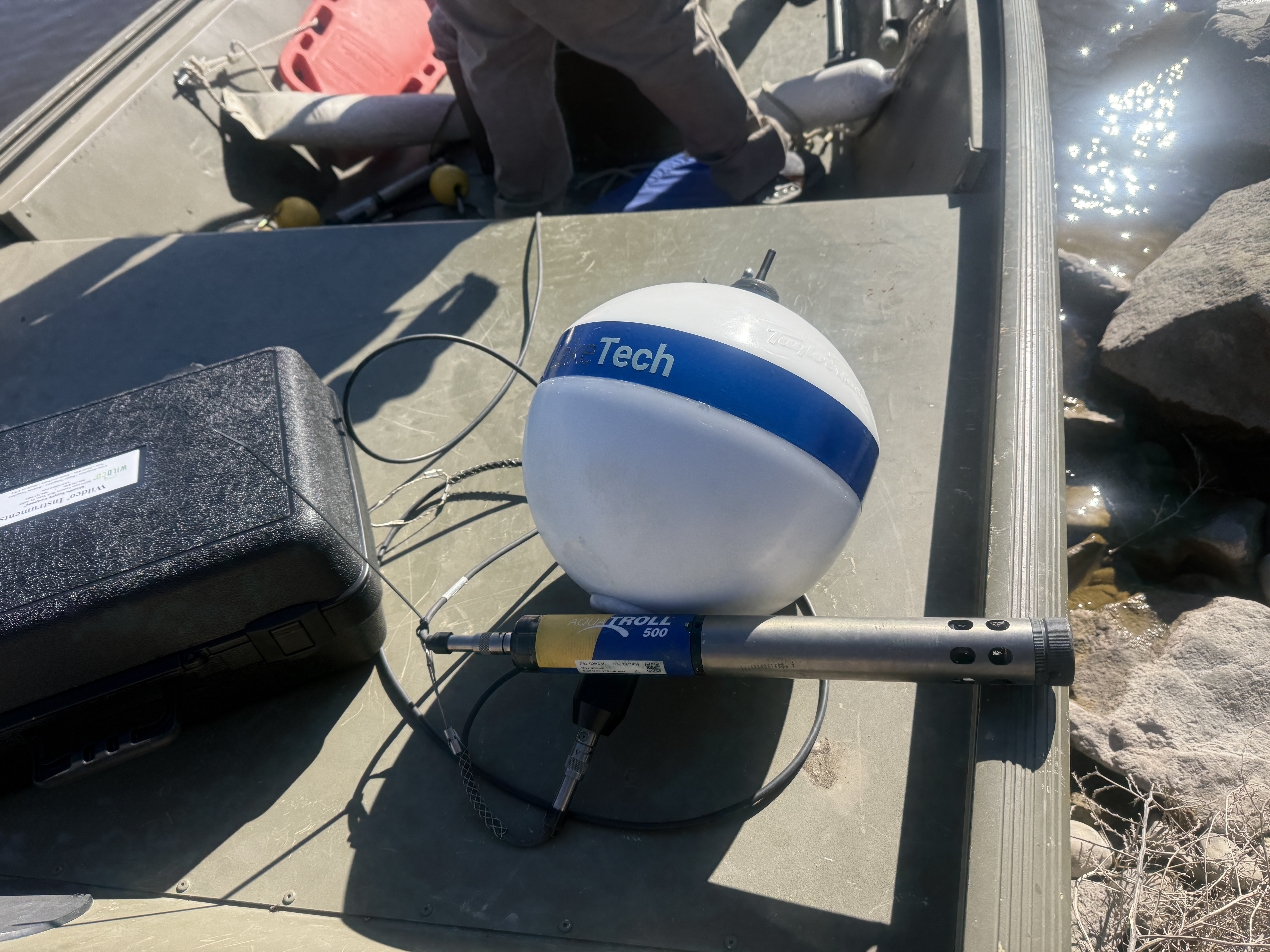
At the heart of the Prewitt deployment is our Advanced Buoy, a complete monitoring platform that ships ready to deploy. The system captures the full water column through a multi-depth sensor chain, anchored by surface and bottom multiparameter sondes and augmented by three mid-water temperature and dissolved oxygen sensors spaced equidistantly between them.
The surface and bottom sondes measure temperature, conductivity, dissolved oxygen, turbidity, pH, and ORP. The mid-water sensors are held at fixed depths using midwater floats, which lets us capture the stratification signal that matters most during Colorado's warm summer months. All sensors report through cellular telemetry, which means the Jacobs team can see what is happening at Prewitt in real time from anywhere.
Real-time alerts flag anomalies such as rapid oxygen swings or temperature spikes, so conditions of interest are not missed between site visits. The buoy is covered under a lifetime warranty on all components, and monthly cellular data fees are included in the program.
- Surface multiparameter sonde (Temp, Conductivity, DO, Turbidity, pH, ORP)
- Three mid-water Temperature and DO sensors at fixed depths
- Bottom multiparameter sonde
- Cellular telemetry for real-time data streaming
- Real-time alerts and alarms
- Lifetime warranty on all components
EPA-Approved Lab Analysis for Nutrients and Metals
Continuous telemetry captures the pulse of the reservoir, but some questions require laboratory analysis. During each monthly field event, our Colorado Pond and Lake partners collect water samples from both the epilimnion (surface layer) and hypolimnion (deep layer), recording depth profiles at meter spacing along the way.
Samples are analyzed using EPA-approved and Standard Methods protocols, with reporting limits calibrated to detect low-level nutrient and metal concentrations. This level of analytical precision is essential for characterizing baseline conditions at Prewitt and for supporting the long-term management decisions that will follow.
The parameter list covers the nutrient and metal concentrations most relevant to reservoir health, from nitrogen and phosphorus species that drive algae growth to iron and manganese that influence water treatment downstream.
- Iron (0.005 mg/L reporting limit)
- Manganese (0.0008 mg/L)
- Nitrate-nitrogen (0.05 mg/L)
- Nitrite-nitrogen (0.03 mg/L)
- Ortho-phosphate (0.1 mg/L)
- Sulfate (0.1 mg/L)
- Total phosphorus (0.05 mg/L)
- Ammonia-nitrogen (0.03 mg/L)
- Total Kjeldahl Nitrogen (0.1 mg/L)
Eight Field Events, One Continuous Dataset
The Prewitt program runs from March through October, with eight scheduled monthly visits. The March visit is the kickoff, when the buoy is deployed and the sensor chain calibrated. Each subsequent monthly visit includes sample collection, depth profiles, and routine maintenance. The October visit is the program closeout, when equipment is retrieved for winter storage.
Between field visits, data flows continuously through the LakeTech platform. Jacobs can access sensor readings, download CSV exports, and review dashboards at any time. Data can also be provided in Excel or PDF formats upon request, which makes it easy to integrate into Jacobs' own reporting and archival workflows.
The result is one continuous dataset spanning the full growing season, captured at multiple depths, calibrated against EPA-approved lab analysis, and ready to support whatever comes next. It is exactly the kind of program we designed the LakeTech platform to deliver.
- March kickoff and buoy deployment
- Monthly field events April through September
- October closeout and equipment removal
- Continuous cellular telemetry between visits
- CSV, Excel, or PDF data exports on demand