
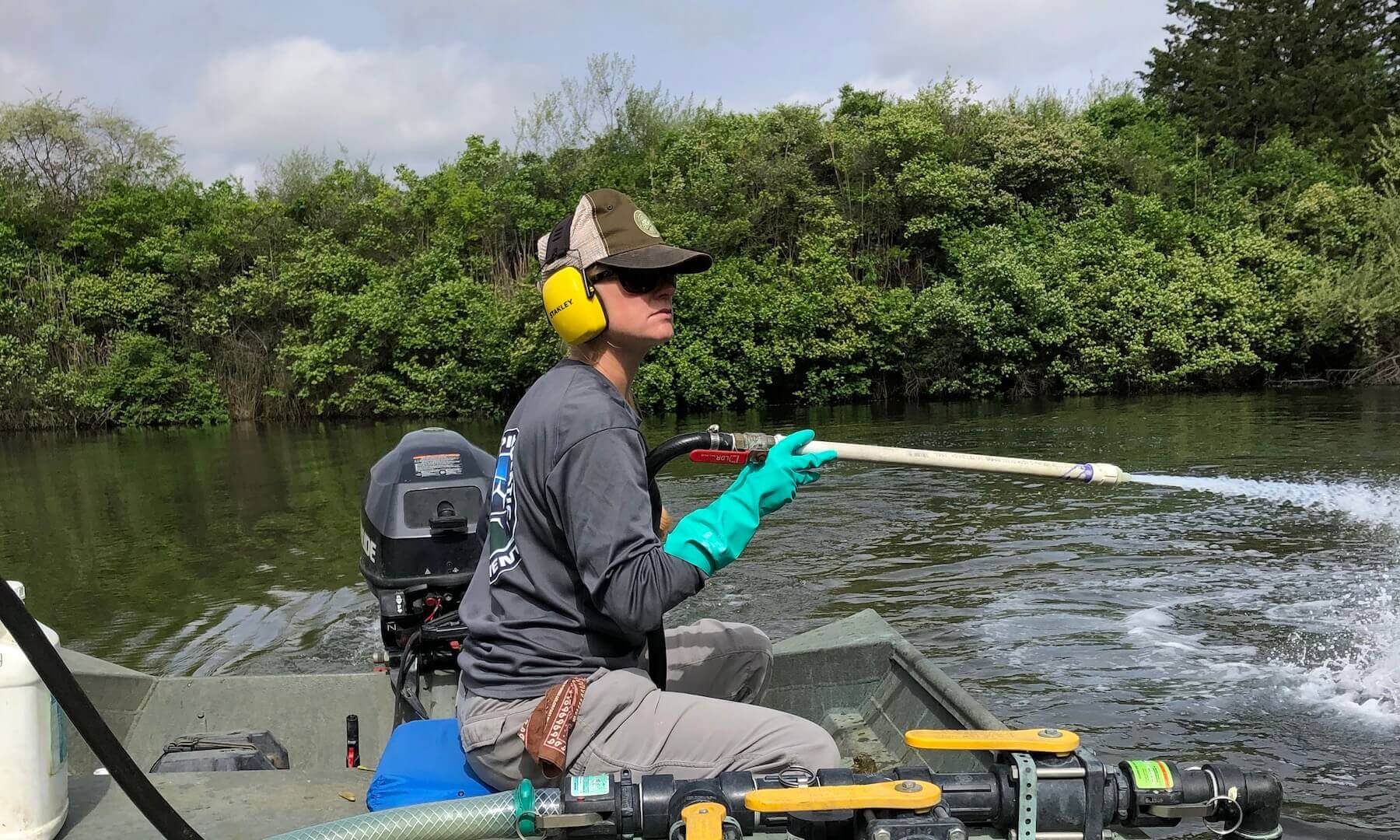
Meet Terrapin Aquatics Management
Every so often a team comes along that uses the LakeTech Platform the way we always hoped it would be used: every day, on every property, without anyone having to remind them. Terrapin Aquatics Management is one of those teams, and today we are making them our featured client.
Terrapin is a WBENC certified, women owned firm conserving lakes and ponds across Illinois. Their crews are on the water treating algae and aquatic weeds, servicing aeration and fountains, and checking in on properties that range from golf course ponds to HOA lakes to detention basins. It is unglamorous, weather-dependent work, and it lives or dies on whether anyone wrote down what they saw.
That last part is why we wanted to tell their story. Terrapin does not treat documentation as an afterthought that gets reconstructed on a Friday afternoon. They log as they go, and it shows in the volume and consistency of what sits in their account.
- WBENC certified, women owned aquatic management firm
- Serving lakes and ponds across Illinois
- Treatment, aeration, fountain service, and water quality work
- A LakeTech Platform customer running their entire book of business in one place
One Platform, More Than 100 Accounts

Terrapin manages over 100 accounts inside LakeTech. Every property, every water body, every device, and every service history sits under one company umbrella instead of scattered across spreadsheets, text threads, and the memory of whoever ran that route last season.
That kind of portfolio is exactly what the Commercial License was built for. Lake management companies and environmental consultants get unlimited client accounts under their own umbrella, company-branded client portals, and centralized management of devices and data across the whole portfolio. A property manager sees a clean view of their own lake. Terrapin sees all 100 of them.
The practical win is that onboarding a new client does not mean inventing a new filing system. The structure is already there, so account 101 works the same way account 1 does.
- 100+ client accounts managed under a single company umbrella
- Client-facing portals so property contacts see their own water body
- Centralized device and portfolio management across every site
- One consistent structure for every new account added
Every Visit, Logged Live
The habit that sets Terrapin apart is the daily field log. Their crews create field logs as part of the visit itself, not as paperwork waiting at the end of the week. Three things go in every time: water quality readings, field observations covering the work actually performed onsite, and visual observations describing what the site looked like on arrival.
Those three categories cover the questions that come up later. The readings tell you the condition. The field observations tell you what was done about it, including treatments and applications. The visual observations capture the part no sensor records, the surface scum along the north shoreline, the geese, the water level after a storm, the filamentous mat that was not there two weeks ago.
Because logs are created in the field on a phone, the detail survives. Notes, photos, and attachments land on the correct account and the correct date while the crew is still standing on the bank. Nobody is reconstructing a Tuesday from memory on Friday.
- Water quality readings logged on every visit
- Field observations covering treatments and onsite activity
- Visual observations describing conditions on arrival
- Photos and attachments filed against the right account and date
- Custom form templates so each log captures what that site needs
Why Daily Logging Compounds
A single field log is a note. Two seasons of daily field logs across 100 properties is an asset, and it changes what a management company can do.
It changes client conversations first. When a board asks why the pond looked bad in August, the answer is a dated record with photos and readings instead of a recollection. It changes treatment decisions next, because a crew arriving at a site can see what was applied there last month and what the water looked like before and after. Over a few seasons it turns into a baseline, which is the only honest way to tell a bad year apart from a bad week.
It also protects the business. Applications, conditions, and site activity are documented as they happen, which is the record you want if a question ever comes back about what was done and when. None of this requires extra effort at the end of the season. It requires the habit Terrapin already has.
- Dated, photo-backed answers for client and board questions
- Treatment history visible to whoever runs the route next
- Season over season baselines instead of one-off snapshots
- Application and activity records documented as they happen
- Reports and exports pulled from data that is already clean
Thank You, Terrapin

We build software, but the platform is only as good as the work people put into it. Terrapin Aquatics Management is in the field every day and is one of the most active teams on LakeTech, and the quality of their account is a direct reflection of how seriously they take their clients' water.
So this one is a straightforward thank you. Thank you for the daily logs, for the photos, for the feedback that has shaped features we all use, and for showing what the platform looks like in the hands of a team that actually uses it.
If you run a lake or pond management company and your service history currently lives in three spreadsheets and a truck console, this is what the other version looks like. We would be glad to show you.