
What Is a Harmful Algal Bloom?
A harmful algal bloom, often shortened to HAB, is a rapid overgrowth of algae or cyanobacteria that degrades water quality and can produce toxins. Most blooms are dominated by cyanobacteria, sometimes called blue-green algae, which thrive in warm, nutrient-rich, slow-moving water.
When conditions are right, a bloom can develop in a matter of days. The water may turn green, blue-green, or even reddish-brown, and a thick surface scum often forms along downwind shorelines. Beyond the unpleasant appearance and odor, blooms can pose real risks to people, pets, livestock, and aquatic life.
What Drives a Bloom
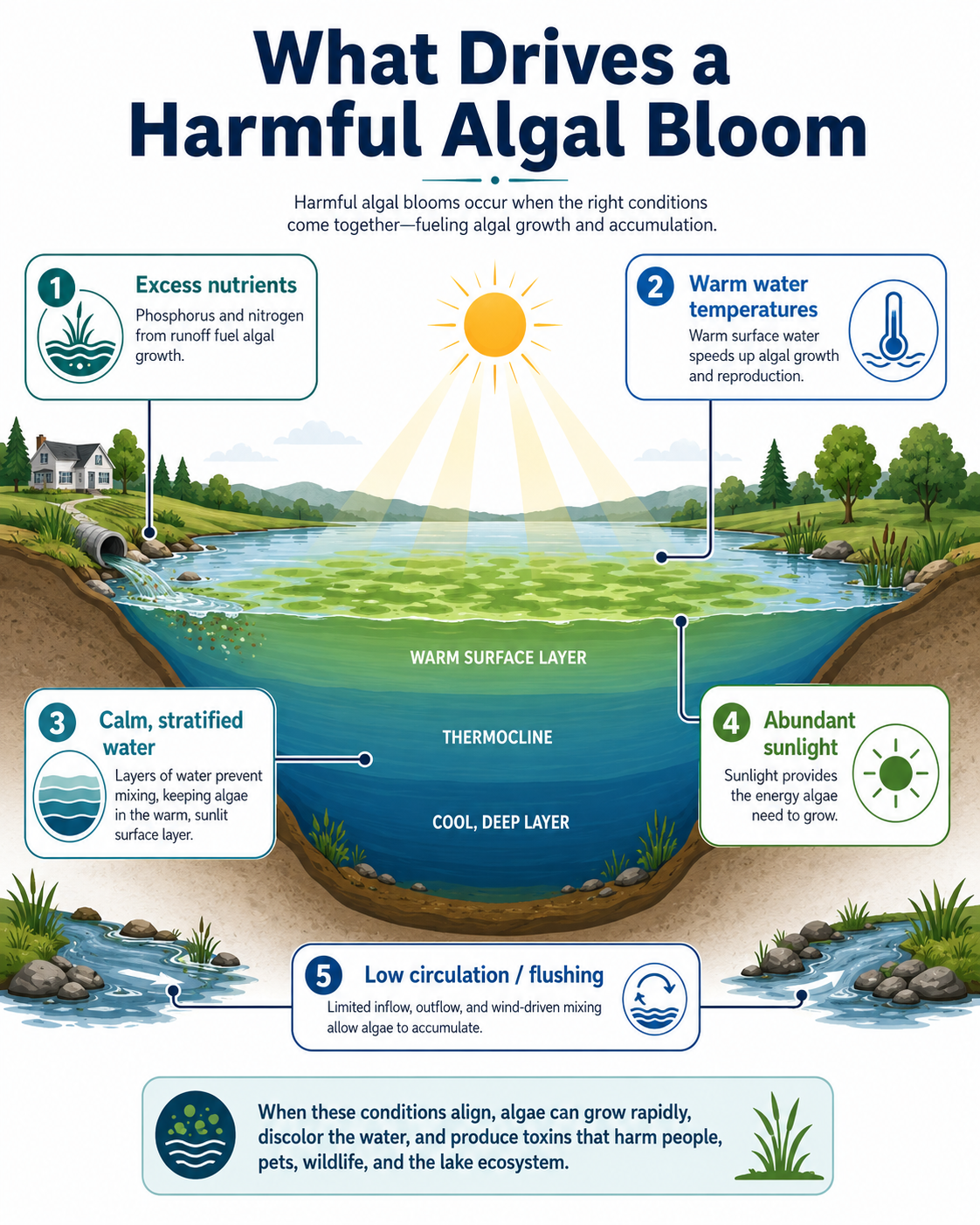
Blooms rarely have a single cause. They are usually the result of several conditions lining up at the same time, which is why understanding your specific water body matters so much.
- Excess nutrients, especially phosphorus and nitrogen, from runoff, fertilizer, and internal sediment loading
- Warm water temperatures, which speed up algae reproduction
- Calm, stratified conditions that let cyanobacteria float to the surface and outcompete other species
- Plenty of sunlight to fuel photosynthesis
- Low flushing or circulation that allows nutrients and algae to accumulate
Why HABs Matter
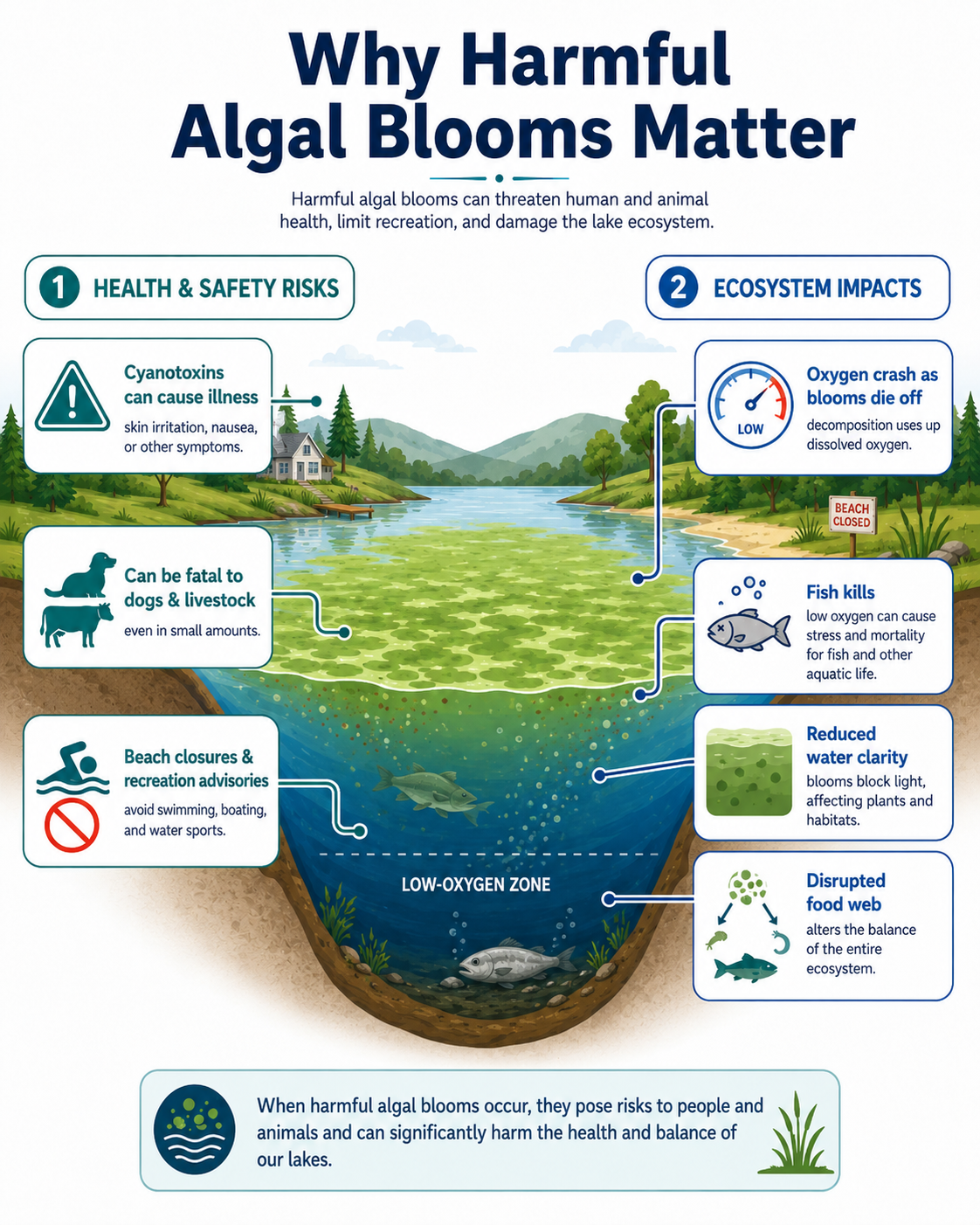
The most serious concern is toxicity. Some cyanobacteria produce cyanotoxins that can cause illness in humans and can be fatal to dogs and livestock that drink affected water. Public lakes may face beach closures and recreation advisories during a bloom.
Blooms also harm the ecosystem itself. As a large bloom dies off, bacteria consume oxygen while breaking down the organic material, which can drive dissolved oxygen to levels low enough to cause fish kills. Over time, recurring blooms reduce water clarity, disrupt the food web, and make a water body harder and more expensive to manage.
How LakeTech Helps You Stay Ahead
The best defense against harmful algal blooms is early awareness combined with proactive nutrient management. Our approach pairs continuous monitoring with targeted treatment so you can act before a bloom takes hold rather than after.
- Real-time monitoring buoys that track temperature, dissolved oxygen, and the conditions that precede a bloom
- Phosphorus management to address the nutrient that most often fuels cyanobacteria
- Aeration and circulation to disrupt the calm, stratified water that blooms depend on
- Data and alerts that help your team make timely, informed decisions
A Proactive Approach Pays Off
Managing a bloom after it appears is always more difficult and more costly than preventing one. By understanding the conditions that lead to blooms and keeping a close eye on your water, you can protect water quality, recreation, and aquatic life all season long.
If you are concerned about harmful algal blooms in your lake or pond, our team can help you build a monitoring and management plan tailored to your water body.