
The Question Behind the Deployment
Novato Creek runs through the tidal flats of Marin County before its water reaches adjacent, tidally influenced lagoons. Those lagoons are managed water. The creek that feeds them is not. Every tide moves a new volume of water across that boundary, and the people responsible for lagoon conditions have historically had very little visibility into what that water is carrying.
That is the question we set out to answer. Not whether the creek is good or bad, but what it actually looks like across a full tidal cycle, measured continuously rather than sampled once.
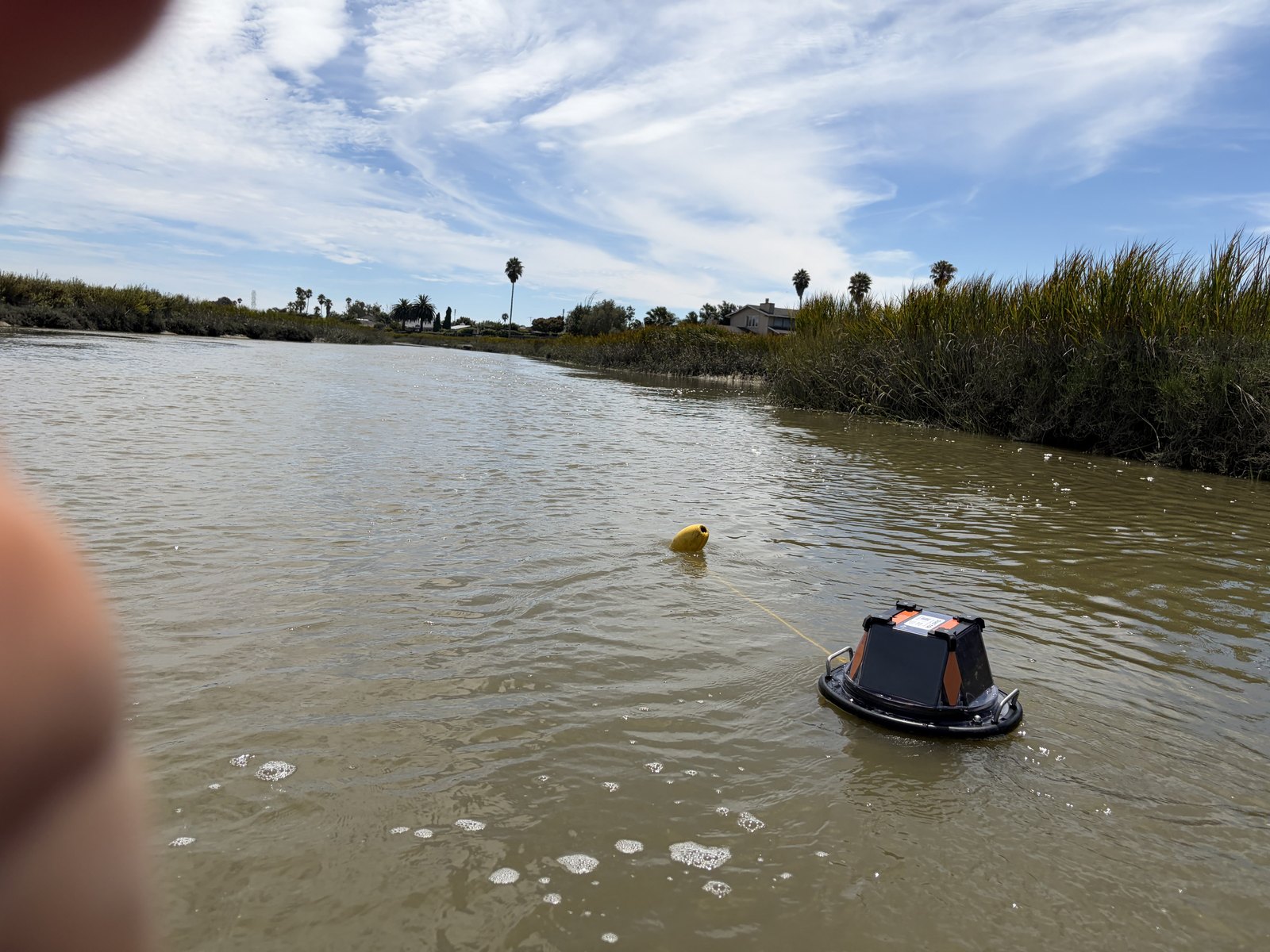
We deployed a Bluesonde compact monitoring platform in the creek channel and let it log. What came back is a clear picture of a system in constant motion.
- Location: Novato Creek, Marin County, California
- Platform: Bluesonde compact monitoring buoy, kayak deployed and tethered
- Parameters logged: dissolved oxygen, temperature, salinity, depth, turbidity, chlorophyll-a
- Record shown here: 18 to 25 August, roughly eight days of continuous data
Why a Grab Sample Cannot Answer This Question
A grab sample is a single point on a curve. If that curve is flat, one point tells you nearly everything. If the curve is swinging, one point tells you almost nothing except where the needle happened to sit at the moment someone was standing on the bank with a bottle.
Tidal creeks produce some of the steepest curves in inland water management. Water level, salinity, oxygen, and suspended sediment all move on the tide, and they do not all move together or in phase. A sample taken at slack high water and a sample taken three hours later on a falling tide can describe what looks like two different waterbodies.
This is not a criticism of grab sampling. It is a statement about what a single measurement can and cannot support. When the question is "what is entering our lagoons," the answer has to be a distribution, not a data point.
- Tidal systems can cycle through their full range twice a day
- Parameters peak at different points in the cycle, so timing changes the story
- A single reading cannot show range, duration, or frequency
- Continuous logging captures the lows and the recovery, not just the average
Reading Eight Days of Continuous Data
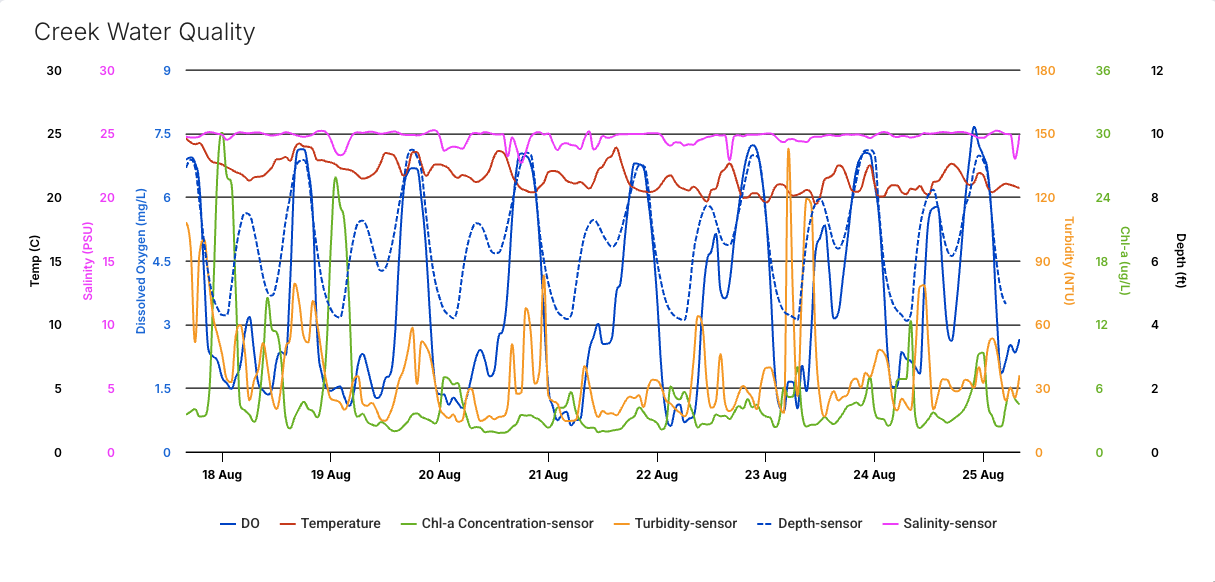
The depth trace is the clearest signal in the record. It moves in a strong twice-daily cycle spanning roughly six feet, which is the tide writing its own signature across the chart. Once you can see that rhythm, every other parameter can be read against it.
Dissolved oxygen tracks that cycle closely and swings hard, moving between roughly 1.5 and 7.5 mg/L within the window. That range matters more than any single value in it. A reading taken near the top of the swing and a reading taken near the bottom would support completely different conclusions about the same creek on the same day.
Salinity behaves the opposite way. It holds steady near 25 PSU for the entire record, which tells us this reach is under consistent marine influence rather than swinging between fresh and salt. Temperature cycles gently on a daily rhythm between roughly 19 and 23 degrees Celsius.
Turbidity and chlorophyll-a spend most of the record low, then spike sharply and briefly. Those events are short. A weekly or monthly sampling schedule would very likely miss them entirely, and missing them means missing the part of the record that is most worth explaining.
- Depth: a twice-daily tidal cycle spanning roughly six feet
- Dissolved oxygen: swings between roughly 1.5 and 7.5 mg/L, tracking the tide
- Salinity: steady near 25 PSU, indicating consistent marine influence
- Temperature: a daily cycle, roughly 19 to 23 degrees Celsius
- Turbidity and chlorophyll-a: mostly low, with short sharp spikes
A Platform Built for Moving Water
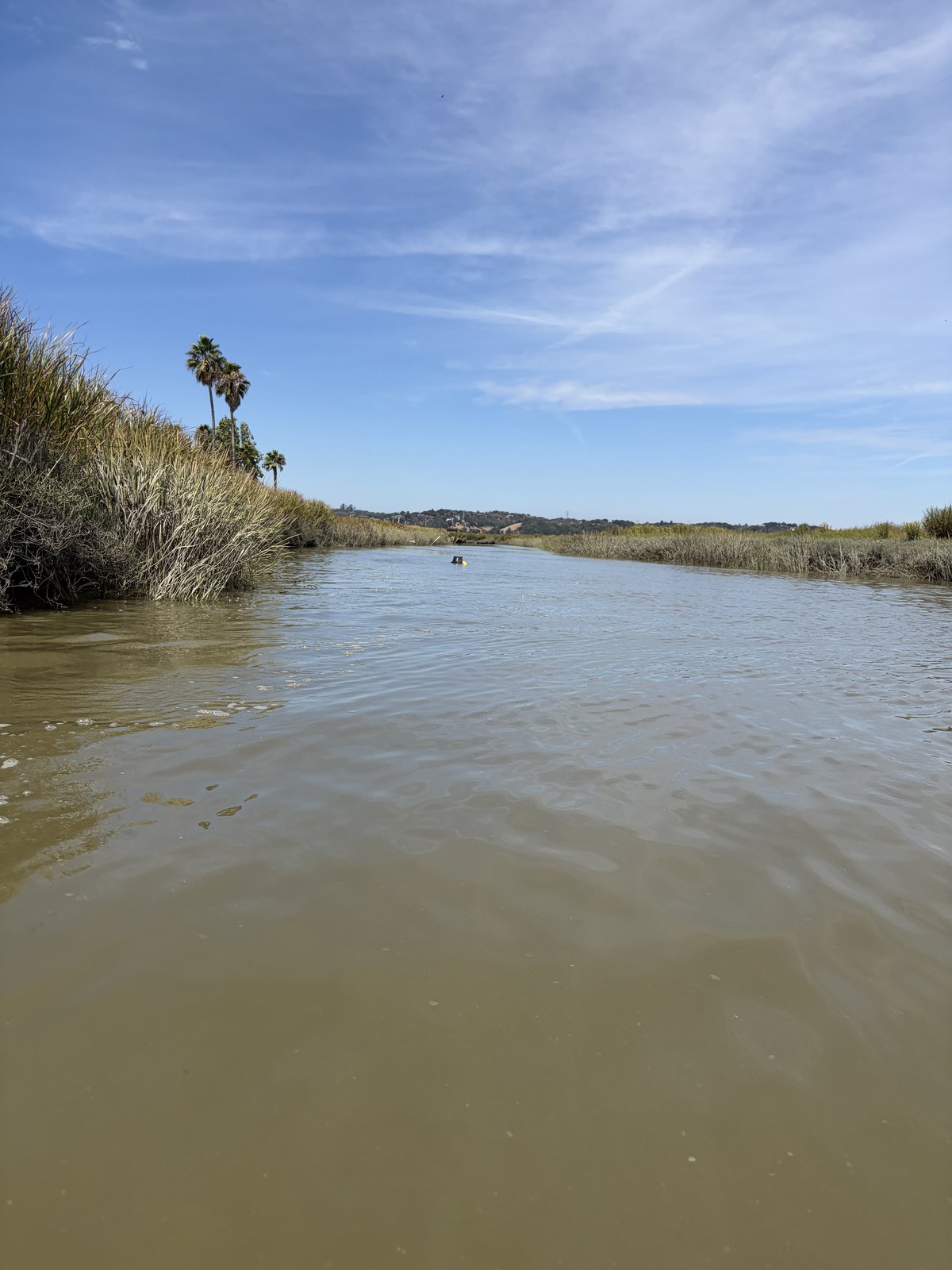
Deploying in a tidal creek is a different problem from deploying in a reservoir. There is no dock, the channel is shallow at low water, access is by paddle rather than by boat ramp, and the platform has to stay put through a six foot swing twice a day without becoming a navigation hazard.
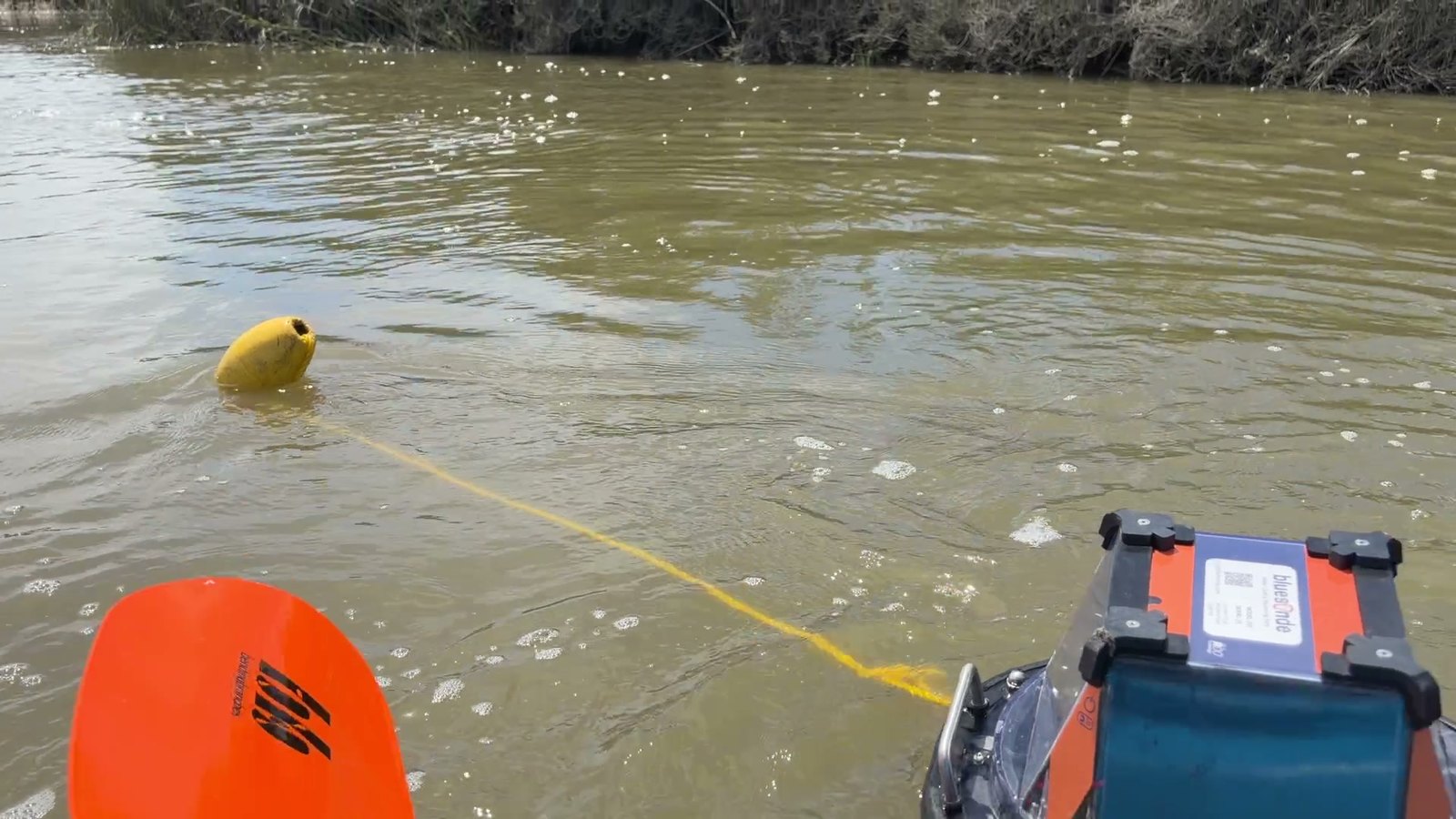
The Bluesonde unit is compact enough to carry out on a kayak and set by hand, tethered to a marker float so it holds station and stays visible. That matters more than it sounds. When a deployment does not require a trailer, a ramp, and a crew, it becomes practical to monitor the places that actually control water quality downstream instead of only the places that are easy to reach.
The unit logs all six parameters on a continuous interval and reports in, so the record builds without anyone standing in the creek. Field visits become verification and maintenance rather than the entire data collection strategy.
- Compact enough for kayak deployment without a ramp or trailer
- Tethered to a surface marker for station keeping and visibility
- Handles a large tidal range in a shallow channel
- Six parameters logged continuously and reported remotely
Turning a Field View Into a Data View
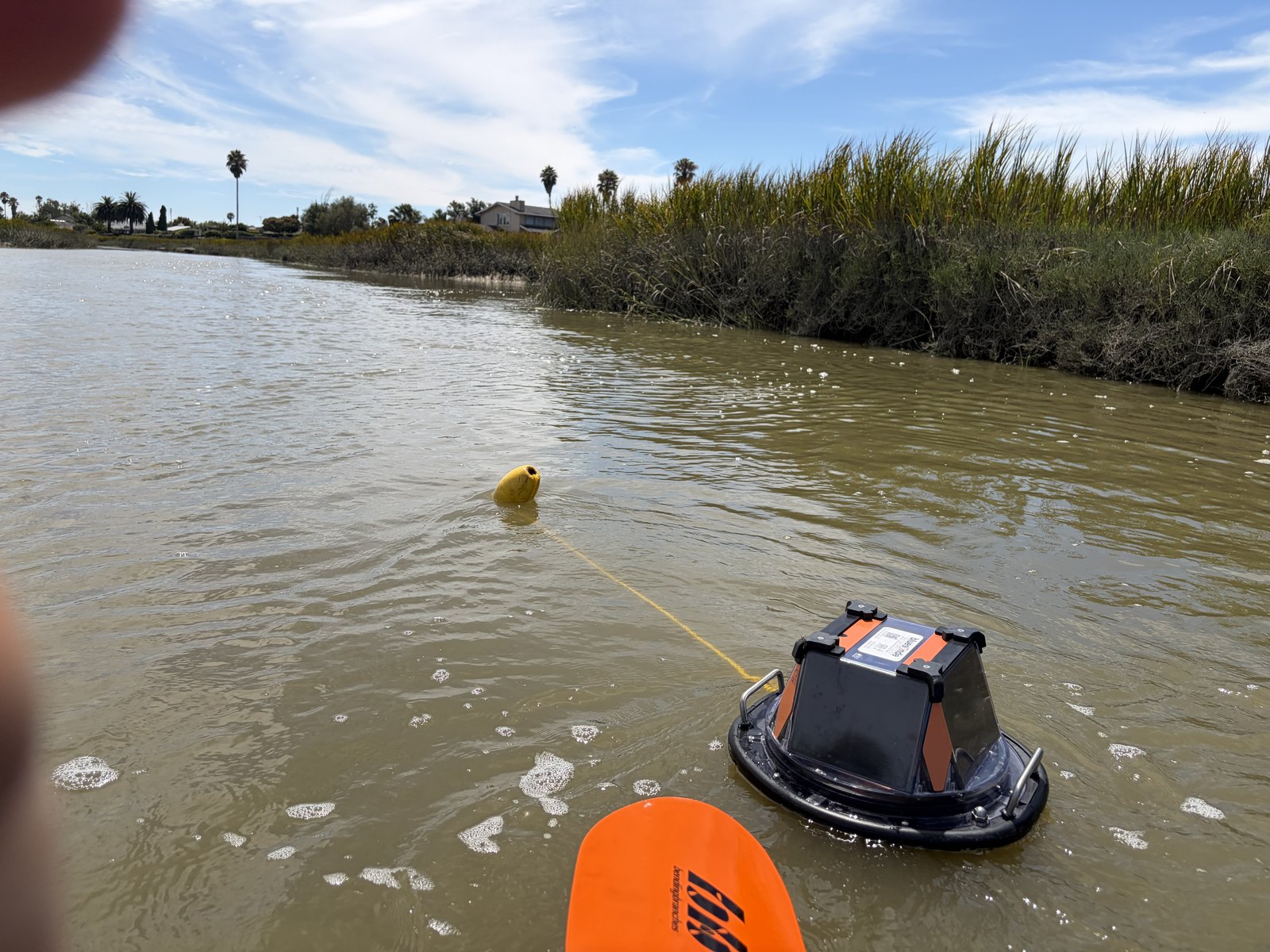
Standing in the creek, you see brown water moving past a bank of pickleweed. That view is real, but it does not tell you whether today is typical, whether last week was worse, or what arrives on the next flood tide. The instrument record turns that field view into something a group of stakeholders can actually reason about together.
That is the practical value of this deployment. Not a verdict on the creek, but a shared, continuous reference that replaces individual impressions with a record everyone can look at. Once the baseline exists, a change in the pattern becomes visible as a change, rather than as an argument about whether anything changed at all.
We are continuing to evaluate creek conditions at this site so the people responsible for the adjacent lagoons can better understand the water entering them. If you manage a lagoon, a channel, or an inlet where the water is always moving, the same approach applies.
- Establishes a baseline before anyone needs to interpret a change
- Replaces individual impressions with a shared record
- Puts the tidal cycle in context rather than treating readings as isolated
- Supports better questions from stakeholders, not just better answers