
The Muck Problem Nobody Wants to Talk About
If you manage a lake or pond long enough, you will eventually have a conversation about muck. That soft, dark layer of organic sediment that builds up on the bottom over years and decades is one of the most common issues we see across our customer sites. It smells bad when disturbed, it makes shoreline areas unusable, and it fuels nutrient recycling that drives algae blooms from the inside out. The frustrating part is that muck accumulation is often invisible until it becomes a serious problem. Leaves, dead algae, grass clippings, and other organic debris settle to the bottom and decompose slowly, especially in low-oxygen zones near the sediment. Over time, that layer grows thicker and starts releasing phosphorus and nitrogen back into the water column, creating a feedback loop that makes water quality progressively harder to manage. We have worked with dozens of lakes and ponds dealing with this exact cycle. After evaluating several biological treatment options over the years, MuckBiotics from Natural Lake Biosciences has become one of the products we consistently recommend. It works, it is nontoxic, and it fits cleanly into the kind of data-driven management programs we help our customers build.
- Organic muck accumulates from leaves, dead algae, grass clippings, and other debris
- Low-oxygen conditions at the bottom slow natural decomposition
- Muck releases phosphorus and nitrogen back into the water column
- Internal nutrient loading from sediment can drive algae blooms even when external sources are controlled
What MuckBiotics Actually Does
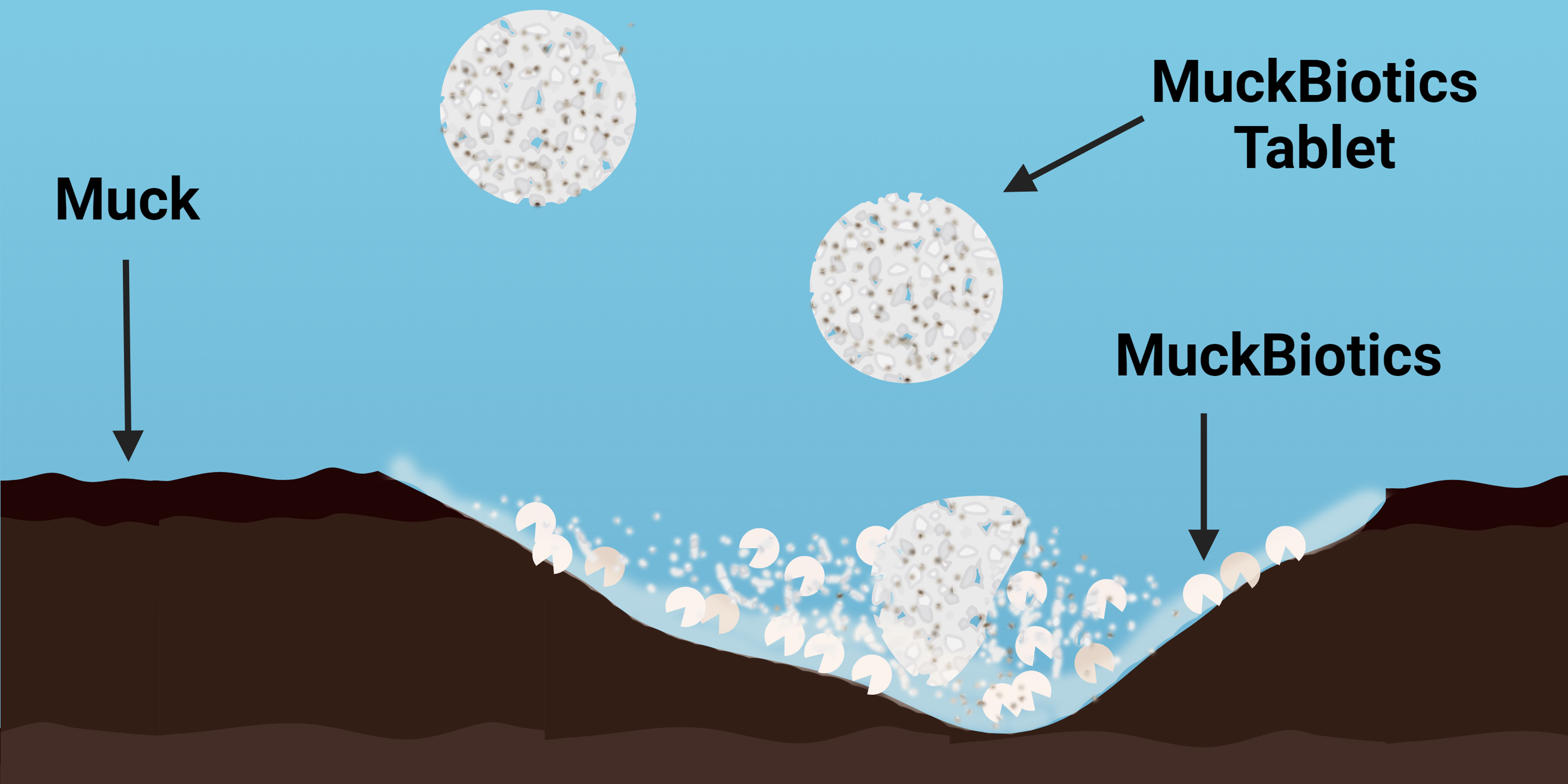
MuckBiotics is a next-generation probiotic tablet made up of beneficial bacterial cultures and biostimulants. The tablets are dense enough to sink directly into the muck layer on contact, delivering the biology exactly where it needs to go. Once in the sediment, the bacteria colonize the water-to-sediment interface and begin accelerating the breakdown of organic matter through complex enzyme pathways. What makes this approach different from liquid bacterial amendments is the delivery mechanism. Because the tablets sink into the muck rather than dispersing through the water column, the active ingredients stay concentrated in the treatment zone. This makes the product significantly more efficient and means applications can happen as infrequently as once per month. The surface sonde includes a built-in mechanical wiper, but the biology happening in the sediment is equally important. MuckBiotics essentially establishes a healthy microbial community at the bottom that functions as a biofilter. It digests organic matter, reduces the thickness of the muck layer, and lowers the internal nutrient load that would otherwise feed future algae growth. The end products are microscopic levels of bacterial biomass, water, and carbon dioxide. The product is completely nontoxic and will not harm fish or other aquatic life.
- Dense tablets sink directly into the muck layer for targeted treatment
- Beneficial bacteria and biostimulants accelerate organic matter breakdown
- Establishes a healthy microbiota at the water-to-sediment interface
- Reduces muck volume, internal nutrient loading, and sludge buildup
- Nontoxic and safe for fish, wildlife, and aquatic organisms
- Applied once per month by broadcasting over the surface
The Science Behind It
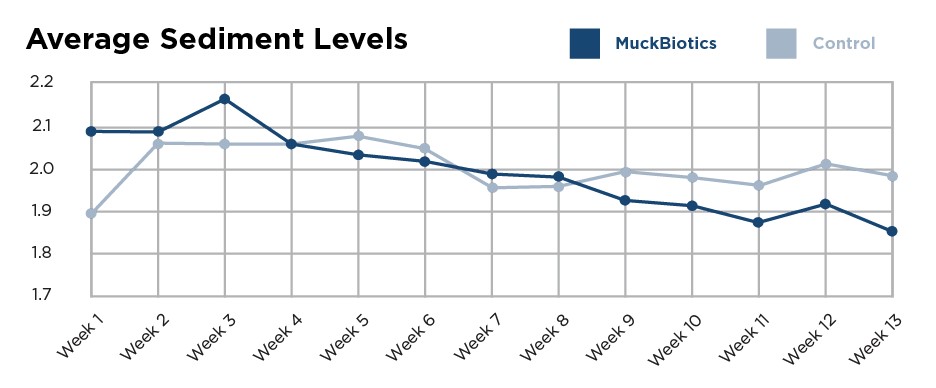
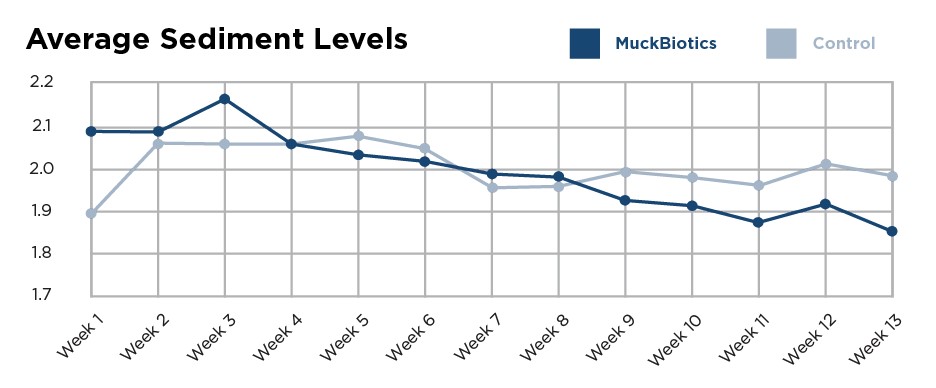
We would not recommend a product without solid research behind it. MuckBiotics has been evaluated through laboratory studies using freshwater replica tanks designed to mimic real-world water body conditions, including natural water movement and clay/sand sediment layers. The study used complete metagenomic DNA analysis of sediment microbiota, full sediment nutrient and water quality assessments, and quantitative sediment volume measurements. The results showed measurable reductions in organic matter and key nutrients in the muck layer in treated tanks compared to controls. The research was conducted using the Illumina NovaSeq6000 platform for DNA analysis, which is the same sequencing technology used in advanced environmental and clinical research. This level of scientific rigor is uncommon in the biological lake treatment space, and it is one of the reasons we are comfortable recommending this product to our customers. Natural Lake Biosciences calls their formulation the Diversiform Blend. It is a broad-spectrum combination of bacterial cultures selected specifically for their ability to consume large volumes of organics and uptake problematic nutrients like phosphorus and nitrogen. Every component in the tablet has been chosen for performance in aquatic sediment environments.
- Laboratory evaluation conducted in freshwater replica tanks mimicking real conditions
- Complete metagenomic DNA analysis using Illumina NovaSeq6000
- Measurable sediment volume reduction and nutrient removal in treated tanks
- Diversiform Blend formulation optimized for organic matter digestion
- Peer-reviewed research paper available from Natural Lake Biosciences
How We Use MuckBiotics in Our Management Programs
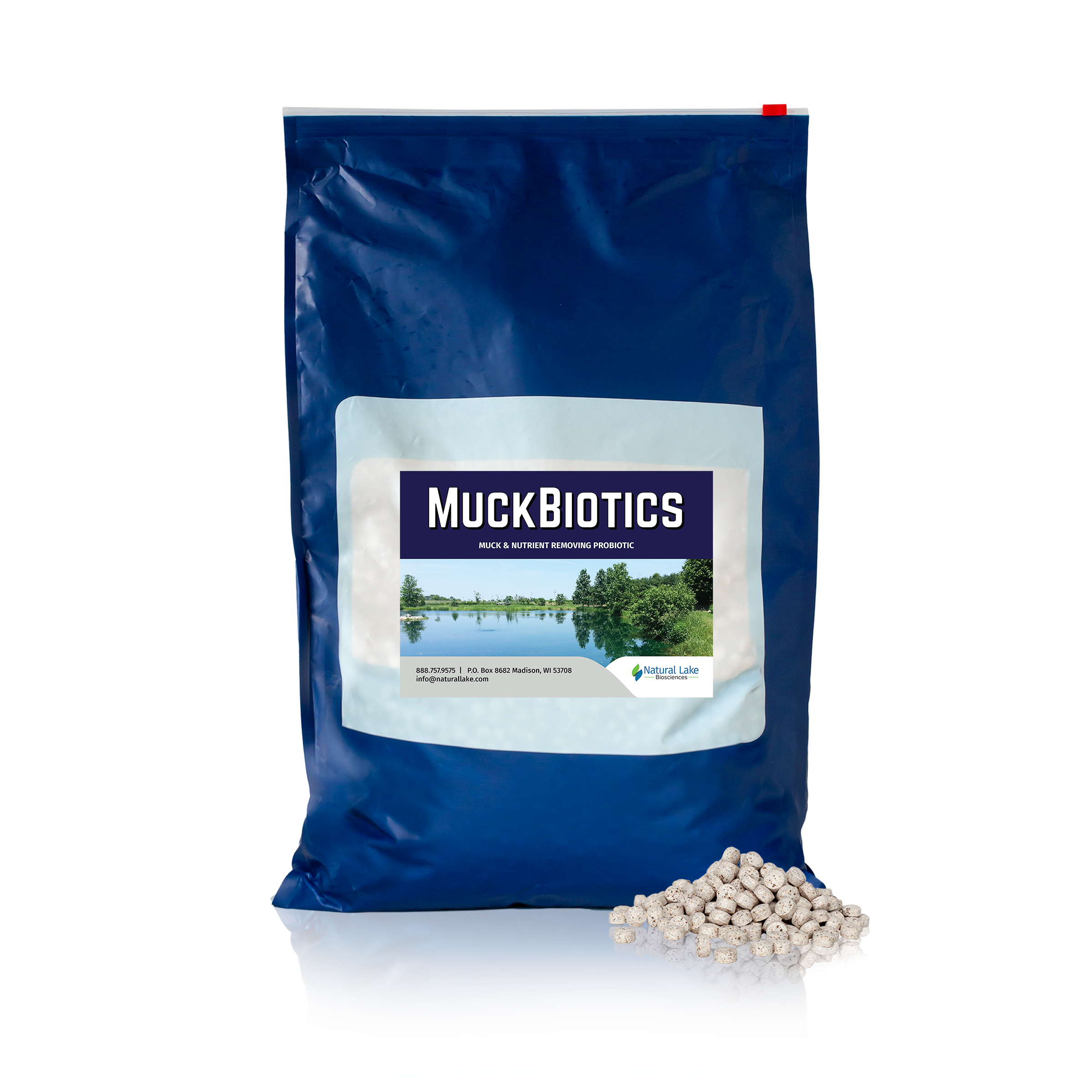
MuckBiotics is one of the tools we recommend as part of a comprehensive, data-driven lake management strategy. It pairs naturally with the real-time monitoring data our customers already collect through the LakeTech platform. When our sensors detect declining dissolved oxygen at the bottom, rising nutrient levels, or increasing turbidity trends, biological sediment treatment is often part of the management response. This is one of our two most common treatment recommendations alongside aeration. For lakes and ponds where muck accumulation is the primary concern, MuckBiotics addresses the root cause rather than just managing symptoms. For sites with active algae issues driven by internal nutrient loading, combining MuckBiotics with monitoring data gives managers a clear way to measure the impact of treatment over time. We carry MuckBiotics in our shop in both 30-pound bags and 10-pound pails. Dosage rates depend on the treatment goal. For targeted muck reduction, Natural Lake Biosciences recommends 20 to 50 pounds per acre per month. For ongoing maintenance and prevention, 10 to 25 pounds per acre per month is typical. The tablets can be broadcast by hand or with a spreader, and they work in all weather conditions.
- Pairs with LakeTech real-time monitoring for data-driven treatment decisions
- Available in our shop: 30-pound bag ($360) and 10-pound pail ($130)
- Targeted muck reduction: 20 to 50 lbs per acre, once per month
- Maintenance and prevention: 10 to 25 lbs per acre, once per month
- Applied by hand or with a spreader in any weather
- Do not mix directly with algaecides or herbicides
Is MuckBiotics Right for Your Lake?
If your lake or pond has soft, dark sediment along the shoreline or in shallow coves, if you notice a sulfur smell when wading or anchoring, or if you are dealing with recurring algae issues despite controlling external nutrient sources, there is a good chance muck is part of the problem. MuckBiotics is designed for exactly these conditions. The product works well in lakes, ponds, reservoirs, golf course water features, retention ponds, decorative ponds, and aquaculture systems. It excels at targeting specific problem areas like shorelines and coves where organic matter accumulates fastest, but it can also be applied across an entire water body for system-wide treatment. Not sure if muck is your primary issue? Reach out to our team. We can help you evaluate your site conditions, review your monitoring data if you are a LakeTech platform customer, and recommend the right combination of treatment and technology for your situation.