
Local conditions matter more than broad forecasts
In an era of unpredictable climate patterns and extreme weather events, understanding local conditions at a lake has become increasingly important. Recent heat waves across the United States have broken long-standing temperature records, highlighting the need for accurate, real-time weather data at the water body itself.
The unpredictability of heat
Recent events cited in the source article illustrate how volatile weather can be. Las Vegas broke an 86-year-old heat record by reaching 120°F (48.9°C), and Palm Springs reached 122°F (50°C).
Those extremes underscore a point made in the article: historical averages are becoming less reliable predictors of future conditions, and climate scientists continue working to forecast temperature extremes accurately.
Local variations and lake microclimates
General weather forecasts often miss the unique microclimate of an individual lake. Elevation, surrounding landscape, and water body size can significantly influence local weather conditions. Real-time monitoring at the site provides insights that regional forecasts cannot.
How extreme weather affects lake ecosystems
Extreme weather affects more than recreation and operations. It has direct implications for lake ecosystems.
- Water temperature: rapid air-temperature changes can alter water temperature and affect fish and aquatic plants.
- Evaporation: higher temperatures increase evaporation and can lower water levels.
- Algal blooms: warmer water can promote algal growth that may harm water quality and aquatic life.
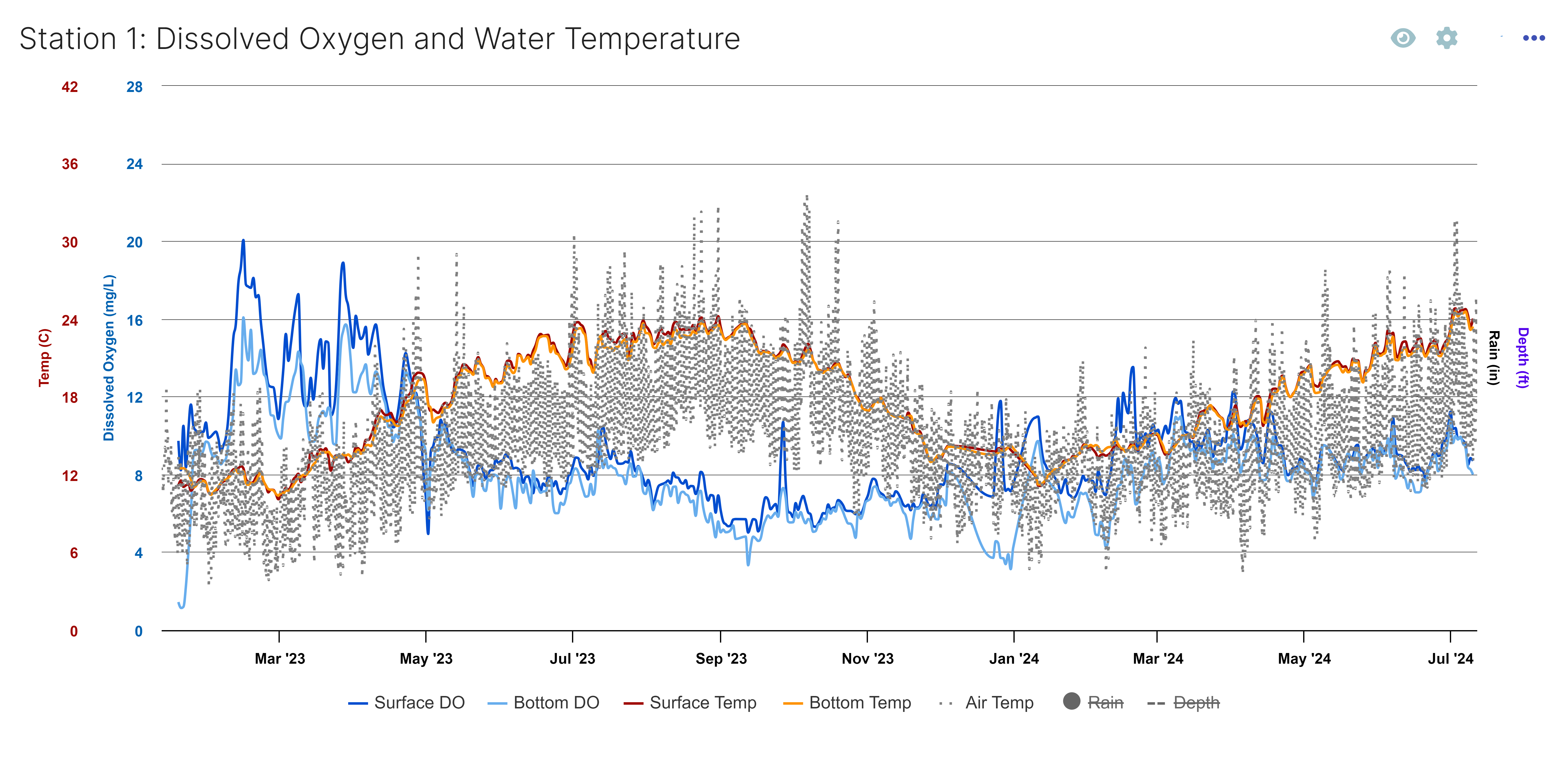
- Stratification: temperature shifts can change water layering, affecting nutrient distribution and oxygen levels.
Beyond temperature: a holistic monitoring approach
Temperature is important, but comprehensive weather monitoring provides a fuller picture of a lake's environment.
- Wind speed and direction affect water mixing and oxygenation.
- Rainfall influences water levels, runoff, and potential pollutant influx.
- Solar radiation influences water temperature and photosynthesis rates.
- Humidity affects evaporation rates and overall water balance.
Real-time data for better lake decisions
LakeTech's real-time weather monitoring services are described in the source article as providing immediate insights, historical context, predictive support, and a stronger basis for management decisions ranging from recreation planning to conservation measures.
When broad climate models struggle to predict local conditions accurately, an on-site weather station can become a practical necessity for understanding, protecting, and managing a lake in uncertain conditions.