Understanding Lake Treatment Categories
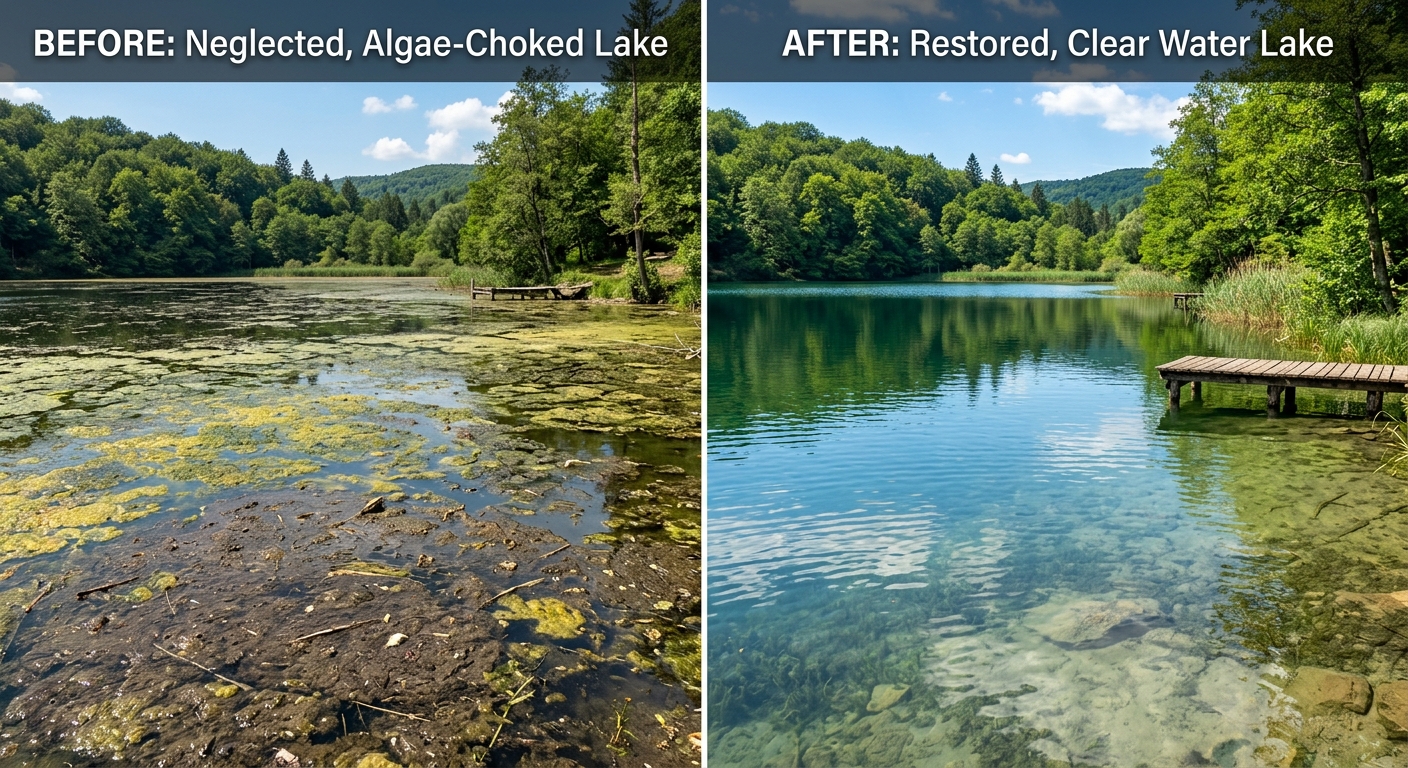
Lake and pond treatment products work in fundamentally different ways depending on what they target. Probiotics introduce beneficial bacteria that break down organic matter and reduce nutrient loads naturally. Phosphorus binders lock up excess phosphorus in the water column, while algae control products address existing blooms directly.
Choosing the right product starts with understanding what is driving your water quality issues. A lake with heavy muck accumulation needs a different approach than one dealing with recurring algae blooms caused by phosphorus runoff. In many cases, a staged treatment plan that combines multiple product types delivers the most lasting improvement.
- Probiotics and beneficial bacteria reduce organic muck and consume excess nutrients over time
- Phosphorus binders rapidly lower dissolved phosphorus levels that fuel algae growth
- Algae control products address active blooms and prevent new growth from taking hold
Matching Products to Your Water Conditions
Before purchasing any treatment product, it helps to know your baseline water conditions. A simple water quality test that measures phosphorus, dissolved oxygen, and organic sediment depth will point you toward the right product category.
Water temperature and lake depth also influence product selection. Probiotics work best in warmer water when microbial activity is highest, typically from late spring through early fall. Phosphorus binders can be applied year-round, and algae control timing depends on whether you are preventing blooms or responding to an active outbreak.
- Test phosphorus, dissolved oxygen, and sediment depth before selecting a product
- Consider seasonal timing: probiotics perform best in water above 50 degrees F (10 degrees C)
- Factor in lake size, depth, and watershed inputs when calculating application rates
Building a Long-Term Treatment Plan
The most effective lake management programs layer multiple treatments across the season. A common approach starts with a phosphorus binder application in early spring to cut off nutrient supply before algae season, followed by regular probiotic dosing through summer to maintain water clarity and reduce muck.
Results are rarely instant. Probiotic treatments typically show measurable muck reduction after one to two full seasons, while phosphorus binders can clear water within days of application. Setting realistic expectations and committing to a multi-season plan is the key to lasting improvement.
- Layer treatments seasonally: binders in spring, probiotics through summer
- Expect visible probiotic results after one to two full treatment seasons
- Re-test water quality annually to track progress and adjust your plan