
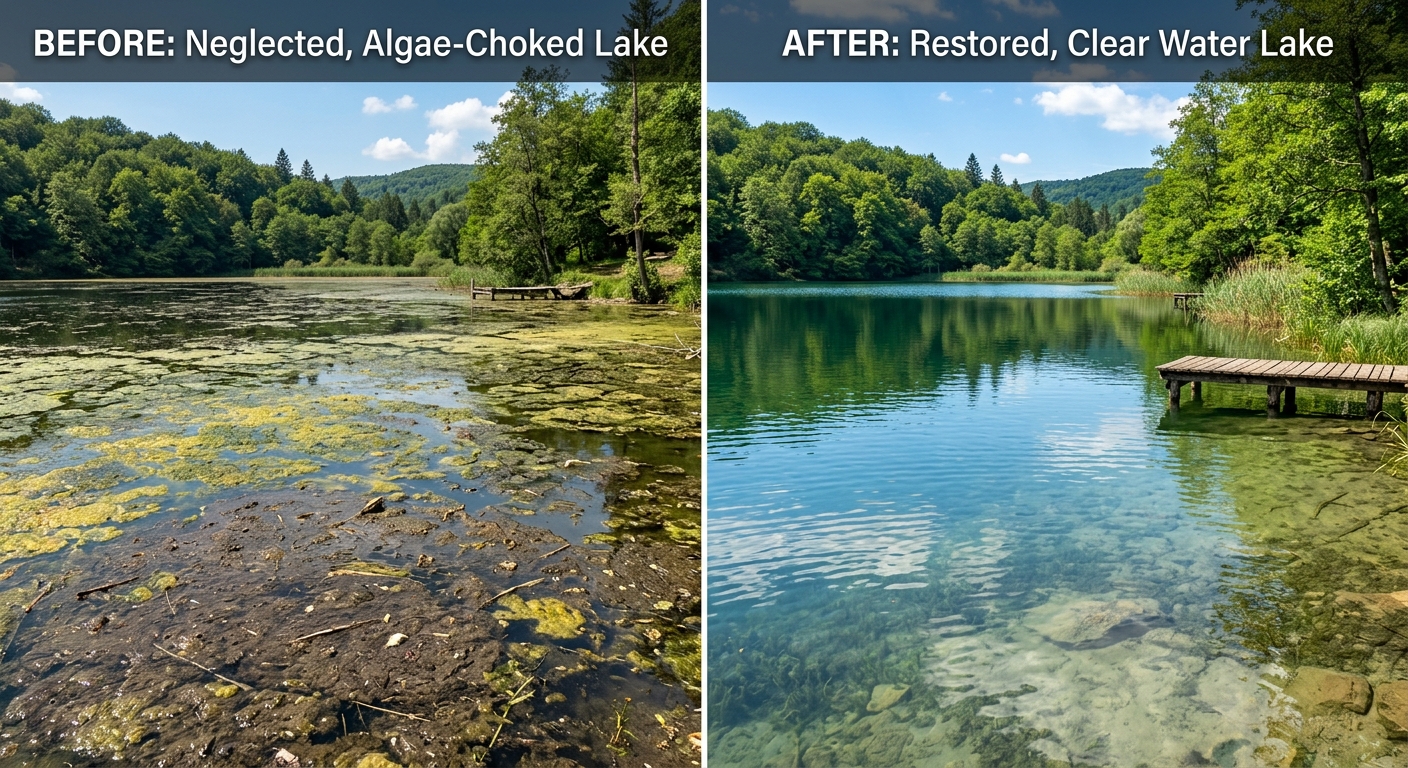
Types of Algae Control Products
Algae control products fall into two broad categories: chemical treatments that kill existing algae and biological or nutrient-management approaches that prevent algae from growing in the first place. Chemical options include copper-based algaecides, sodium percarbonate, and hydrogen peroxide treatments.
Each product type has trade-offs. Copper-based algaecides are fast-acting but repeated use can build up copper levels in sediment. Peroxide-based products break down cleanly. Biological products work more slowly but address root causes.
- Copper-based algaecides provide fast knockdown of active blooms across most algae types
- Peroxide-based treatments break down cleanly and leave no chemical residue in the lake
- Biological approaches, probiotics and binders, prevent algae by removing the nutrients it needs
Identifying Your Algae Problem
Not all algae problems are the same, and correct identification matters for choosing the right product. Green planktonic algae turns water to a uniform green color. Filamentous algae forms stringy mats along the surface and shoreline. Cyanobacteria (blue-green algae) can produce toxins and typically appears as thick, paint-like scums.
Cyanobacteria blooms deserve special attention because of their potential health risks. If you suspect a cyanobacteria bloom, confirm the identification before choosing a treatment approach. Some algaecides can cause cyanobacteria cells to rupture and release toxins.
- Green planktonic algae responds well to most chemical and biological treatments
- Filamentous algae often requires direct-contact treatment at the surface or shoreline
- Cyanobacteria blooms may need specialized products to avoid releasing toxins during treatment
Building a Preventive Algae Management Plan
Reactive algae treatment, waiting for a bloom and then killing it, is a losing strategy if the underlying nutrient problem is not addressed. Every bloom that dies releases its stored nutrients back into the water, setting the stage for the next bloom.
A typical preventive plan starts with a phosphorus binder application in early spring, followed by regular probiotic treatments through summer. If a bloom breaks through despite prevention, a targeted algaecide application handles the immediate problem while the preventive products continue working.
- Apply phosphorus binders in early spring to cut off the nutrient supply before algae season
- Maintain probiotic treatments through summer to keep nutrient levels low
- Use algaecides as a targeted response, not as the sole management strategy