
The Band of Water Nothing Can Reach
Ask a lake manager where their problem is and they will usually point at the edge. Not the middle, where the water is deep and mostly behaves itself, but the shallow margin along the bank, around the docks, at the head of a cove. That is where the weeds are thickest, where the muck is softest, and where residents actually stand when they decide the lake looks bad.
It is also the hardest part of a waterbody to put equipment on. Run a work boat in and it grounds out or fouls its prop in the growth it came to remove. Bring a truck or a small excavator down the bank and you are into soft saturated ground, which usually means matting, a haul road, or a machine reaching from a distance it was not built to reach from. Neither approach is wrong. They just both run out of room in the same place, and the gap between where one stops and the other stops is exactly the strip that needed the work.
There is a reason the problem concentrates there. The shallow margin is the part of the lake where light still reaches the bottom, so it is where rooted aquatic plants can grow in the first place. It is also low energy water, so fine organic material settles out and stays. Depth, light, and deposition all line up in the same band, and that band is the one your equipment cannot get to.
- Too shallow to float a work boat, too soft to carry a truck or an excavator
- Light reaches the bottom there, so it is where rooted plants can grow
- Low energy water, so fine organic sediment settles and stays
- Bank access often means matting, a haul road, or a long reach from dry ground
- On a lagoon or an HOA pond, it is also the part everyone can see
What a Truxor Actually Is
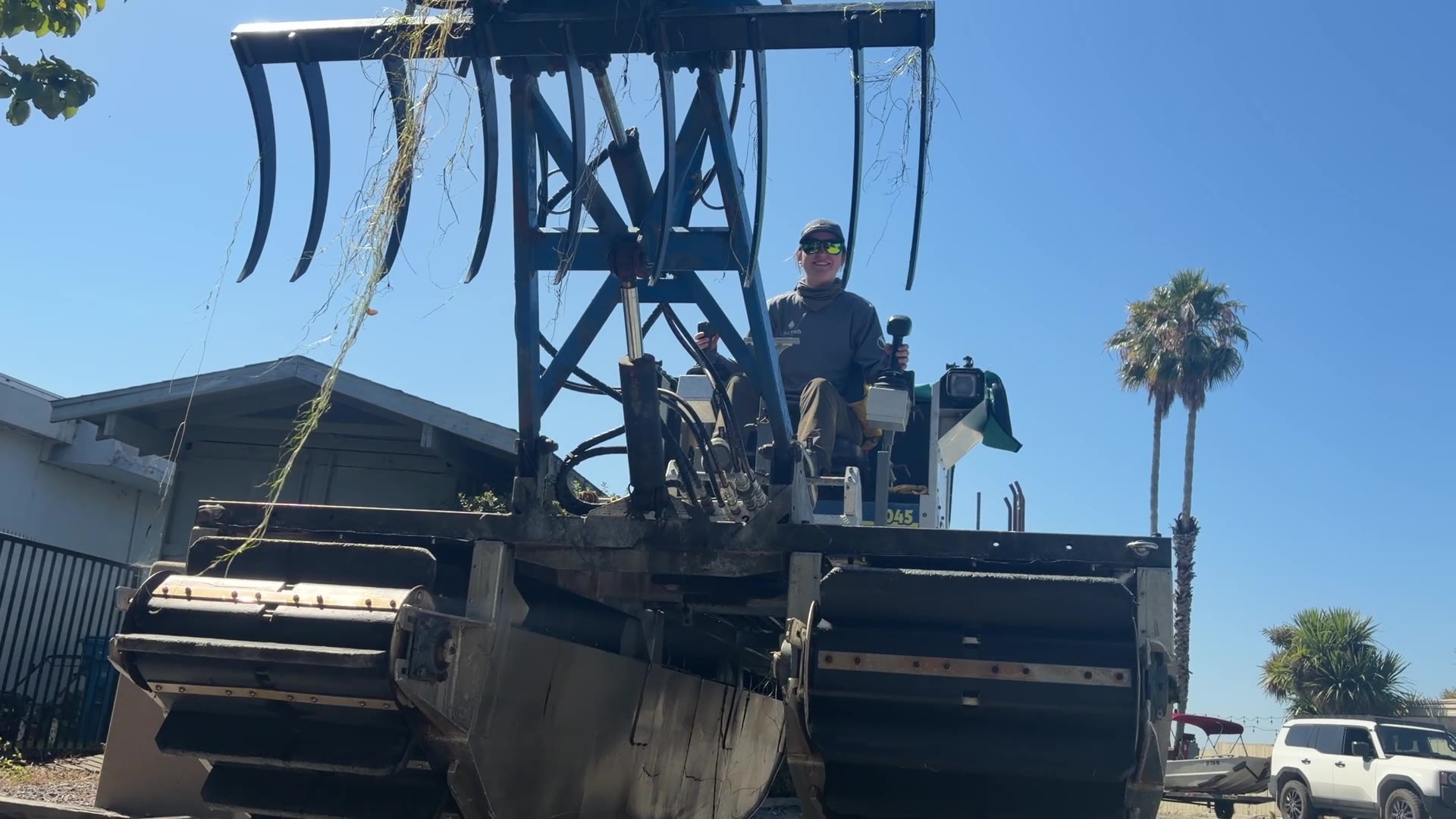
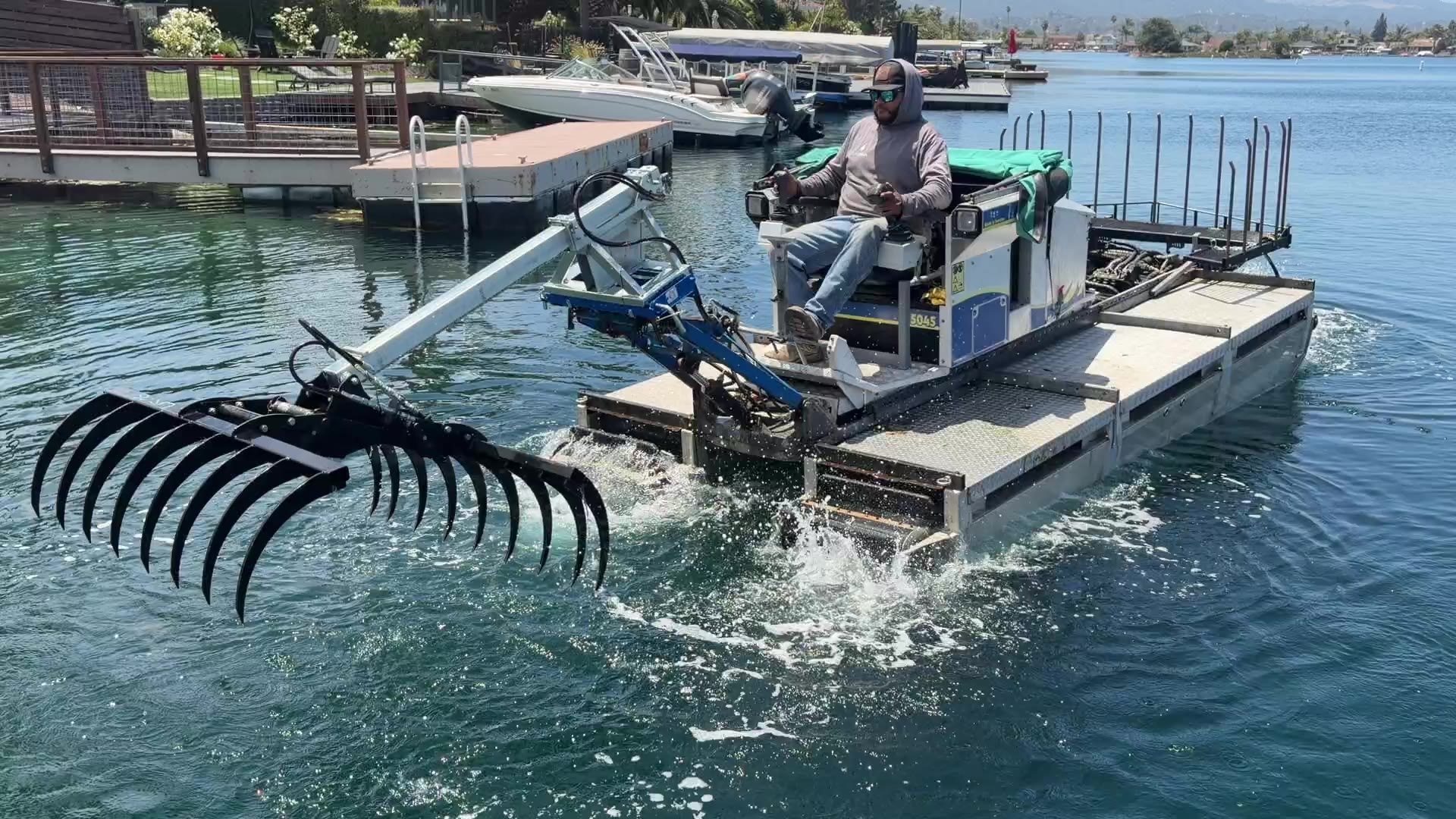
A Truxor is an amphibious lake management machine. That word gets used loosely, so it is worth being specific about what it means here. It is not a boat with an arm bolted to it, and it is not a compact excavator someone floated on pontoons. It is a purpose built work platform that runs on wide tracked pontoons, which float it when there is water under it and carry it when there is not.
The practical consequence is that it does not have to choose. The same machine can drive down a bank, cross saturated ground that would swallow a wheeled vehicle, float out into a foot of water, work there, and come back up the bank under its own power. It does not need a dock, a hoist, or a deep enough channel to get to the job. On the sites where we use it most, it enters and exits at a boat ramp or a graded bank and never touches anything else.
For a scope of work, the description we use is this: a low impact, amphibious work platform used for aquatic vegetation harvesting, invasive plant removal, shoreline maintenance, sediment management, and other lake and wetland maintenance activities, capable of operating in shallow water and soft bottom areas that are difficult to access with conventional land based equipment. That sentence is doing real work. Every clause in it is describing somewhere a normal machine cannot go.
- An amphibious work platform, not a boat and not a land machine
- Tracked pontoons that float it in water and carry it across soft ground
- Built for shallow water, wetlands, shorelines, and soft sediment
- Enters and exits at a ramp or a graded bank, no dock or hoist required
- Reaches ground that is difficult to access with conventional land based equipment
The Attachments Are the Actual Product
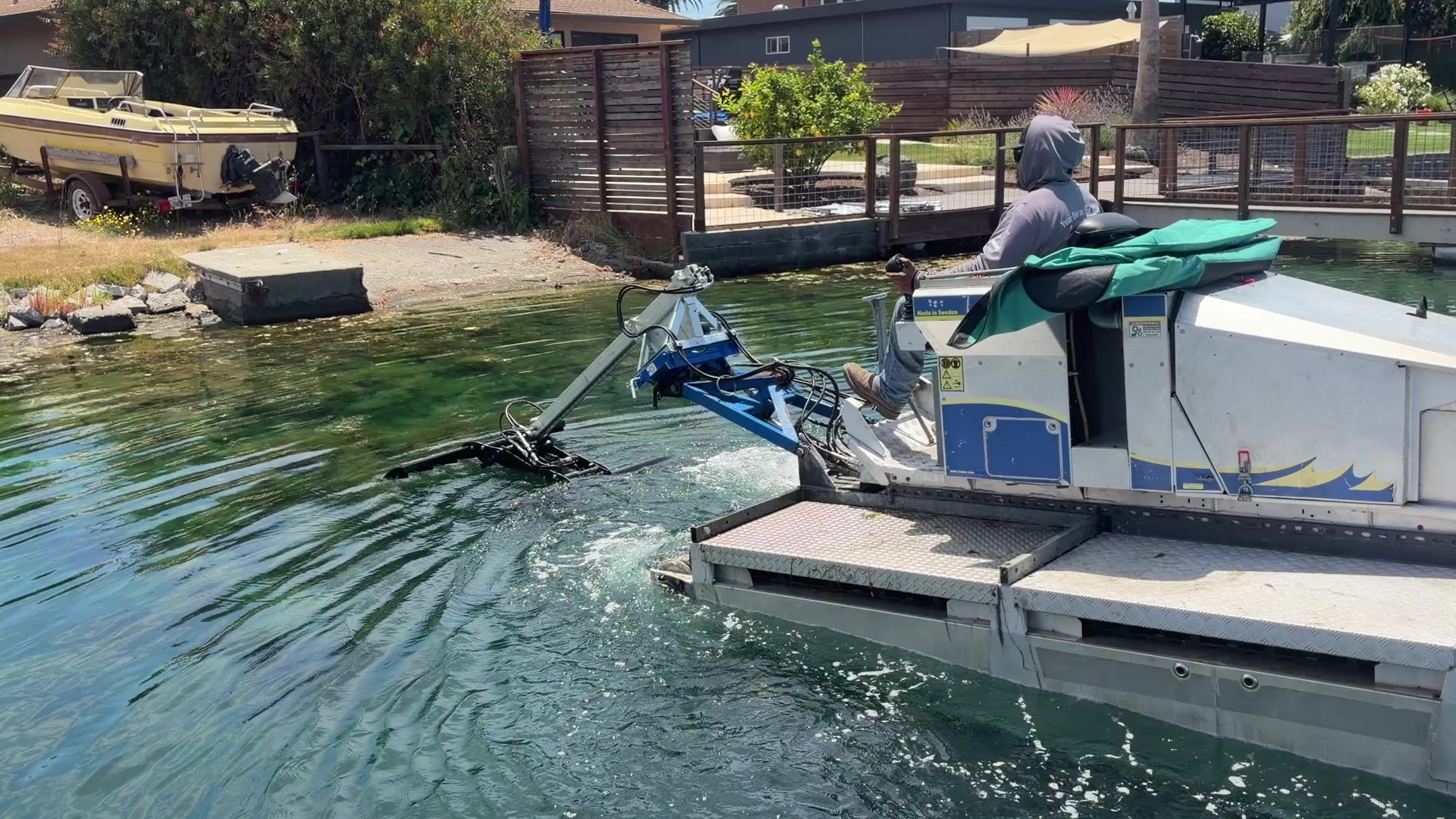
The machine is the delivery method. What makes it useful across a whole season is that the tool on the front changes. A cutting head handles standing submerged vegetation. A rake collects what has been cut, along with the mats, root balls, and debris that a cutter alone leaves behind. Other tools address sediment and muck, shoreline work, and support for dredging operations.
That matters more than it sounds. Most of the cost of in water work is not the hour the tool spends in the water, it is everything around it: getting a machine to the site, getting it in, getting it out, and getting it back again for the next task. When one platform can cut in the morning, switch to a rake and collect in the afternoon, and handle a shoreline detail before it leaves, several separate mobilizations collapse into one.
It also means the plan can change mid job without a phone call to a different contractor. Shallow water work rarely looks exactly like it did during the site walk. Water levels move, growth is heavier in one arm than expected, and something is always under the surface that nobody knew about. Being able to change the tool rather than the schedule is worth a great deal on that kind of site.
- Aquatic vegetation harvesting
- Invasive plant removal
- Shoreline maintenance
- Sediment and muck removal
- Dredging support
Cutting Is Not the Same as Removing
This is the part worth understanding before you compare quotes, because it is the difference between two jobs that can look identical on the day and behave very differently over the following years.
Plant material that is cut and left in the lake does not leave the lake. It sinks, and it decomposes where it settles. That decomposition consumes oxygen, which matters most in exactly the warm still shallows where the material tends to collect. It also returns the nutrients that were locked up in that plant tissue back into the water and the sediment, where they are available to grow the next round. A meaningful share of what people call muck is simply the accumulated remains of previous seasons of growth. Cut without collecting, and you have rearranged the problem rather than reduced it.
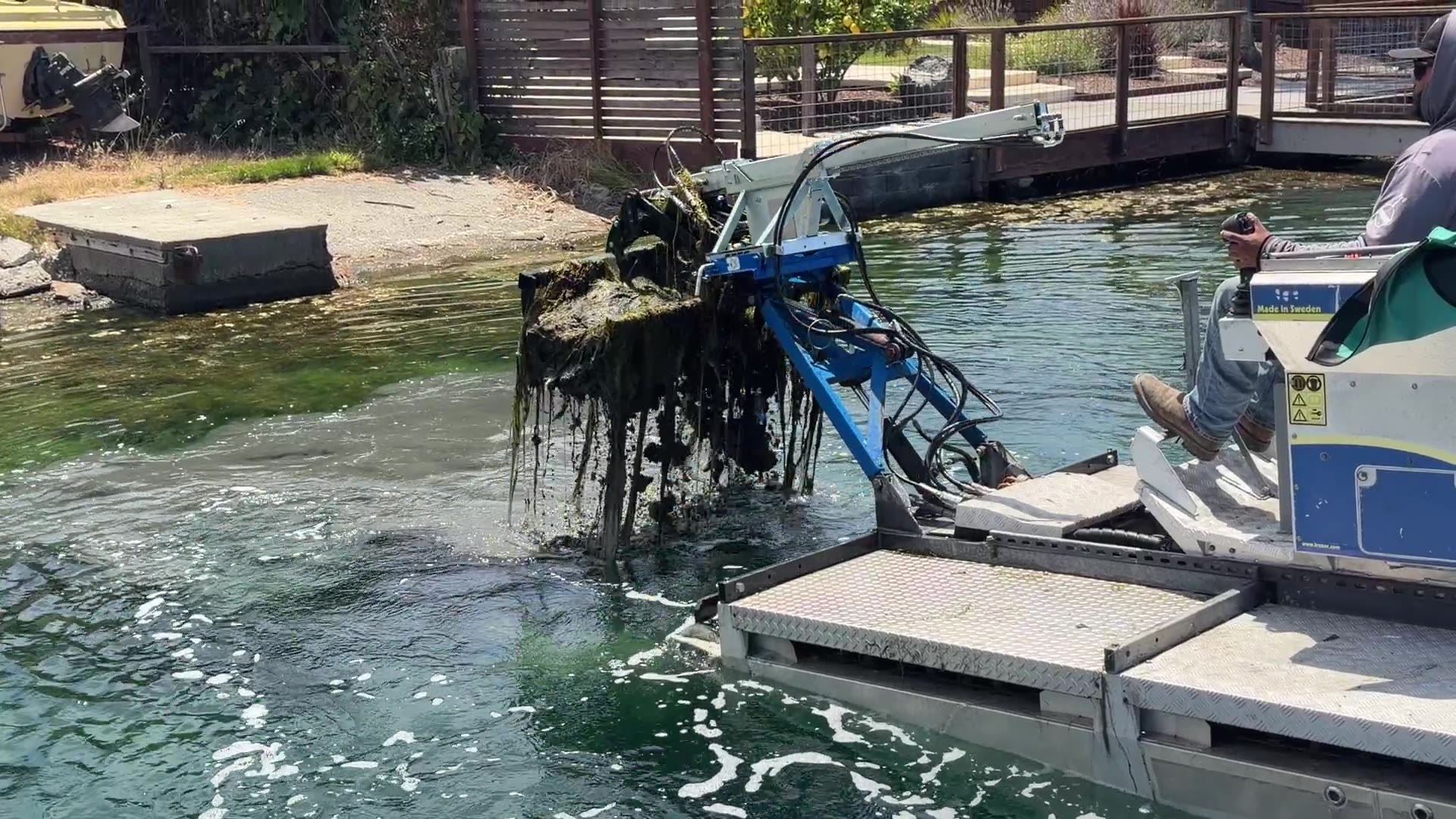
Harvesting is different in one specific and important way: the material physically leaves. When a rake lifts a load of vegetation out of the water and it comes ashore, the biomass goes with it and so do the nutrients bound up inside it. That is why mechanical removal belongs in a nutrient management conversation and not only an aesthetics one. It is also why the unglamorous half of the job, staging the material on the bank and hauling it away, is not an afterthought. It is the half that makes the rest count.
- Material cut and left in place decomposes in the water
- Decomposition consumes oxygen in the shallows where the material settles
- Nutrients released from that tissue are available to grow the next round
- Accumulated organic sediment is partly previous seasons of growth
- Harvesting exports the biomass, and the nutrients inside it, off the waterbody
- Where the material goes afterward is part of the job, not a detail
What a Job Looks Like Around the Bay
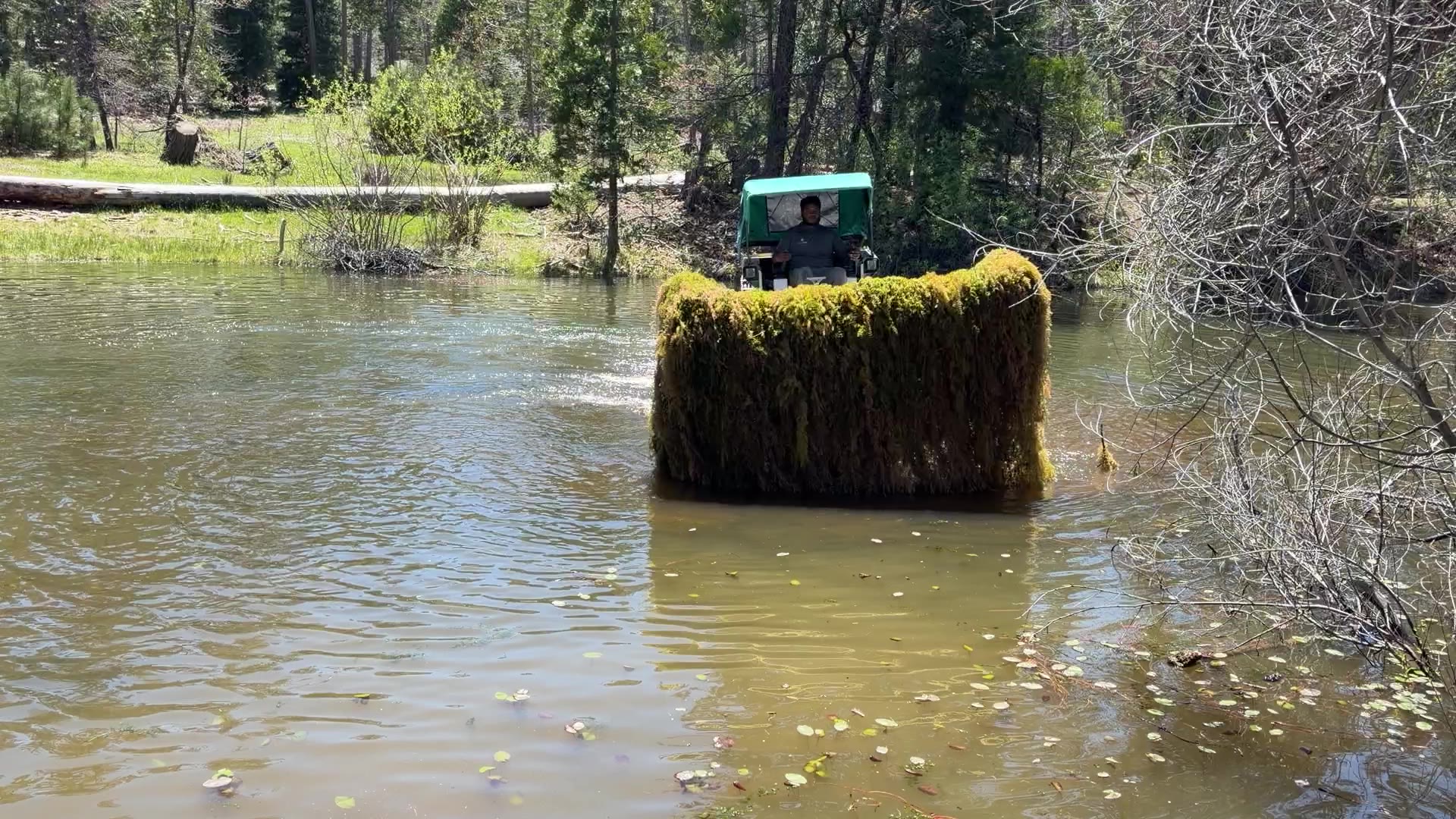
We run this machine on Bay Area lagoon communities, HOA and community association ponds, marina and shoreline work, and smaller ponds where the bank simply will not carry equipment. The sites vary a lot. The planning questions do not.
The first is access. The machine has to get in and out somewhere, which means a ramp, a graded bank, or an entry point we can use without tearing up the ground getting to it. The second is what happens to the material. Everything that comes out of the water has to go somewhere on land first, so there needs to be a place to stage it and a plan to move it. The third is permitting, which depends on the waterbody, what is growing in it, and which agencies have a say. Some jobs are routine. Others are not, and it is better to find that out during planning than during mobilization. The fourth is timing, since growth season, water level, and seasonal restrictions all move the right window around.
The last thing worth saying plainly is what mechanical removal does and does not do. It manages a condition. It takes out what is there now, and it takes the nutrients in that material with it, which is genuinely useful. It does not permanently end regrowth, because the conditions that grew the plants in the first place, light in the shallows, nutrients in the sediment, are still there the following spring. On most waters this is one tool inside a longer plan rather than a single visit that settles the question. Anyone who tells you otherwise is selling you a day of work and calling it a cure.
- An access point: a ramp, a graded bank, or somewhere the machine can enter
- Somewhere to stage the material that comes ashore, and a way to move it
- Permitting appropriate to the waterbody and the agencies involved
- Timing around growth season, water level, and seasonal restrictions
- A realistic scope: mechanical work manages a condition, it does not end regrowth