
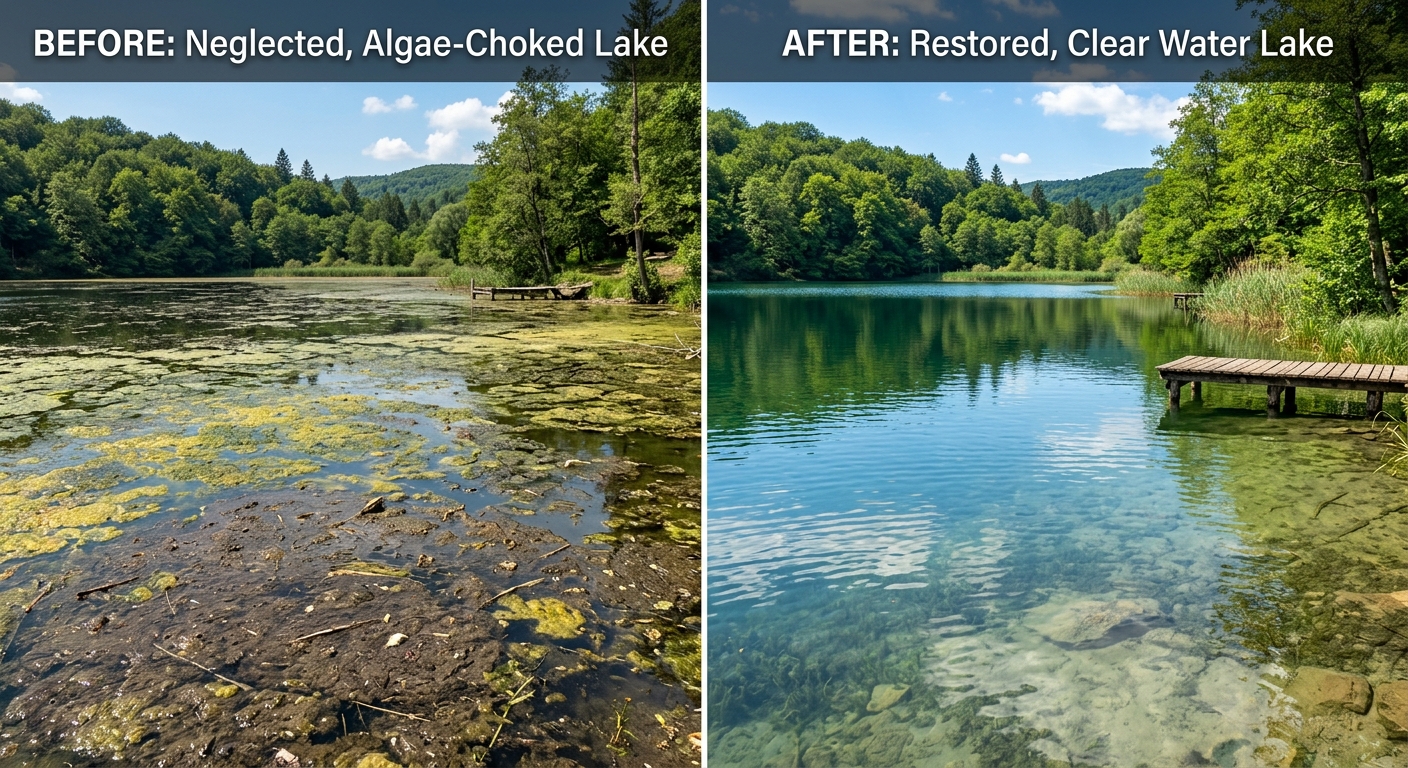
What counts as a natural approach to muck removal
Natural muck removal typically refers to methods that work with biological and physical processes rather than mechanical excavation. Biological products like MuckBiotics introduce beneficial bacteria that help break down organic material. Aeration improves oxygen conditions that support natural biological activity. Debris management reduces the fresh inputs that build the muck layer.
These methods are most effective when the pond's muck is primarily organic in nature and when the owner is willing to commit to a multi-season program rather than expecting a single treatment to restore the bottom.
- Biological treatment uses bacteria to break down organic material naturally.
- Aeration supports the oxygen conditions that biological activity requires.
- Debris control prevents the muck layer from growing faster than treatment can reduce it.
When natural approaches have limits
A primarily natural program is well-suited for ponds with moderate organic buildup and manageable inputs. When a pond has very deep accumulated sediment, a significant inorganic component, or inputs that far outpace biological management capacity, a natural-only program may not achieve the owner's goals without additional intervention.
In those cases, the natural program may still be valuable as maintenance but physical removal of the worst zones may be a necessary component of the restoration plan.
- Extreme sediment depth may require physical removal as the starting point.
- High inorganic sediment content reduces the effectiveness of biological treatment.
- Natural programs are best suited for maintenance after initial remediation.