
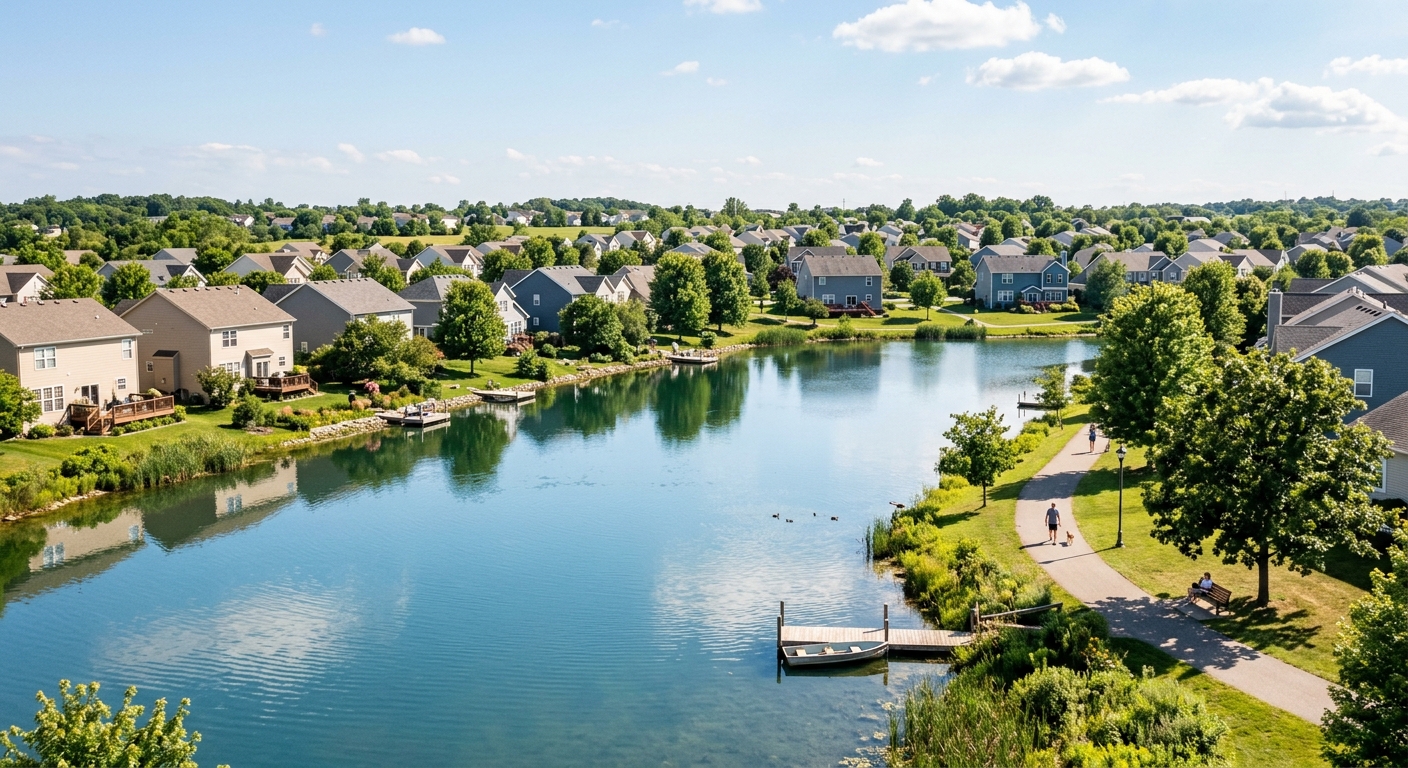
The inputs that build pond muck
Pond muck accumulates when more organic material settles to the bottom than natural decomposition processes can handle. The primary sources are fallen leaves, grass clippings and lawn debris, aquatic plant and algae die-off, bird and fish waste, and nutrient-rich runoff from the surrounding watershed.
Every pond has some natural organic loading, but ponds surrounded by trees, manicured lawns, active agriculture, or heavy waterfowl use tend to accumulate muck much faster than ponds with minimal inputs.
- Tree canopy over ponds is one of the highest contributors to annual organic input.
- Lawn fertilizer runoff accelerates algae growth, which adds to the muck layer when it dies.
- Waterfowl populations can contribute significant organic waste to smaller ponds.
Prevention strategies that actually work
No prevention strategy eliminates muck entirely, but the combination of input reduction and active management can significantly slow accumulation rates. Installing leaf netting over ponds during fall, establishing native shoreline buffer plantings that slow runoff and filter nutrients, and maintaining a biological treatment program that keeps decomposition active are all practical approaches.
The goal of prevention is to reduce how much product, dredging, or major remediation work is needed in the future by keeping the annual organic balance closer to neutral.
- Leaf netting during fall reduces the single largest annual organic input for most ponds.
- Native shoreline buffers filter nutrients and reduce direct debris input.
- Consistent biological treatment maintains decomposition activity and slows net accumulation.