
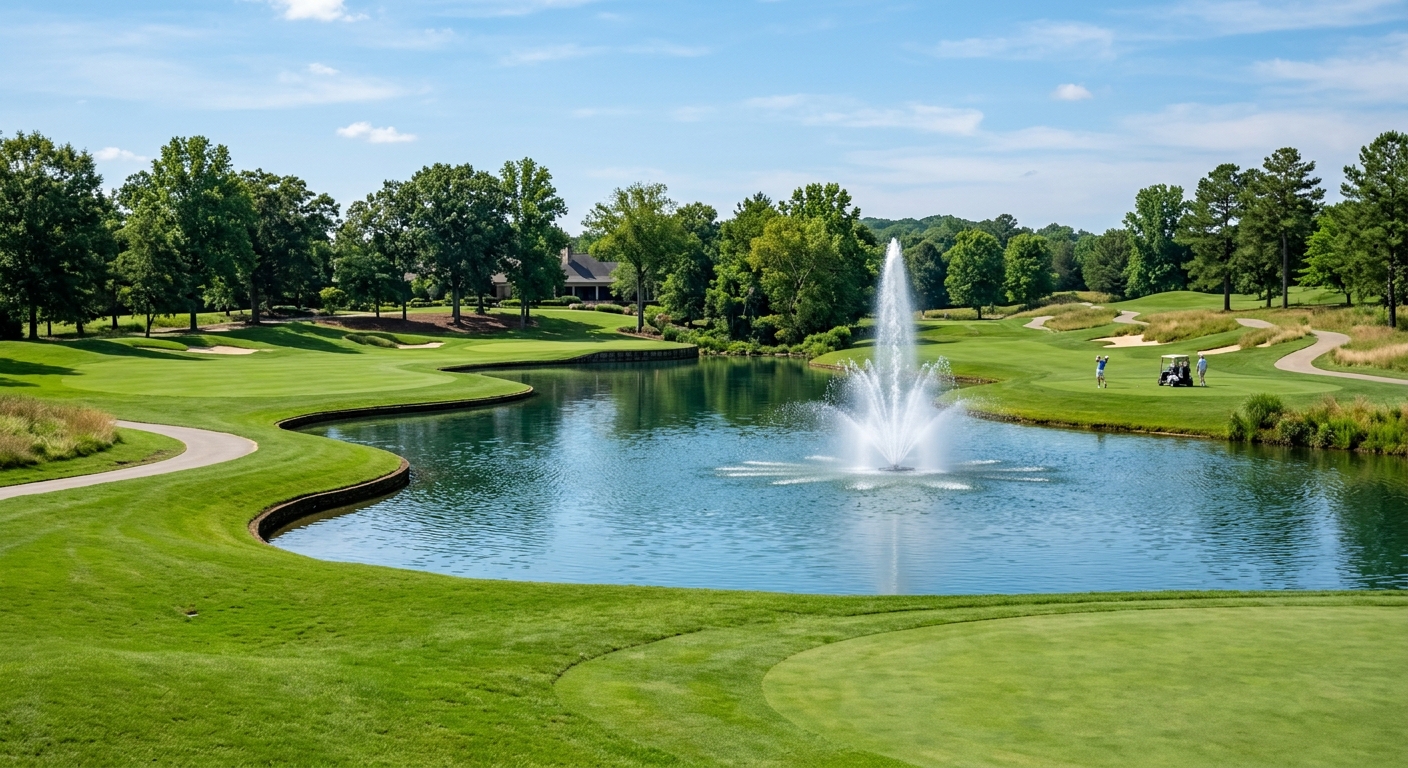
How lake fountains work
Lake fountains use a submersible pump to draw water from just below the surface and propel it into the air through a nozzle assembly. As the water breaks into droplets and falls back to the surface, it absorbs oxygen from the atmosphere and releases dissolved gases like carbon dioxide and hydrogen sulfide.
The aeration benefit of a fountain is concentrated in the upper water column. Unlike diffused systems that push air to the bottom, fountains primarily improve oxygen levels in the top several feet. This makes them most effective in shallow ponds where the entire water column is within their mixing range.
- Submersible pumps typically range from 1/2 HP to 5 HP depending on pond size and desired spray height
- Spray patterns include V-shape, crown, geyser, and multi-tier designs, most units include interchangeable nozzles
- Effective aeration zone extends roughly 3-4 feet deep in typical installations
Sizing a fountain for your lake or pond
A common guideline is one horsepower of fountain per surface acre, but this varies based on water depth and the primary goal. If visual display is the priority, you may choose a taller pattern with a smaller footprint. If aeration is the priority, a wider, lower spray pattern moves more water volume per hour.
Larger lakes often use multiple fountains spaced across the surface to provide even coverage. For waterbodies over three acres, consider whether a diffused aeration system might deliver better results per dollar, especially if the lake has deep areas that a fountain cannot reach.
- 1/2 HP fountains suit ponds up to 1/4 acre; 1 HP covers roughly 1 acre of surface area
- Spray height is proportional to horsepower, a 1 HP unit typically reaches 8-12 feet, while 5 HP can reach 20+ feet
- Floating fountains should be anchored with at least three cables to prevent drift and keep the spray centered
Lighting, maintenance, and seasonal operation
LED lighting kits transform fountains into nighttime features. Most systems use color-changing submersible LED rings that mount directly to the fountain float. Lighting adds modest energy cost and requires periodic bulb or module replacement every few years.
Maintenance is straightforward: clean the intake screen monthly during algae season, inspect the power cord and connections at the start of each season, and remove the fountain before ice forms if you are in a freeze zone. Most quality fountain motors are oil-cooled and sealed, with expected lifespans of 5-10 years under normal operation.
- LED light kits are available in single-color and programmable RGB options, typically drawing 100-300 watts
- Remove and store the fountain before ice-up to prevent freeze damage to the pump and float
- Annual maintenance includes intake screen cleaning, cord inspection, and checking the mooring anchors