
The flocculation process step by step
When Metafloc is applied to a waterbody, the active ingredient reacts with fine particles and dissolved phosphorus in the water column. The reaction causes these particles to lose their surface charges, allowing them to attract and bind to each other rather than staying dispersed.
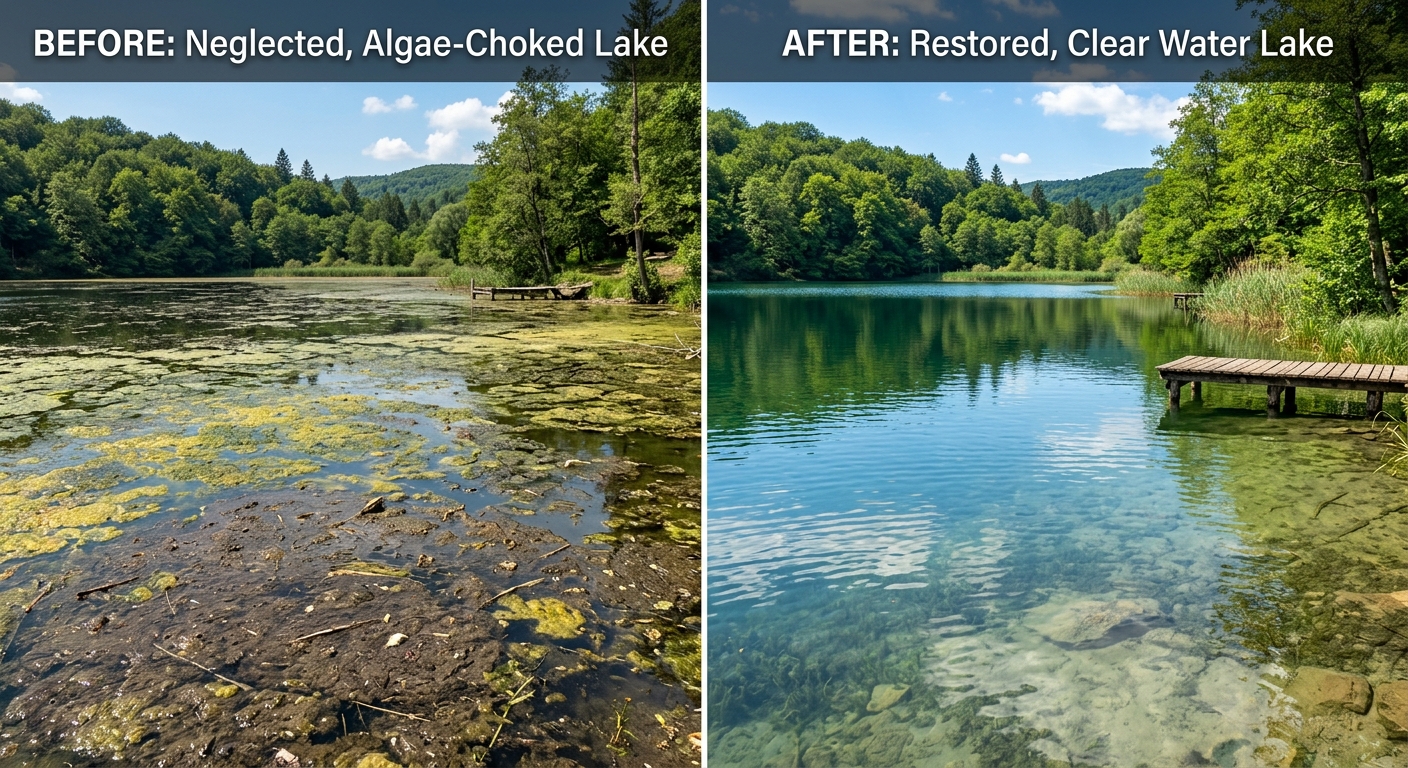
As the bound particles grow larger and heavier, they settle toward the pond bottom in visible floc. What remains in the water column is clearer and lower in dissolved phosphorus. The floc that settles to the bottom is chemically stable and does not readily release the bound phosphorus back into the water under most conditions.
- Surface charge neutralization causes fine particles to aggregate.
- Aggregated floc settles to the bottom, leaving clearer water above.
- Settled floc holds bound phosphorus in a stable form under normal pond conditions.
What affects how well Metafloc works
Water chemistry is the most important factor. pH, alkalinity, and the presence of certain competing ions all affect how efficiently the flocculation reaction proceeds. Applications in ponds with very low alkalinity or extreme pH may require adjustment or modified dosing.
The source and type of turbidity also matter. Metafloc is most effective against fine mineral particles and dissolved phosphorus. Fibrous organic material or active algae biomass may not settle as cleanly, which is why knowing what is causing turbidity before applying is important.
- pH and alkalinity significantly affect flocculation efficiency.
- Fine mineral particles and dissolved phosphorus respond best to Metafloc.
- Pre-application water chemistry assessment improves treatment outcomes.