
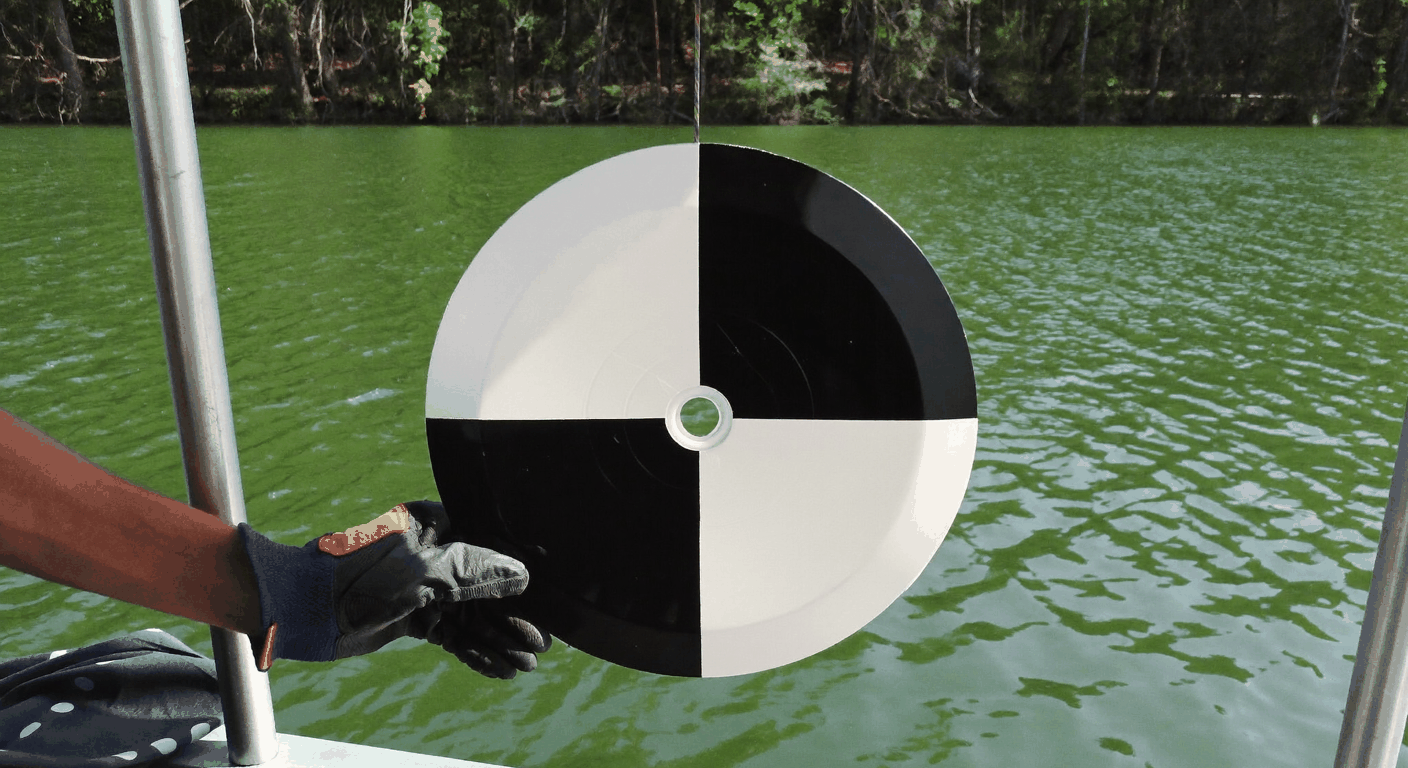
What types of turbidity Metafloc addresses best
Not all murky water responds equally to flocculant treatment. Metafloc is most effective against turbidity caused by fine suspended mineral particles, clay and silt, and by fine organic colloids that stay in suspension for extended periods. These particle types typically have surface charges that prevent them from naturally settling, and flocculants work by neutralizing those charges.
Turbidity from dense active algae blooms is more complicated. Flocculation can help settle algae cells, but active bloom management is typically needed in parallel. Brown tannin staining from organic leaching does not respond to flocculation.
- Clay and fine silt turbidity responds very well to Metafloc.
- Fine organic colloids that stay in suspension are also good targets for flocculation.
- Tannin staining requires different treatment: flocculation will not help.
What pond clarity improvement looks like in practice
Pond owners who treat chronic clay turbidity with Metafloc typically see remarkable clarity improvement within days. A pond that has been murky brown-gray for years can shift to visibly clear water that shows bottom features and depth for the first time in many seasons.
For recreational ponds where visibility into the water column matters for swimming, fishing, or aesthetics, this type of improvement can be transformative. LakeTech works through the clarity diagnosis carefully before recommending Metafloc so that the investment goes toward a problem it can actually solve.
- Clay turbidity ponds can see dramatic clarity improvement within days.
- Clarity improvement can be visually striking in ponds that have been chronically turbid.
- Confirming the turbidity source before treatment ensures investment in the right solution.