
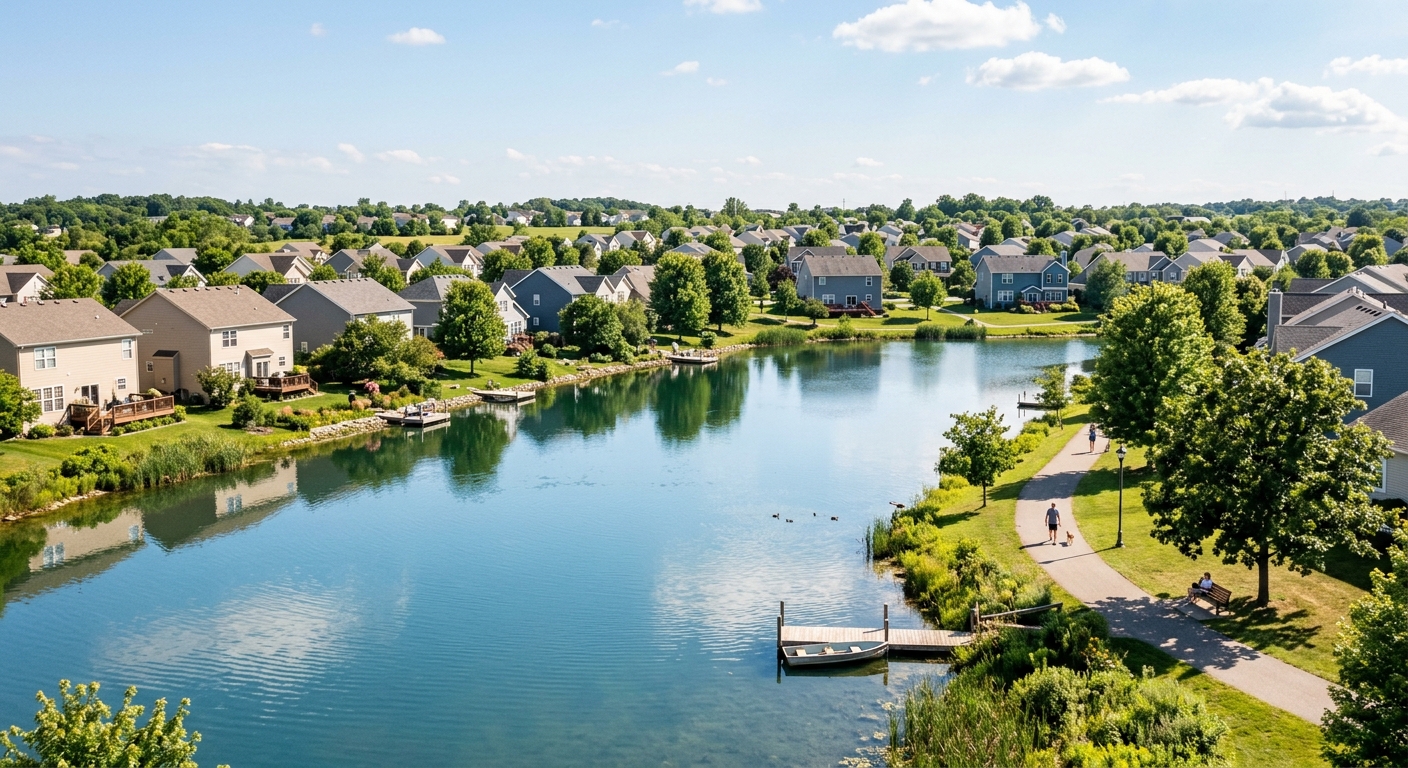
What HOA boards are responsible for with community ponds
Most HOAs inherit ponds and lakes as part of the original community development. The developer builds them, often as stormwater retention features required by the county, and then hands responsibility to the HOA once the community is established. At that point, the board is responsible for maintaining waterbodies that were engineered for drainage but are now expected to look like amenities.
That creates a real tension. Homeowners expect clean water, no algae, and pleasant shorelines. The board is working with a waterbody that was designed to collect runoff, trap sediment, and manage stormwater volume. Without active management, these ponds accumulate organic muck, develop algae blooms in warm months, and eventually become the most visible maintenance problem in the community.
Board members are typically volunteers without aquatic management training. They need a partner who can assess the waterbody's condition, recommend a realistic management plan, execute the work, and report back in terms the board and homeowners can understand.
- Most HOA ponds were originally built as stormwater features and later became community amenities.
- Boards inherit maintenance responsibility without specialized knowledge or equipment.
- Homeowner expectations for water appearance often exceed what an unmanaged retention pond can deliver.
Common problems HOA ponds face
The most frequent complaints board members hear are about algae, odor, and shoreline erosion. Algae blooms appear when nutrient levels, particularly phosphorus and nitrogen from lawn fertilizer, pet waste, and organic debris, build up in the water. The blooms look bad, and some types can be harmful to pets and children who come into contact with the water.
Organic muck accumulation is a slower problem but harder to reverse. Over years, leaves, grass clippings, and dead algae settle to the bottom and decompose into a soft sludge layer. This reduces pond depth, worsens odor, and creates conditions that feed more algae growth. By the time residents start noticing the problem, the muck layer may be several feet deep.
Shoreline erosion is the third common issue. Without stabilized banks, wave action, runoff, and foot traffic gradually wear away the edges. Exposed soil washes into the pond, adding sediment and nutrients. Some communities spend thousands on riprap or retaining walls before realizing that managing the root causes, runoff control, buffer plantings, and access management, is more effective long term.
- Algae blooms driven by nutrient loading from lawn care, pet waste, and organic debris in the watershed.
- Organic muck accumulation that reduces depth, worsens odor, and feeds future algae growth.
- Shoreline erosion caused by runoff, wave action, and unmanaged foot traffic along pond banks.
How LakeTech works with HOA communities
LakeTech starts with a waterbody assessment that documents current conditions: water quality measurements, sediment depth, shoreline condition, and the sources of nutrient input around the pond. That assessment becomes the basis for a management plan the board can review and approve.
Once the program is in place, LakeTech handles scheduled treatment visits, water quality monitoring, and any biological or mechanical interventions the pond needs. The board receives regular reports, typically quarterly, with water quality data, photos, treatment summaries, and plain-language explanations of what is changing and why.
LakeTech also provides support for board meetings and homeowner communications when needed. If a resident complains about algae or water color, the board can point to the management report rather than trying to explain aquatic biology themselves. That layer of professional accountability is one of the most practical reasons HOAs work with a dedicated lake management provider.
- Initial assessment documents water quality, sediment depth, shoreline condition, and nutrient sources.
- Scheduled visits for treatment, monitoring, and reporting, typically on a quarterly cycle.
- Board-ready reports with data, photos, and plain-language summaries for homeowner communications.