
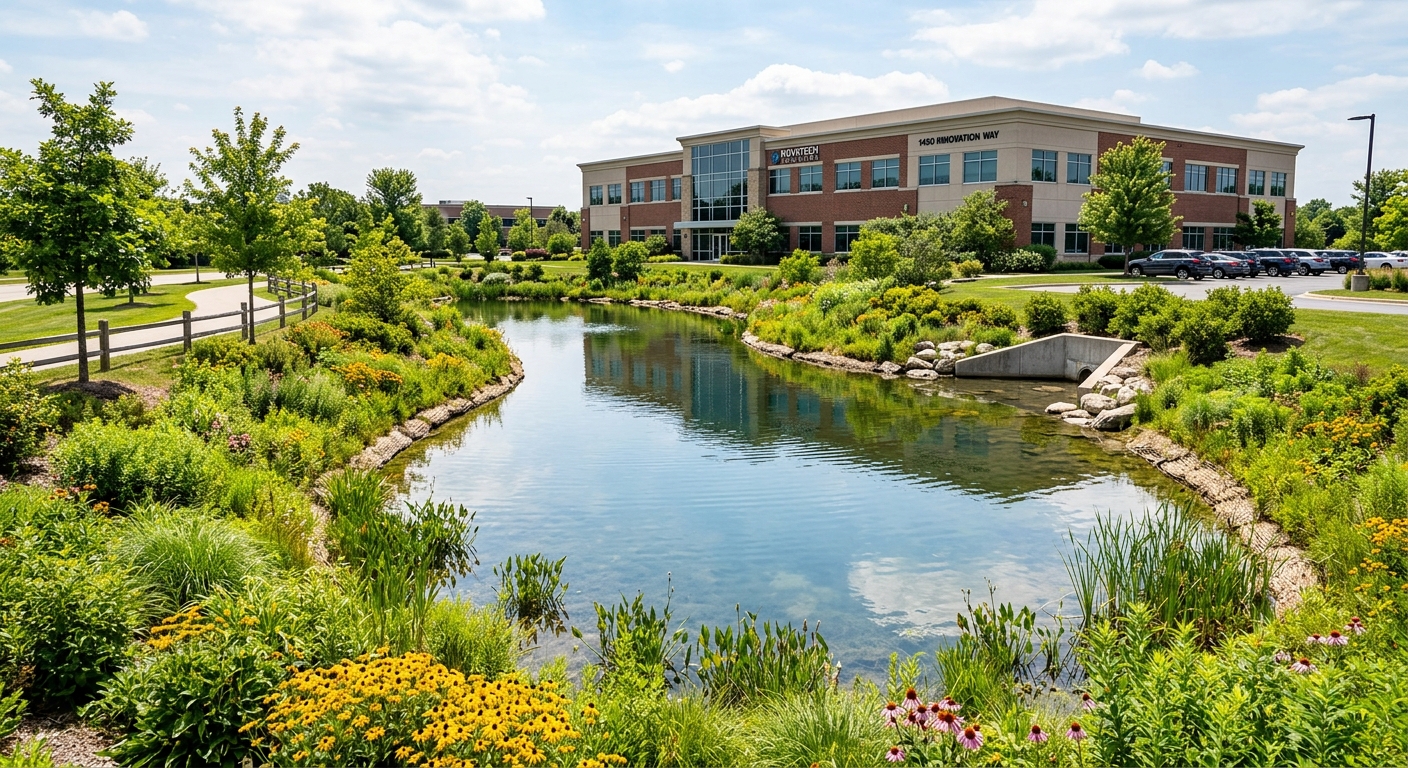
What stormwater ponds actually require
Stormwater ponds are engineered systems designed to capture, detain, and treat runoff before it enters natural waterways. They are not decorative features, even if they look like one. Every stormwater pond has a designed storage volume, a specific discharge rate, and, in most jurisdictions, a permit that requires the property owner to maintain those design parameters. When a property manager inherits responsibility for stormwater ponds, they are inheriting a regulated utility.
Routine maintenance involves several interconnected concerns. Sediment accumulates as runoff deposits soil, sand, and organic debris into the pond, gradually reducing the volume available to store stormwater. Outfall structures, the pipes, weirs, and control devices that regulate how water leaves the pond, must remain clear and functional. Littoral vegetation along the pond edges filters incoming runoff and stabilizes banks, but only if it is maintained at the right density and does not become overgrown or choked with invasive species.
Documentation matters as much as the physical work. Most stormwater permits require periodic inspections, and some jurisdictions require certified inspection reports. Property managers need to maintain records of maintenance activities, inspection findings, and any corrective actions taken. These records are your evidence of compliance if a regulator asks questions.
- Sediment removal or reduction to preserve designed stormwater storage capacity.
- Outfall and control structure inspections to ensure proper discharge function.
- Littoral vegetation management and bank stabilization to maintain filtration and prevent erosion.
Common problems in stormwater ponds
The most widespread issue is deferred maintenance. Stormwater ponds are out of sight and out of mind until something goes wrong, flooding during a storm event, complaints about algae or odor, or a notice from a regulatory agency. By the time these symptoms appear, the underlying problems have usually been building for years. Sediment has reduced capacity, outfall structures are partially blocked, and littoral plantings have been overtaken by invasive vegetation.
Algae blooms are a visible symptom of nutrient loading, which is common in stormwater ponds that receive runoff from fertilized landscapes, parking lots, and roadways. While some algae growth is normal, persistent dense blooms indicate that the pond's biological system is out of balance. In some cases, blue-green algae (cyanobacteria) can produce toxins that create health and liability concerns, particularly for ponds adjacent to recreational areas or residential neighborhoods.
Erosion of pond banks is another frequent problem, especially in ponds without adequate littoral shelves or where mowing crews cut grass right to the water's edge. Bank erosion introduces additional sediment into the pond, accelerates capacity loss, and can undermine adjacent structures like sidewalks, fences, and retaining walls.
- Deferred maintenance leads to capacity loss that shows up as flooding during storm events.
- Persistent algae blooms signal nutrient overloading and can create health or liability risks.
- Bank erosion accelerates sediment buildup and can damage adjacent property infrastructure.
How LakeTech helps property managers stay on top of stormwater ponds
LakeTech provides structured stormwater pond management programs that give property managers a clear plan, a regular schedule, and documented results. We start with a condition assessment of each pond, evaluating sediment depth, outfall function, bank condition, vegetation health, and water quality, so you understand what you are working with and what needs attention first.
Biological treatment programs address organic sediment accumulation and nutrient loading without the disruption of mechanical dredging. For many stormwater ponds, biological sediment reduction can restore meaningful capacity while the pond remains in service. LakeTech also manages littoral vegetation, controls invasive species, and monitors bank stability as part of ongoing programs.
Every service visit and monitoring event is documented in reports that are structured to meet common regulatory inspection requirements. Property managers receive clear summaries of work performed, conditions observed, and any recommended follow-up actions. This documentation gives you a defensible compliance record and helps you budget for future maintenance needs.
- Condition assessments that identify current maintenance needs and prioritize action items.
- Biological sediment reduction and nutrient management to restore capacity without dredging disruption.
- Detailed service documentation structured to support regulatory compliance and budget planning.