
Why lake management should start during development
Newly constructed lakes and ponds are not blank slates, they are unstable ecosystems. Freshly graded banks erode easily. Construction runoff introduces sediment, concrete washout, and disturbed soils that spike nutrient levels. Without vegetation establishment and early management, new ponds often develop severe algae problems within the first year, right when model homes open and buyers are forming first impressions.
Starting a management program during development also establishes water quality baselines. These baseline measurements become critical later when the HOA or management company takes over and wants to understand whether conditions are improving or declining. Without early data, there is no way to distinguish a new problem from a pre-existing one.
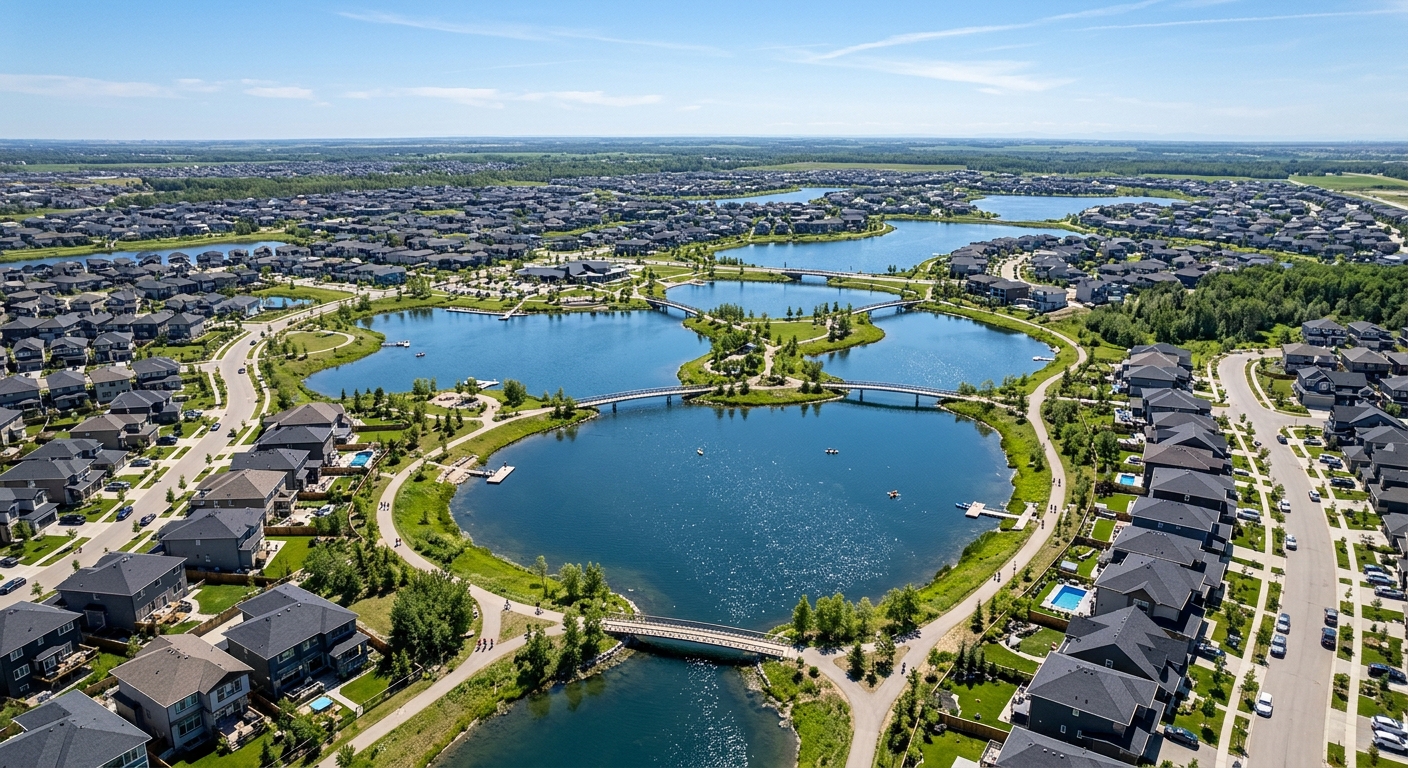
Developers who invest in lake management during the construction and sales phase protect their investment in the community's aesthetic appeal. Lakes and ponds are among the most valued amenities in master-planned communities, buyers pay premiums for waterfront lots. Letting those water features degrade before the community is even built out undermines property values and sales momentum.
- New ponds are prone to rapid algae growth due to construction runoff and bare soils.
- Early monitoring establishes water quality baselines that protect developers during HOA turnover.
- Well-maintained lakes preserve the amenity value that drives lot premiums and sales.
Developer responsibilities before HOA turnover
Most developers are responsible for community waterbodies from the time they are built until the HOA assumes control, which can be years, depending on the buildout timeline. During this period, the developer is typically responsible for regulatory compliance, maintenance, and any remediation needed. Neglecting ponds during this phase does not just create ugly water; it can create liabilities that persist well beyond turnover.
Documentation is one of the most overlooked responsibilities. HOA boards and management companies need to understand what they are inheriting: as-built specifications, stormwater permits, maintenance history, water quality data, vendor contracts, and any regulatory obligations. Developers who hand over a well-organized management file make the transition far smoother and reduce the likelihood of post-turnover disputes.
There is also a practical consideration: the condition of community waterbodies at turnover often becomes a point of contention between developers and HOA boards. Having documented evidence of consistent maintenance and water quality monitoring gives developers a defensible record if questions arise about the state of the lakes at handoff.
- Developers bear maintenance and compliance responsibility until the HOA formally takes control.
- Comprehensive documentation, permits, as-builts, maintenance logs, prevents turnover disputes.
- A clear maintenance history provides a defensible record of the waterbody's condition at handoff.
How LakeTech works with developers and their engineering teams
LakeTech partners with developers and their civil engineering firms to integrate lake management planning into the overall site design and construction schedule. We review stormwater management plans, pond geometry, and littoral shelf designs to identify potential maintenance challenges before construction begins, when changes are easy and inexpensive.
During the construction and sales phase, we implement monitoring and treatment programs that keep water features looking their best while building the data record that will support a clean HOA turnover. Our reports are structured to serve both the developer's immediate needs and the future management company's long-term planning.
When turnover approaches, we help developers compile the documentation package that the HOA board and their management company will need. We can also continue as the lake management provider for the HOA, providing continuity and institutional knowledge that would otherwise be lost in the transition.
- Early collaboration with civil engineers to address maintenance concerns in pond design.
- Monitoring and treatment programs that maintain water quality throughout the sales phase.
- Turnover documentation support and continuity of service through the developer-to-HOA transition.