
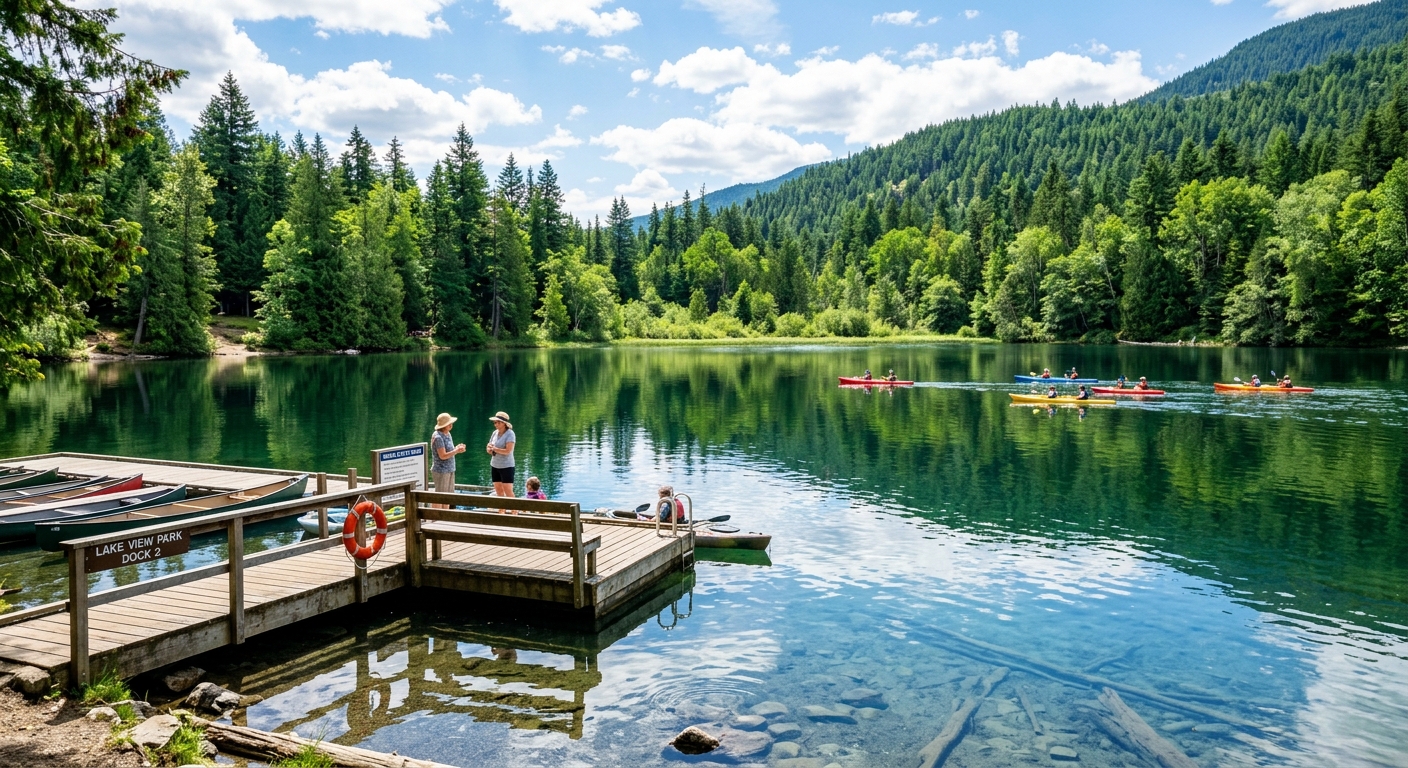
What park pond management typically involves
Parks departments are responsible for waterbodies that serve several purposes simultaneously. The same pond might be used for fishing in the morning, visited by families with small children in the afternoon, and relied on by nesting birds year-round. Management has to account for all of these uses, which means the priorities are broader than a private pond owner would typically face.
The core responsibilities usually include maintaining safe water quality for body contact and fishing, managing nuisance algae and aquatic vegetation so the water remains accessible and visually acceptable, preserving shoreline conditions for erosion control and wildlife habitat, and keeping aeration or fountain systems operational. Many parks departments also handle stormwater management functions through their ponds, which adds another layer of obligation.
Aesthetics matter more in a public park setting than in most other contexts. A pond that is ecologically healthy but looks murky or has visible algae mats will generate complaints from visitors and elected officials, even if the water quality data is fine. Parks managers often spend significant time explaining that green water is not the same as unsafe water.
- Public safety is the top priority: water quality must support swimming, fishing, and general contact without health risks.
- Wildlife habitat, shoreline stability, and recreational access all have to be managed at the same time.
- Visual appearance drives more public feedback than test results, so aesthetics are a real management concern.
Challenges specific to public parks
Budget constraints are the defining challenge for parks departments managing water. Most parks operate on annual appropriations that can be cut or held flat regardless of what the ponds actually need. Multi-year treatment programs, the kind that produce the best results, are difficult to fund when the budget cycle resets every twelve months and priorities shift with each new administration or board.
Heavy public use creates problems that private ponds rarely face. Fertilizer runoff from adjacent sports fields, goose populations attracted by maintained turf, litter and debris from park visitors, and fishing pressure that changes the biological balance of the water are all common in park settings. These inputs are ongoing and largely outside the pond manager's control.
Public perception adds a layer of pressure that does not exist in private management. A green algae bloom on a private HOA pond might generate a few emails to the property manager. The same bloom in a public park can generate news coverage, social media complaints, and calls to elected officials. Parks departments need to be able to respond quickly with factual information about what is happening and what is being done.
- Annual budget cycles make it hard to fund the multi-season treatment programs that produce lasting results.
- Heavy public use introduces nutrient loading, erosion, and biological pressure that the pond manager cannot control.
- Public visibility means water quality issues become public relations issues faster than in any other setting.
How LakeTech supports parks departments
LakeTech works with parks and recreation departments to build monitoring and treatment programs that fit within public budget structures. That means designing programs with clear annual cost projections, documented results that can be included in budget justification requests, and reporting that is readable by non-technical decision makers like city council members or parks board commissioners.
The monitoring side is especially important for public agencies. Having a continuous, documented record of water quality data makes it possible to respond to public complaints with facts rather than explanations. It also provides the trend data needed to demonstrate that a management program is working over time, which is the strongest argument a parks department can make when requesting continued or increased funding.
LakeTech's biological treatment products, including MuckBiotics for organic sediment management, are designed to be safe for waterbodies with active recreational use. They do not require posting closures or restricting access during or after application, which matters for parks that cannot shut down public access to a pond without significant pushback.
- Programs are designed with clear annual costs and documented results for budget justification.
- Monitoring data gives parks departments factual responses to public complaints and media inquiries.
- Biological treatments do not require restricting public access during or after application.