
What goes into the cost of managing a pond
Pond management is not a single line item. It is a collection of services that vary depending on the size of the waterbody, what problems exist, and what the owner's goals are. Some owners want a clean-looking pond with no algae blooms. Others need documented water quality data for regulatory compliance. A few want both, plus active treatment for sludge buildup. Each of those goals carries different costs.
The main cost categories include routine maintenance (debris removal, vegetation management, shoreline upkeep), water quality testing (lab analysis, field sampling, monitoring equipment), biological or chemical treatments (algaecides, beneficial bacteria, nutrient binders), aeration systems (installation plus electricity), and professional service contracts that bundle some or all of these together.
- Routine pond maintenance for a small residential pond typically runs $500 to $2,500 per year.
- Water quality testing costs $200 to $1,000 per round depending on which parameters are tested.
- Aeration system installation ranges from $1,000 to $10,000 depending on pond size and system type.
Annual maintenance contracts versus one-time services
The most common way pond owners buy management services is either through an annual contract or by calling for one-time visits when a problem appears. Annual contracts almost always cost less per service because the provider can schedule visits efficiently and catch problems early. One-time calls tend to be more expensive because they are reactive, the problem is usually worse by the time someone makes the call, and the provider has to fit the visit into their schedule on shorter notice.
Annual pond maintenance contracts for residential ponds typically range from $1,500 to $5,000 per year and cover scheduled visits, basic water quality checks, algae and vegetation management, and minor debris removal. Larger ponds or HOA-managed waterbodies with multiple ponds can run $5,000 to $25,000 or more per year depending on the scope.
- Annual contracts provide predictable budgeting and catch problems before they get expensive.
- One-time emergency treatments for algae blooms or fish kills can run $500 to $3,000 per visit.
- HOA boards often prefer annual contracts because they simplify budget approval and reporting.
Treatment costs: biological, chemical, and mechanical
Treatment is where costs vary the most. A simple beneficial bacteria application for a quarter-acre pond might cost $200 to $600 per season in product alone. Chemical algae treatments for the same pond might run $300 to $1,200 per season depending on frequency and severity. If the issue is sediment buildup and the pond needs dredging, the cost jumps dramatically, mechanical dredging typically costs $10,000 to $75,000 or more depending on the volume of material removed and access conditions.
Biological treatments like beneficial bacteria products sit between the extremes. They are less expensive than dredging but require a longer commitment, typically a full season or more of regular applications to see measurable results. Owners who want the quickest possible result tend to pay more. Owners who are comfortable with a longer timeline can often spend less by choosing biological approaches and waiting for the natural processes to work.
- Beneficial bacteria treatments for muck reduction typically cost $200 to $800 per season for a small pond.
- Chemical algae treatments range from $300 to $1,200 per season depending on severity.
- Dredging is the most expensive option but produces the most immediate physical change.
Monitoring and water quality testing costs
Water quality monitoring is sometimes treated as optional by pond owners, but for anyone managing a pond professionally or within a regulated setting, it is a necessary ongoing expense. A single lab analysis for basic parameters like dissolved oxygen, pH, nitrogen, and phosphorus typically costs $150 to $500 per sample depending on the lab and how many analytes are included.
Most managed ponds are tested two to six times per year. Some programs add continuous monitoring through sensors that feed data back to software platforms. The sensors themselves can cost $1,000 to $5,000 each, and the data management side adds subscription or software costs on top of that. For operations managing many ponds, software that centralizes all of this data into one platform can actually reduce the per-pond cost of monitoring by making it easier to spot trends and avoid unnecessary treatments.
- Basic lab water quality testing runs $150 to $500 per sample for common parameters.
- Most professional programs test two to six times per year, adding $500 to $3,000 annually.
- Continuous monitoring sensors cost $1,000 to $5,000 per unit plus ongoing data management costs.
What drives costs up and what keeps them down
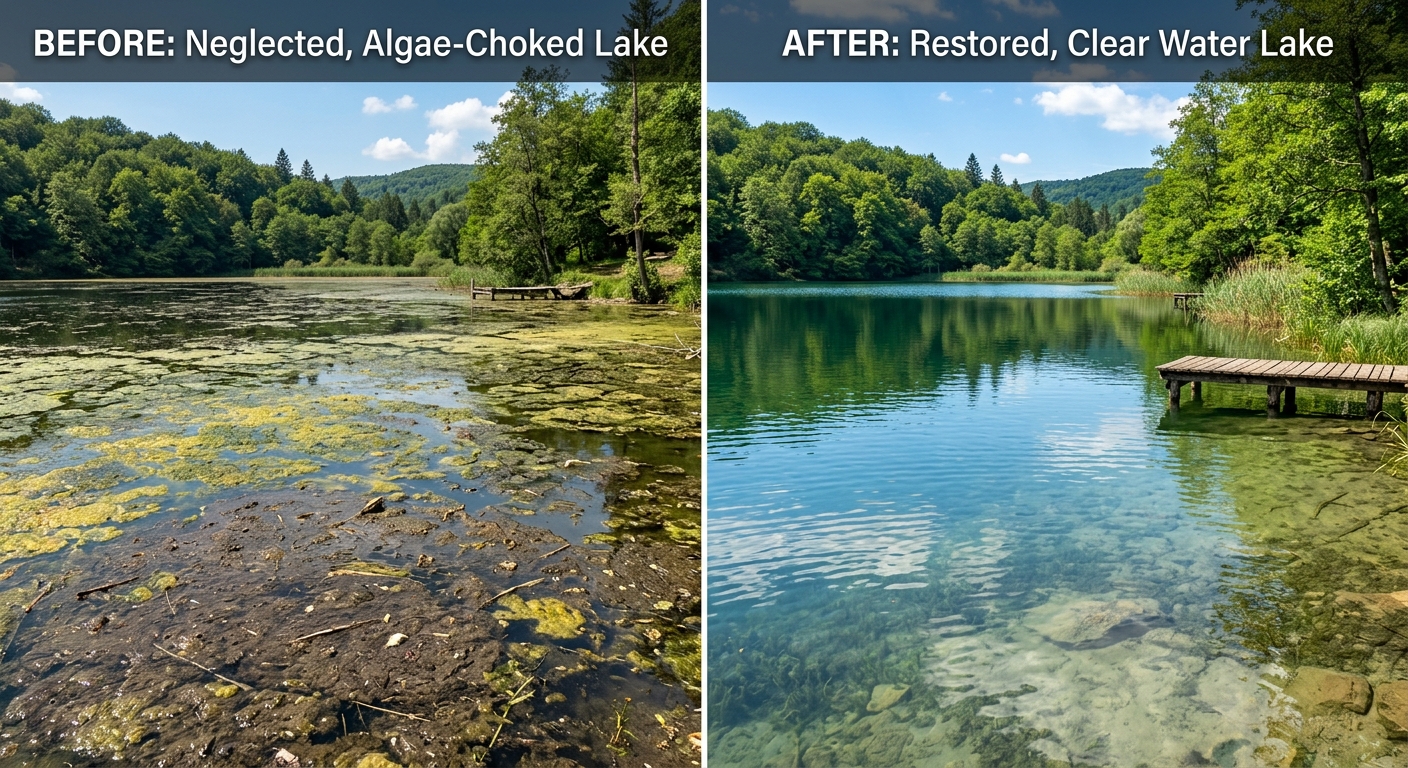
The biggest cost driver is deferred maintenance. A pond that has gone years without attention will almost always cost more to bring back into shape than one that has been managed consistently. Thick sludge layers, unchecked vegetation growth, failing aeration equipment, and years of accumulated nutrient loading all create compounding problems that require more aggressive and more expensive intervention.
The most cost-effective approach for most pond owners is a consistent, modest maintenance program: keep aeration running, apply biological treatments on a schedule, test water quality a few times a year, and address vegetation before it takes over. This kind of program for a typical residential or small HOA pond costs roughly $2,000 to $6,000 per year, substantially less than the cost of a major remediation after years of neglect.
- Deferred maintenance is the single biggest cost multiplier in pond management.
- Consistent annual programs cost a fraction of emergency remediation work.
- Owners who track water quality data over time can adjust treatments and avoid overspending.