
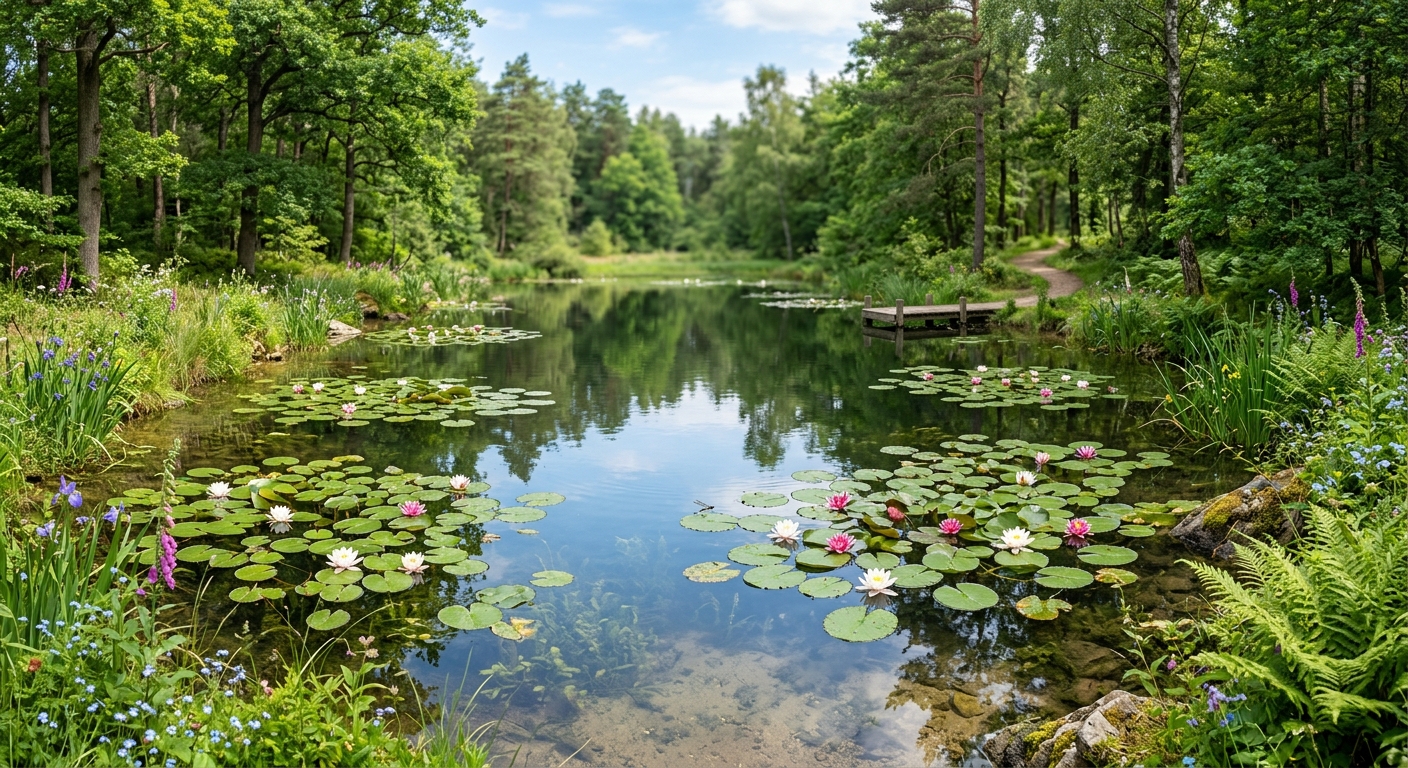
Irvine Lake, Lake Mission Viejo, and community waterbodies
Orange County's lake landscape is dominated by managed community waterbodies. Lake Mission Viejo, a 124-acre man-made lake, is one of the few private lakes in Southern California owned and maintained by a homeowners association. It serves as the centerpiece of the Mission Viejo community and requires continuous management to maintain swimming and recreation standards. Irvine Lake (Santiago Reservoir), operated by the Irvine Ranch Water District, serves as both a water supply reservoir and a recreational fishery.
Beyond these larger waterbodies, Orange County contains hundreds of smaller HOA ponds, golf course water features, and commercial property retention basins. These smaller waterbodies are where most individual lake management decisions happen, and where management quality varies the most. Some HOA communities have well-funded lake management programs with regular professional service. Others rely on reactive treatments when complaints arise, which typically results in worse long-term outcomes and higher costs.
The county's master-planned community model means that many of these ponds were designed primarily as aesthetic features or stormwater management infrastructure, with water quality maintenance as a secondary consideration. Their shallow depths, small volumes, and high surface-area-to-volume ratios make them inherently more challenging to manage than deeper, larger waterbodies.
- Lake Mission Viejo is one of Southern California's largest privately managed HOA lakes at 124 acres.
- Irvine Lake serves dual roles as a water supply reservoir and recreational fishery.
- Hundreds of smaller HOA ponds and golf course features are scattered across the county.
- Many community ponds were designed as aesthetic features with limited consideration for long-term water quality.
Year-round warmth and fertilizer runoff
Orange County's Mediterranean climate delivers mild winters and warm summers, with inland areas like Rancho Santa Margarita and Lake Forest experiencing summer highs regularly above 90°F. Coastal communities from Huntington Beach to Dana Point are moderated by ocean influence, but even these areas maintain water temperatures that support year-round algae growth in most ponds.
Fertilizer runoff is one of the most significant nutrient sources for Orange County ponds. The county's extensive landscaped residential areas, golf courses, and commercial properties generate substantial volumes of irrigation runoff that carries nitrogen and phosphorus into local drainage systems and eventually into ponds and lakes. This is particularly problematic during the irrigation season when over-watering sends nutrient-rich runoff directly into storm drains connected to waterbodies.
The combination of warm water, high nutrient availability, and shallow pond depths creates conditions where algae blooms can develop rapidly, sometimes within days of a nutrient pulse. HOA boards and property managers frequently deal with green water complaints, surface scum, and odor issues, particularly from late spring through early fall.
- Inland Orange County summer temperatures regularly exceed 90°F, driving intense biological activity.
- Irrigation runoff from landscaped properties is a primary source of nitrogen and phosphorus loading.
- Shallow HOA ponds can shift from clear to bloom conditions within days of a nutrient pulse.
- Coastal areas maintain milder temperatures but still support year-round algae growth in most ponds.
Santa Ana Regional Water Board and local regulations
Orange County falls under the jurisdiction of the Santa Ana Regional Water Quality Control Board (Region 8), which oversees water quality in the Santa Ana River watershed and connected waterways. The Board's Basin Plan establishes water quality objectives for beneficial uses including recreation, aquatic life support, and water supply.
The county's North Orange County MS4 permit and the South Orange County MS4 permit establish stormwater management requirements that can affect how ponds and lakes receive and discharge water. HOA ponds connected to the storm drain system may be subject to discharge limitations, particularly for nutrients and bacteria.
Orange County Water District's groundwater replenishment efforts also influence local water management. In areas where recycled water is used for landscape irrigation, the nutrient profile of irrigation runoff may differ from areas using potable water, affecting downstream pond chemistry. Understanding the water sources feeding your pond, whether direct rainfall, irrigation runoff, recycled water, or supplemental fill, is essential for designing an effective management program.
- The Santa Ana Regional Board (Region 8) oversees water quality in the Santa Ana River watershed.
- North and South Orange County MS4 permits regulate stormwater discharges that may affect connected ponds.
- Recycled water used for irrigation can alter the nutrient profile of runoff entering downstream ponds.
- Understanding all water sources feeding a pond is essential for designing effective treatment programs.