
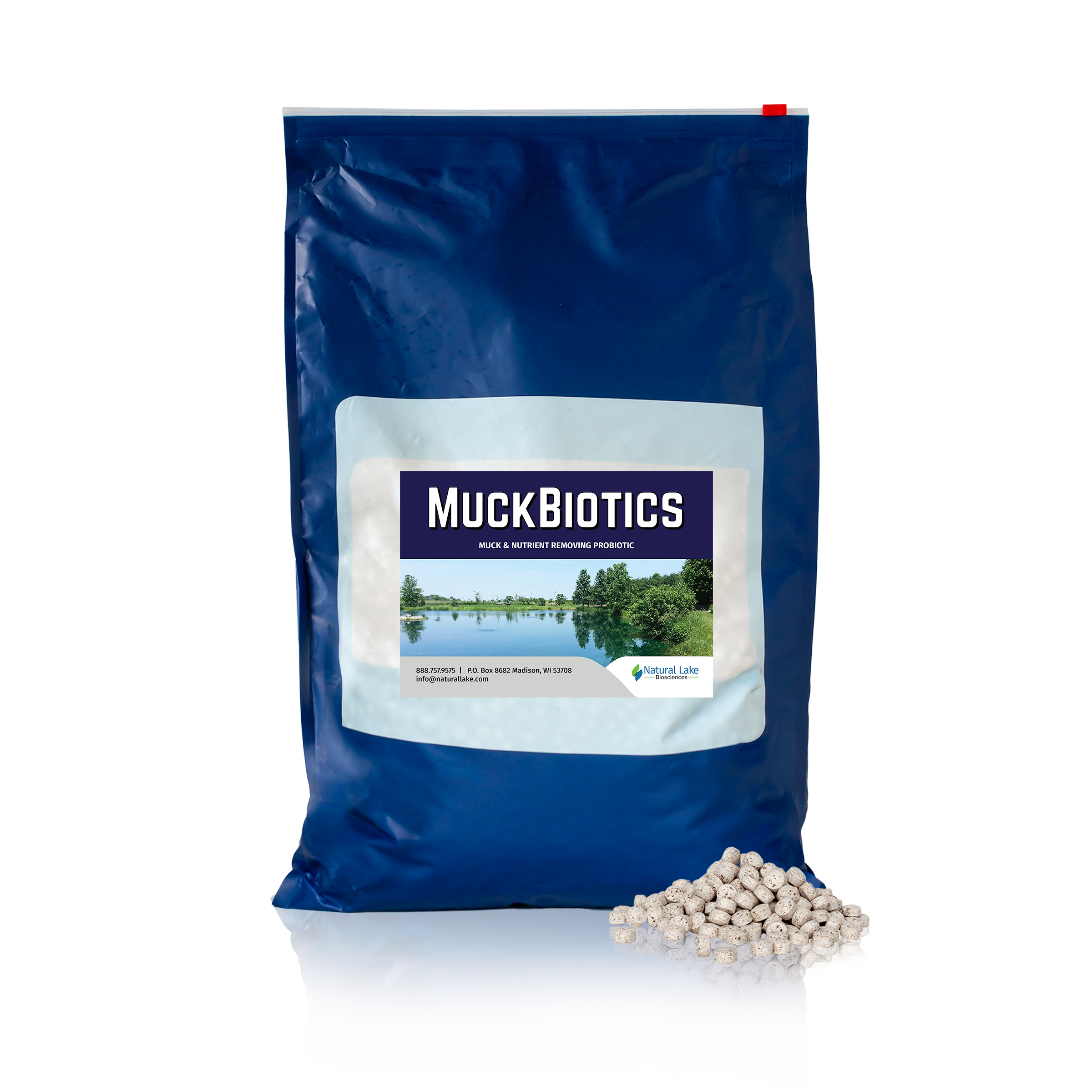
MuckBiotics in plain terms
MuckBiotics are a biological muck-reduction product made of concentrated beneficial bacteria pressed into pellet and tablet form. When you toss them into your pond or lake, they sink rapidly through the water column and embed directly into the muck layer on the bottom. Once there, the bacteria begin digesting the organic material that makes up the soft, dark sludge you can feel underfoot or smell along the shoreline.
The organic material they target includes decomposing leaves, grass clippings, dead algae, fish waste, and nutrient-rich runoff that has settled and accumulated over months or years. This is the same material responsible for foul sulfur odors, mushy pond bottoms, and the dark water that makes a pond look unhealthy.
- Concentrated beneficial bacteria in pellet and tablet form.
- Dense enough to sink directly to the muck layer where organic buildup is worst.
- Targets decomposing leaves, algae, fish waste, and other organic sediment.
- Used by pond and lake owners who want to reduce sludge without mechanical dredging.
The two product forms and when to use each
The pelleted version comes in 30-pound bags and is designed for broad coverage, one bag treats up to half an acre of pond bottom. You broadcast the pellets evenly over the water surface and they settle into the sediment layer across the treatment area. This is the standard form for general pond and lake treatment.
The tablet form is a concentrated dose built for targeted application. Tablets are ideal for treating specific problem zones like docks, beaches, swim areas, and shoreline stretches where muck tends to accumulate the heaviest. Place them every 6 to 10 feet along the area you want to treat. Both forms use the same core beneficial bacteria, just packaged for different application needs.
- Pellets (30 lb bags): broadcast over the water for broad-area coverage.
- Tablets: drop at specific locations for concentrated treatment of problem zones.
- Both forms sink to the bottom and work at the sediment layer.
- Many treatment programs use pellets for general coverage and tablets for trouble spots.
What problems MuckBiotics are designed to solve
The core problem is organic muck accumulation. Over time, natural debris like fallen leaves, dead aquatic plants, grass clippings from mowing near the shore, and algae die-off settle to the bottom and decompose slowly. This creates a soft, dark layer of sludge that gets deeper each year.
That buildup causes several noticeable problems: the bottom feels soft and unpleasant to walk on, the shoreline develops a sulfur or rotten-egg smell during warm months, the water appears dark or murky, and the overall depth of the pond shrinks as the muck layer thickens. MuckBiotics introduce bacteria that accelerate the biological breakdown of this organic layer, gradually reducing its depth and the problems that come with it.
- Soft, mushy pond bottoms that keep getting worse each year.
- Sulfur or rotten-egg odor along the shoreline, especially in summer.
- Dark or murky water caused by decomposing organic material.
- Gradual loss of pond depth as the sludge layer thickens over time.
How MuckBiotics differ from dredging and chemical treatments
Dredging is physical removal: heavy equipment scoops out sediment from the pond bottom. It is effective for severe buildup and works on any type of sediment, but it is expensive, disruptive, and often requires permits and somewhere to dispose of the material. MuckBiotics take a biological approach: instead of removing the muck mechanically, they introduce bacteria that digest it in place over time.
Chemical treatments for ponds usually target water quality issues like algae blooms rather than the bottom sediment layer. MuckBiotics are not a chemical, they are a biological product that works at the sediment level. That makes them a better fit for owners who are specifically dealing with muck and sludge rather than a water clarity problem in the water column above.
- Biological approach: bacteria digest muck in place rather than mechanically removing it.
- Lower disruption than dredging, with no heavy equipment or disposal logistics.
- Works at the sediment layer, not in the water column like most chemical treatments.
- Can be used as part of an ongoing program instead of a one-time intervention.
What MuckBiotics are not designed for
MuckBiotics work on organic material. If the sediment in your pond is primarily inorganic, clay, silt, sand, or construction fill, a biological treatment will not break it down because bacteria cannot digest mineral material. A simple test: grab a handful of the bottom material. Organic sludge is dark, soft, and usually smells. Inorganic sediment feels gritty or slick and does not have a decomposition odor.
They are also not a one-application fix. MuckBiotics are designed to be used in a repeating treatment program, typically with applications every two to four weeks during the warm season. Owners who expect a single application to clear years of accumulated muck will be disappointed. Results depend on water temperature, organic loading, treatment consistency, and whether fresh debris is managed alongside the treatment program.
- Not effective on inorganic sediment like clay, silt, or sand.
- Not a one-time fix: requires applications every 2-4 weeks during warm months.
- Results vary based on water temperature, sludge depth, and treatment consistency.
- Works best alongside debris control and aeration when conditions warrant it.