
What the satellite actually sees
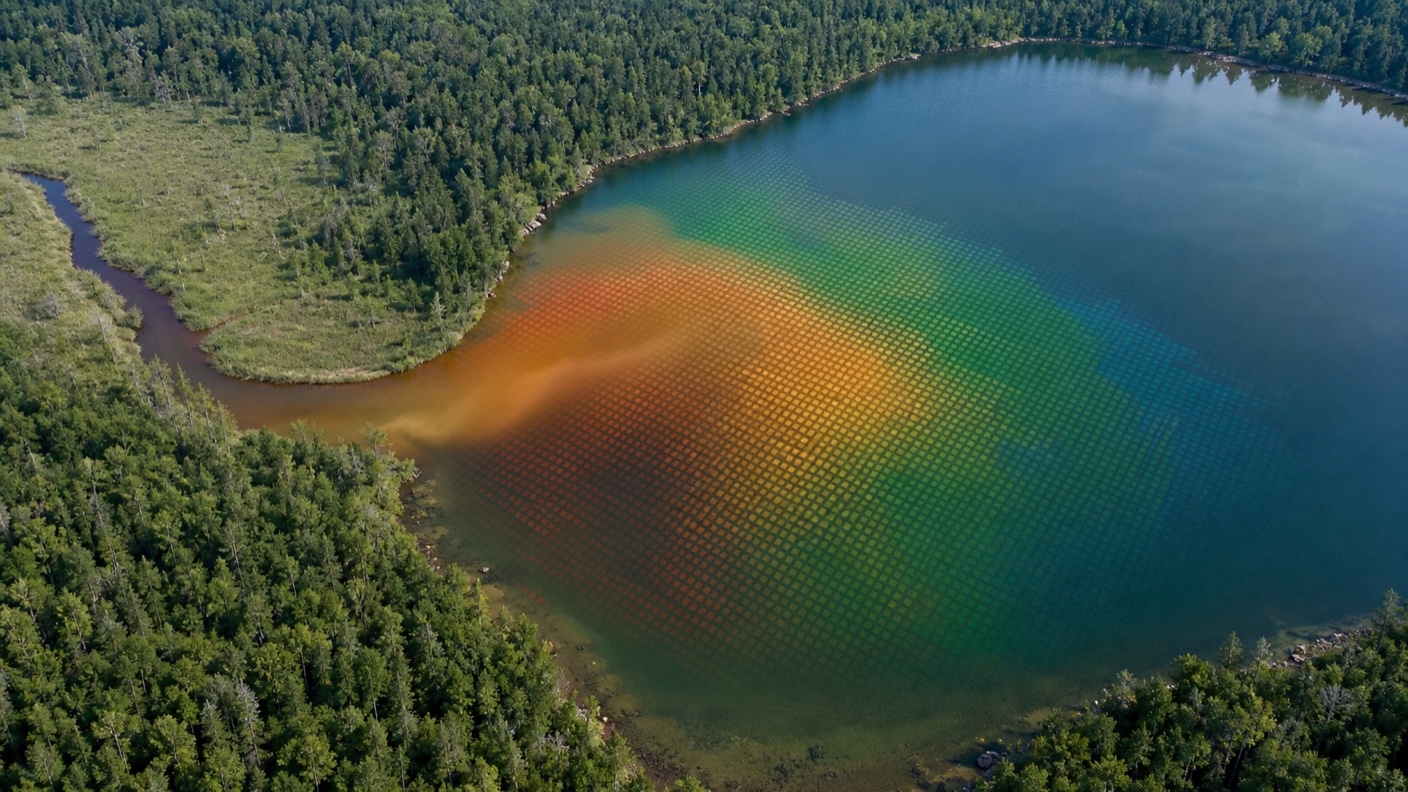
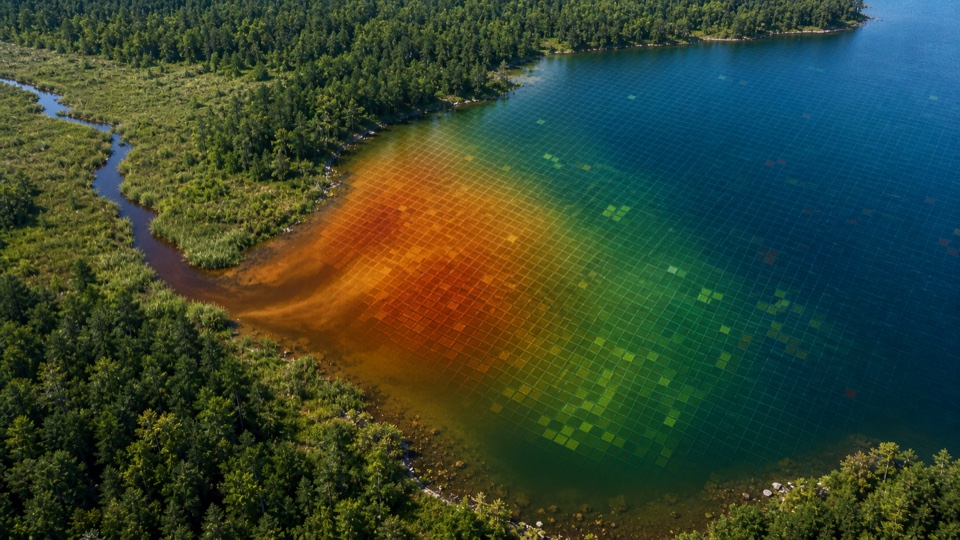
Colored dissolved organic matter is made of dissolved compounds from leaves, soils, wetlands, algae decay, and watershed runoff. It often gives water a yellow, brown, or tea-colored cast because it absorbs shorter wavelengths of light.
A satellite cannot identify each organic compound. It can, however, measure how the water's visible reflectance changes. LakeTech uses those visible-band patterns as a practical proxy for the colored dissolved organic signal.
The product is most useful when reviewed as a pattern over time. A single value gives context, but repeated scenes can show whether storm inflows, seasonal leaf litter, or wetland exchange are changing the lake's color signature.
- cDOM affects water color by changing how visible light is absorbed and reflected.
- Sentinel-2 visible bands provide repeated observations of that color signal.
- The LakeTech output is an index designed for trend and spatial review.
- Field sampling is still needed when the source or chemistry of dissolved organics must be confirmed.
- Surface optical estimates are not direct measurements of toxins, dissolved oxygen, nutrients, or whole-water-column conditions; they require local field validation and must not alone drive reopening or treatment decisions.
How LakeTech converts water color into a cDOM index
LakeTech clips each usable Sentinel-2 scene to the lake boundary, filters out poor observations, and calculates a visible-band relationship tied to the cDOM signal. The result is scaled into a consistent index for map and chart review.
Because cDOM interacts with sediment, algae, and water depth, the product should be interpreted with the rest of the monitoring record. A cDOM increase after a storm may tell a different story than a cDOM increase during a late-season algae crash.
The value of the satellite layer is that it adds spatial context. It can show whether a colored organic signal is strongest near a wetland inlet, a shallow cove, or the whole basin.
- The lake boundary controls which pixels are evaluated.
- Visible reflectance bands are transformed into a cDOM index.
- Maps reveal where organic color signals are concentrated.
- Trend charts help separate short pulses from seasonal patterns.
Why cDOM matters for lake management
Colored dissolved organic matter affects how much light penetrates the water column. That matters for aquatic plants, algae growth, heat absorption, and how clearly managers can interpret other optical parameters.
High cDOM can be natural in wetland-influenced lakes, but sudden changes may point to runoff, decaying plant material, or watershed disturbance. Knowing what is normal for a lake makes unusual changes easier to catch.
LakeTech uses cDOM as one more layer in the management story. It helps explain why clarity changed, why a photic-zone estimate shifted, or why one part of the lake is behaving differently from another.
- cDOM can reduce light penetration and influence plant and algae conditions.
- Storm pulses and wetland inflows often show up as spatial color patterns.
- Tracking cDOM helps interpret Secchi, turbidity, and photic zone data.
- The index supports diagnosis, not just reporting.