
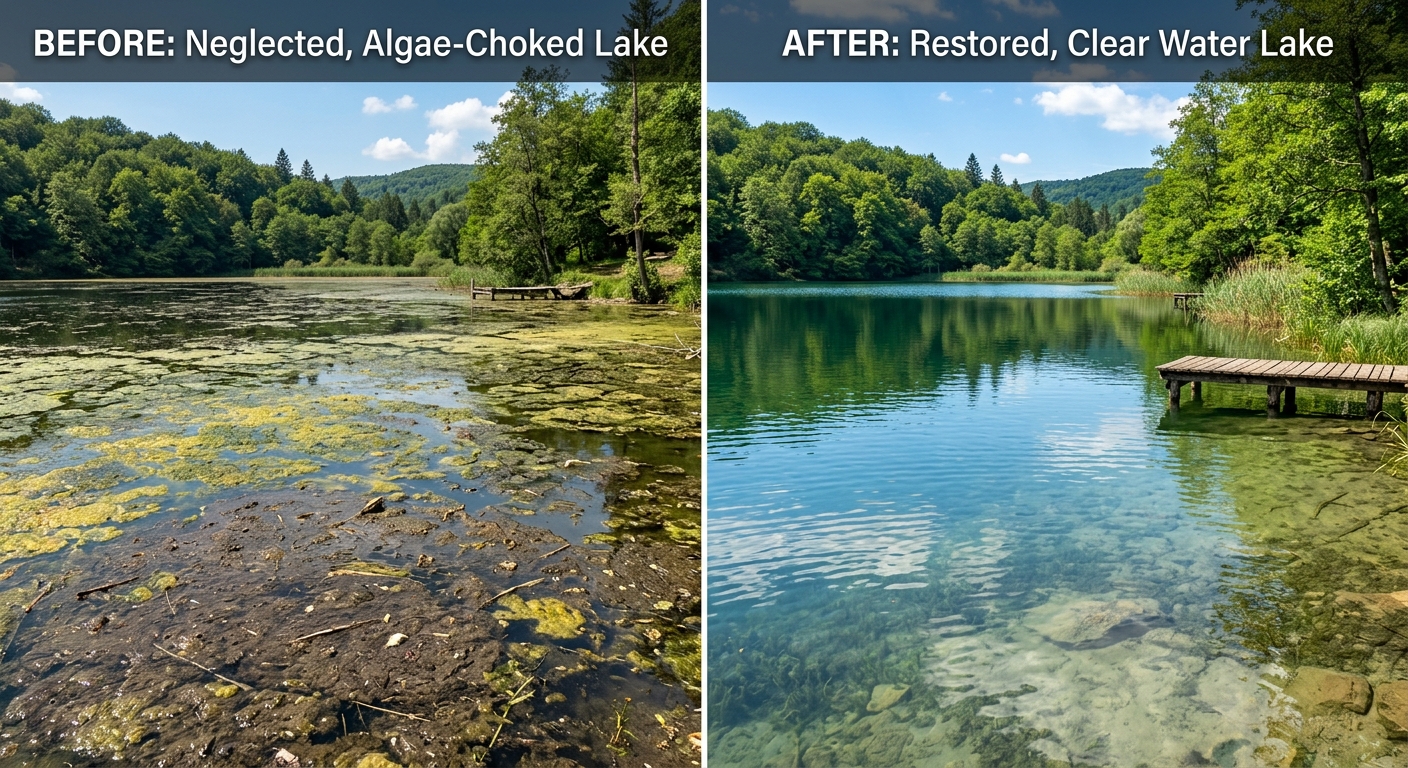
Common causes of fish kills
Oxygen depletion is a common cause of fish kills in ponds and lakes, but it is not the only cause. Oxygen stress and mortality depend on species, life stage, temperature, exposure duration, and the speed of the decline. A crash can follow bloom decay, strong oxygen demand, mixing of oxygen-poor deep water, or prolonged ice and snow cover; disease, toxicants, ammonia, temperature shock, and harmful blooms also require consideration.
Other causes include disease outbreaks, toxic algal blooms (cyanobacteria), chemical contamination from runoff, rapid temperature changes, and spawning stress. In most cases, the underlying issue is a waterbody that is nutrient-rich, shallow, and poorly circulated, conditions that make oxygen crashes more likely and more severe.
- Low dissolved oxygen is the leading cause: fish suffocate when levels drop too low
- Algae die-offs consume oxygen rapidly as dead algae decompose
- Summer stratification and turnover can mix oxygen-poor water through the lake
- Winter ice cover blocks oxygen exchange and sunlight for photosynthesis
- Disease, toxins, and temperature shock are less common but real risks
Prevention strategies
Aeration can reduce oxygen risk when it is correctly selected, sized, placed, started, and monitored for the basin and management objective. It is not a universal fish-kill remedy: destratification can remove cold-water refuge, rapid startup can mix poor-quality deep water upward, and winter systems can create dangerous open water and unstable ice. Diagnose the likely cause and use a site-specific operating and safety plan.
Beyond aeration, managing the conditions that lead to oxygen crashes is important. Reducing nutrient inputs slows algae growth and makes massive die-offs less likely. Avoiding overstocking fish reduces oxygen demand. Monitoring water temperature and dissolved oxygen during high-risk periods, late summer and mid-winter, allows you to intervene before conditions become critical. Even a simple dissolved oxygen meter can provide early warning.
- Size and verify aeration against basin geometry, oxygen demand, habitat goals, and operating conditions
- Winter aeration can create thin ice and open water; use barriers, warnings, and a site-specific safety plan
- Reducing nutrients prevents the massive algae blooms that cause oxygen crashes
- Avoid overstocking fish: more fish means more oxygen demand
- Monitor dissolved oxygen during late summer and mid-winter high-risk periods